14 years to build a replica of the 1909 Blériot XI in Canada

Tags

, , ,

12047150_900482973361201_877538865223184496_n12011186_900480863361412_7191215778558004896_n12036592_900482660027899_8937640742444451038_n12036795_900485583360940_5321936301482974781_n12049682_900490033360495_1112947659304691297_n

The Blériot XI was one of the most famous accomplishments of the pioneer era of aviation, built by Louis Blériot who became on 25 July 1909 the first person to cross the English Channel in an airplane.

The Blériot XI was manufactured in 1914 and was powered by a 50-horsepower Gnôme rotary engine. The airplane was purchased by the Swiss aviator John Domenjoz, a Blériot company flight instructor. Domenjoz earned a reputation as one of the era’s most celebrated stunt pilots, performing in major European cities and in North and South America through 1916, at which time he returned to France. Following wartime service as a civilian flight instructor both in France and the United States, Domenjoz made one final barnstorming tour with his Blériot in 1919.

This was the WORLD’s First Military Aircraft. It was first used operationally in Mexico during the 1910 Mexican Revolution (Lit Dynamite was thrown out of the cockpit) and later as the World’s first Operational Bomber in the Italo-Turkish War of 1911-1912. According to the Hague 1899 & 1907 protocols, attacks from the air were considered WAR CRIMES (civilian or military). The Bleriot was considered a FRONT LINE Aircraft of the Balkan Wars (1912-13) and was used in WWI (1914-1915).

Another important “first” was the 1910 flight over the City of Montreal by Count Jacques de Lesseps in his Blériot XI christened “Le Scarabée”.

10 volunteers’ amateurs in Canada spent 14 years to build a replica of the Blériot from a German set of plans, because the original French set of plans was lost during the WW II. And is now exposed at the CCPA Aviation museum in Montreal.

This replica flew during 14 seconds because the Bleriot is only flown on the calmest of days and then only in a straight line and a few feet above the ground, then lands and is turned by hand for the return trip. Control is too weak to allow in air “aerobatics” and they treat these aircraft with the greatest respect.

In this exposed replica I’ve noticed an extended rudder with a float on the bottom (picture number 5) and one of the volunteer named Michel, explained to me that Louis Blériot did it in case the airplace crashed in the high sea; he would be able to survive by making the airplane float on the water, but no one know what was the material used, probably wine corks.


The silence of personal merit

12039415_10204863373771261_8634989886713064712_n

“Les Caractères/Du mérite personnel” de La Bruyèr

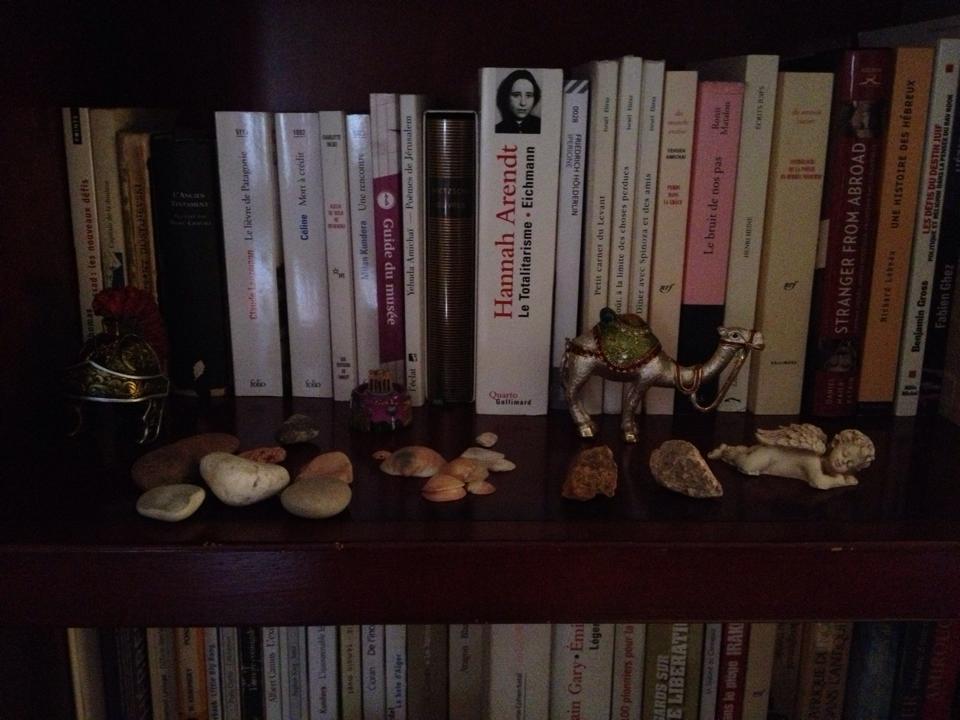
This old edition belonged to my father; more than 15 years now since I’ve read it for the first time. This book contains a treasure trove of timeless and increasingly timely pointers on the necessary art of living up to our social destiny and personal Merit.

I’ve learned that the personal merit is silent and doesn’t need to be reconized…and I’ve learned to not give my time to every superficial acquaintance: it is bestowing what is to you of inestimable worth, upon one who is not likely to be the better for it.

And I’ve learned that the personal merit consists less in the display of one’s own wit and intelligence, than in the power to draw forth the resources of others; he who leaves you after a long conversation, pleased with himself and the part he has taken in the discourse, will be your warmest admirer. Men do not care to admire you, they wish you to be pleased with them; they do not seek for instruction or even amusement from your discourse, but they do wish you to be made acquainted with their talents and powers of conversation; and the true man of genius will delicately make all who come in contact with him feel the exquisite satisfaction of knowing that they have appeared to advantage.This requires great genius and few are gifted with the talent.

Le palais de Cristal et la fin de l’histoire

Tags

,

Dantes-Divine-Comedy-010

Parmi les écrivains du XIX siècle, qui, depuis leur poste d’observation à la périphérie Est européenne retardée ont considère les jeux très avancés d’exploitation agressive du monde avec une réserve critique, Fiodor Dostoïevski s’est révélé comme le diagnosticien le plus clairvoyant.

Dans sa nouvelle « mémoires écrits dans un souterrain » parue en 1864 ; qui ne constitue pas seulement le document fondateur de la psychologie moderne du ressentiment mais aussi la première expression de l’opposition à la globalisation, se trouve une formule qui résume avec une force métaphorique sans égale le devenir du monde au début de la fin de l’ère de la globalisation : cette formule selon laquelle la civilisation occidentale est un « palais de cristal ». Lors de sa visite à Londres en 1842, Dostoïevski avait visité le palais de l’exposition universelle à South Kensington et avait aussitôt saisi de manière intuitive la symbolique de ce bâtiment hybride.

Pour Dostoïevski l’arrivé de cet homme nouveau qui une fois accomplie, la solution technique de la question sociale, vivait parmi ses semblables dans un palais collectif de verre et de métal dans lequel règne un éternel printemps de consensus. Le soleil des bonnes intentions brillait jour et nuit, la coexistence pacifique de tous avec tous irait de soi. Une sentimentalité sans limites.

C’est depuis ce point que le motif de la fin de l’histoire entreprend sa marche triomphale. Les visionnaires du XIX siècle comme les communistes du XX siècle avaient compris que la vie sociale après la fin de l’histoire combattante ne pourrait se dérouler que dans un espace élargi et doté d’un climat artificiel.

Si les combats historiques doivent déboucher sur la paix éternelle, il faudrait intégrer toute la vie sociale dans un habitacle protecteur, ainsi tous les évènements historiques ne pourraient plus survenir, tout au plus des accidents domestiques. Il n’y aurait donc plus de politique ni d’électeur ; uniquement des concours d’ambiances entre les partis et des fluctuations parmi les consommateurs.

Cette gigantesque serre est dédiée à un culte joyeux et frénétique de Baal, pour lequel le XX siècle a proposé le nom de consumérisme. Le Baal capitaliste que Dostoïevski crut reconnaitre à la vue choquante de ce palais à Londres et des masses londoniennes venues s’amuser.

Ainsi la cristallisation désigne le projet de généraliser l’ennui sous une forme normative d’interdire que l’histoire ne fasse de nouveau irruption dans le monde. Encourager et protéger l’immobilité bénigne est désormais l’objectif de tout pouvoir d’état.

Quand on observe le monde tel que l’ont modelé les processus transmis par le capital, on est forcé de constater que le cours actuel des choses a confirmé les anticipations de Dostoïevski sur les ambiances de l’existence dans les palais de verre.

Le palais capitaliste du monde, les marxistes ultra tardifs que sont Negri et Hardt l’ont tout récemment de nouveau arpenté sous le nom d’empire.

Time and stones

10553461_343362109149816_7401524573650909842_n

Carnet de croquis, le temps
Artist : Lookace Bamber

If I trust Bergson’s idea of the “durée créatrice” I must dissociate material from memory… but I feel that the question is not whether material things last rather then how we can coincide with the inner consciousness of this external time. I cannot forget when Carl Jung tried to make a kind of monument out of stone in 1950 as a manifestation of the occupant.

Ferdinandea

10644810_582571708508952_6474784518097245390_n

Mes graves n’émettent plus aucun son

c’est ce que je remarque quand je me réessaye au piano

et l’interminable couvre bouches brodé

avec lequel, enfant, je faisais un lorica.

Sur le dessus du piano défense réduite

des lapins processionnaires insérés dans un bois de Palerme

font route vers l’armoire qui abrite un casque centurion

parodiant les singes de la sagesse.

Il doit y avoir quelque chose

une métaphore qui m’aiderait à parler

mes graves ne sonnent pas.

Je déplace les animaux d’ivoire,

les pierres, l’espèce forte et la friable

quand je referme le piano les charnières grincent

le bois laqué claque.

Sur ma peau dépigmentée ils reprennent leur tour de garde

au millimètre près sur les marques ou la greffe ne prend pas.

Je ne peux pas parler

l’altitude a atrophié mes poumons

je n’ai pas les racines de l’edelweiss

je dois redescendre à ma place

cesser de m’inventer la force d’un membre que je ne possède pas

des images, maintenant que ma main droite seule pianote sébile.

Ma mère et mon père, à l’écart, qui se parlent sans tendresse

mon père, blanc comme un linge, laissé seul et nerveux dans le couloir

car il fait nuit ce matin et les trilles aiguës suffisent à taire

et ma famille éléphantine est en chemin dans l’ivoire.

Je suis sévère avec mon sang

mon corps tubercule tari, qui existe,

et qui cependant n’est pas essences et contingences, bruit la mort,

la phrase du sang n’a pas de point

ou alors il faut être le mot de trop, la saillie.

Ca ne se joue pas à peu de choses tout dire et s’arracher au mensonge

et c’est toute la chair qui vient avec le masque parce qu’il date.

Comment lui dire qu’il y a cette ile, Ferdinandea,

en mer de Sicile qui n’existe qu’en de courtes périodes la tête hors de l’eau

d’Empédocle le volcan à son réveil sa colère le portant,

Empédocle hissé se fait ile

l’ile demeure encore un temps ile,

puis plonge à nouveau

le feu alors rendormi rêve moins de dix mètres sous les vagues

ensuite une éternité passée au crible l’eau.

Dix, vingt, trois secondes, et le volatile reparaît

loin miniature souffle inchangé à l’abri du fouet de la langue.

Paul Goodman on the Nine Kinds of Silence

speakingandlanguage_goodman

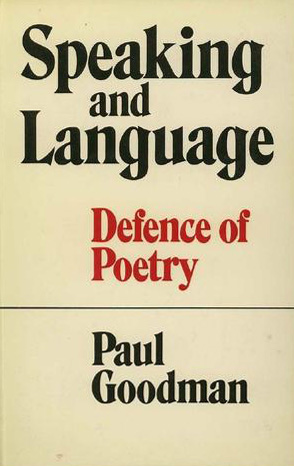
Click here to lisen to the recording from WBUR’s radio program Stylus, British literary critic and poetry scholar reads Goodman’s anatomy of silence in his own deeply resounding voice.

Goodman writes:

“Not speaking and speaking are both human ways of being in the world, and there are kinds and grades of each. There is the dumb silence of slumber or apathy; the sober silence that goes with a solemn animal face; the fertile silence of awareness, pasturing the soul, whence emerge new thoughts; the alive silence of alert perception, ready to say, “This… this…”; the musical silence that accompanies absorbed activity; the silence of listening to another speak, catching the drift and helping him be clear; the noisy silence of resentment and self-recrimination, loud and subvocal speech but sullen to say it; baffled silence; the silence of peaceful accord with other persons or communion with the cosmos.”

The sandal of Empedocles

cosmigraphics127

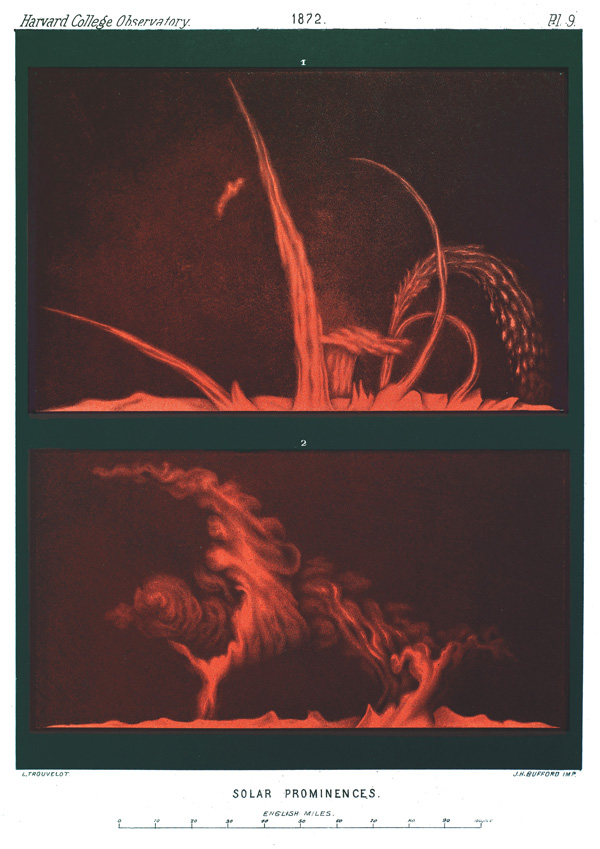
Picture: Courtesy of the Wolbach Library, Harvard – Étienne Trouvelot 1872

The meandering routine

Is a bottomless volcano

Where everything must burn

Like the sandal of Empedocles

Left at the lip of a crater

Signs for the presence or absence

Preserve the longing to become tangible

Hide the En sof from us

Then an aesthetic consumerism

For a lifetime unless it falls.

Geology of the Sephira Kether

965906_10151396819922547_647188350_o

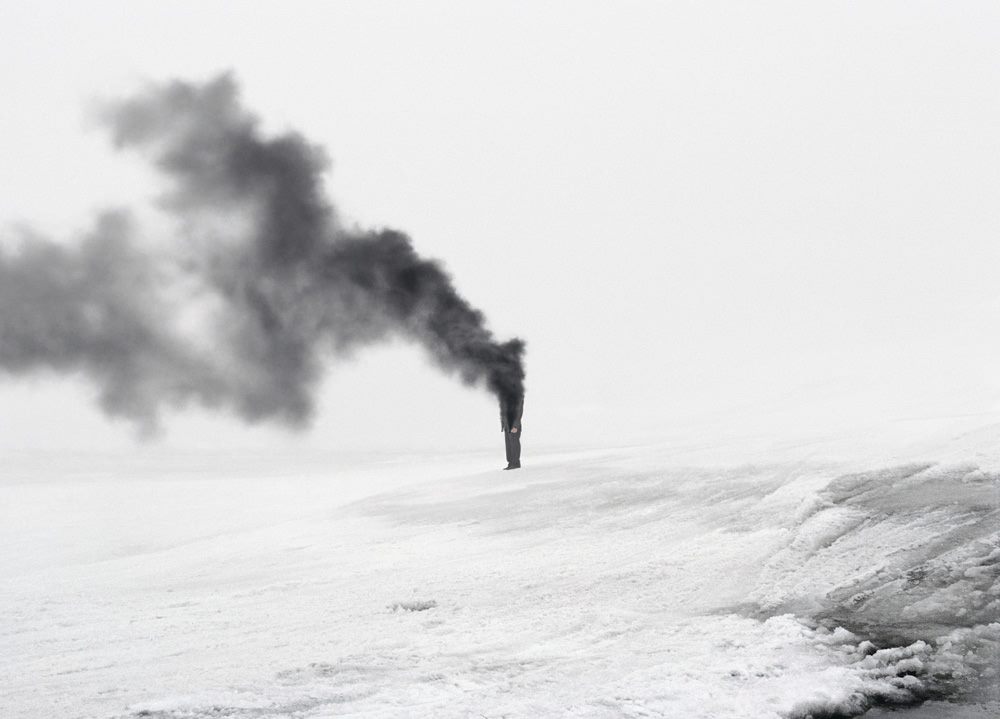
Picture : Andrea Galvani, The Intelligence of Evil #6, 2007

We do not want to disappoint

Even those who count for nothing

This is very mortifying

And this freedom you speak about

Is a fantasy but not sure…

I am not like you

I am cerebral, not visceral

I have the introspection

My roots grow there

In the tree where I hang down

The Kabbalists are wrong

My infidelity is in the Kether  (כתר) 

I forsake the flesh

 I take it off

This is not new

Three years

Every second burning

Before I had to open

Then I went in and locked the door