• About

Selbstwehr

~ Art as self defense

Author Archives: S/O

Ferdinandea

27 Friday Mar 2015

Posted by S/O in Poetry, Uncategorized

≈ Leave a comment

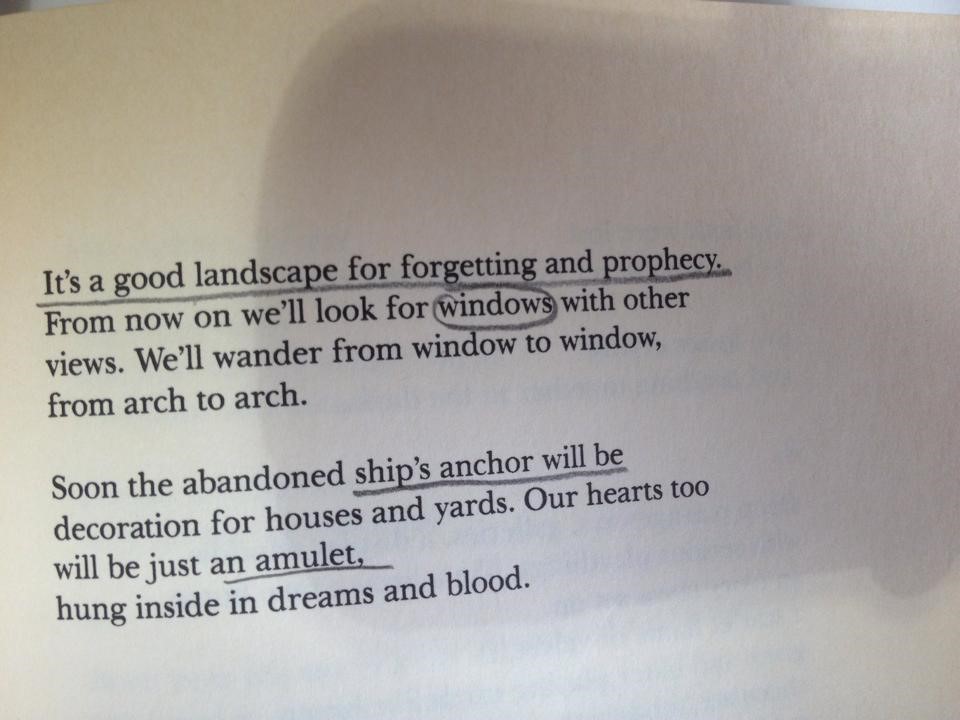
10644810_582571708508952_6474784518097245390_n

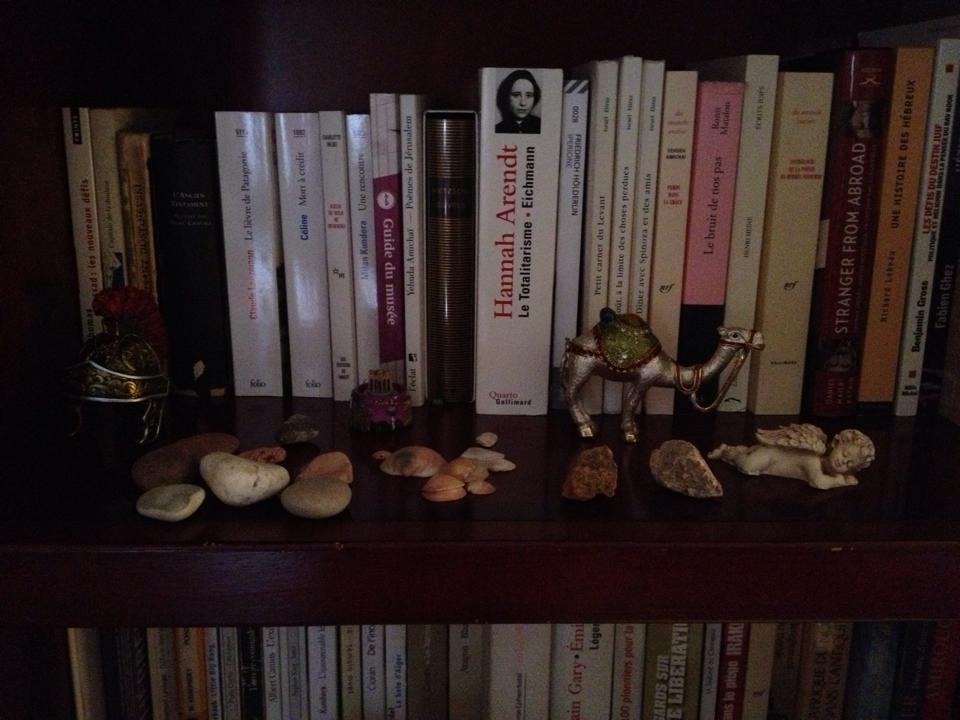
Mes graves n’émettent plus aucun son

c’est ce que je remarque quand je me réessaye au piano

et l’interminable couvre bouches brodé

avec lequel, enfant, je faisais un lorica.

Sur le dessus du piano défense réduite

des lapins processionnaires insérés dans un bois de Palerme

font route vers l’armoire qui abrite un casque centurion

parodiant les singes de la sagesse.

Il doit y avoir quelque chose

une métaphore qui m’aiderait à parler

mes graves ne sonnent pas.

Je déplace les animaux d’ivoire,

les pierres, l’espèce forte et la friable

quand je referme le piano les charnières grincent

le bois laqué claque.

Sur ma peau dépigmentée ils reprennent leur tour de garde

au millimètre près sur les marques ou la greffe ne prend pas.

Je ne peux pas parler

l’altitude a atrophié mes poumons

je n’ai pas les racines de l’edelweiss

je dois redescendre à ma place

cesser de m’inventer la force d’un membre que je ne possède pas

des images, maintenant que ma main droite seule pianote sébile.

Ma mère et mon père, à l’écart, qui se parlent sans tendresse

mon père, blanc comme un linge, laissé seul et nerveux dans le couloir

car il fait nuit ce matin et les trilles aiguës suffisent à taire

et ma famille éléphantine est en chemin dans l’ivoire.

Je suis sévère avec mon sang

mon corps tubercule tari, qui existe,

et qui cependant n’est pas essences et contingences, bruit la mort,

la phrase du sang n’a pas de point

ou alors il faut être le mot de trop, la saillie.

Ca ne se joue pas à peu de choses tout dire et s’arracher au mensonge

et c’est toute la chair qui vient avec le masque parce qu’il date.

Comment lui dire qu’il y a cette ile, Ferdinandea,

en mer de Sicile qui n’existe qu’en de courtes périodes la tête hors de l’eau

d’Empédocle le volcan à son réveil sa colère le portant,

Empédocle hissé se fait ile

l’ile demeure encore un temps ile,

puis plonge à nouveau

le feu alors rendormi rêve moins de dix mètres sous les vagues

ensuite une éternité passée au crible l’eau.

Dix, vingt, trois secondes, et le volatile reparaît

loin miniature souffle inchangé à l’abri du fouet de la langue.

Share this:

  • Share on X (Opens in new window) X
  • Share on Facebook (Opens in new window) Facebook
Like Loading...

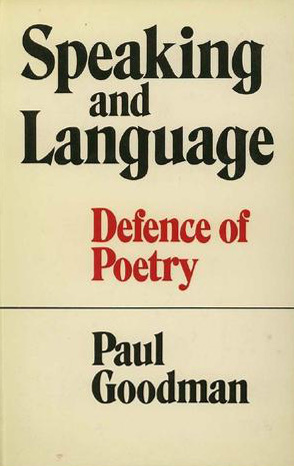
Paul Goodman on the Nine Kinds of Silence

14 Saturday Mar 2015

Posted by S/O in Uncategorized

≈ Leave a comment

speakingandlanguage_goodman

Click here to lisen to the recording from WBUR’s radio program Stylus, British literary critic and poetry scholar reads Goodman’s anatomy of silence in his own deeply resounding voice.

Goodman writes:

“Not speaking and speaking are both human ways of being in the world, and there are kinds and grades of each. There is the dumb silence of slumber or apathy; the sober silence that goes with a solemn animal face; the fertile silence of awareness, pasturing the soul, whence emerge new thoughts; the alive silence of alert perception, ready to say, “This… this…”; the musical silence that accompanies absorbed activity; the silence of listening to another speak, catching the drift and helping him be clear; the noisy silence of resentment and self-recrimination, loud and subvocal speech but sullen to say it; baffled silence; the silence of peaceful accord with other persons or communion with the cosmos.”

Share this:

  • Share on X (Opens in new window) X
  • Share on Facebook (Opens in new window) Facebook
Like Loading...

The sandal of Empedocles

14 Saturday Mar 2015

Posted by S/O in Poetry

≈ Leave a comment

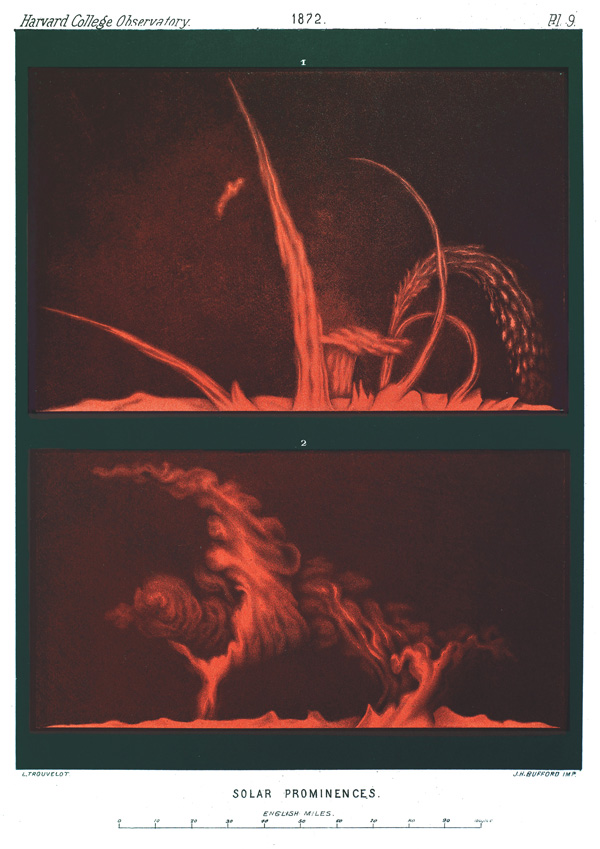
cosmigraphics127

Picture: Courtesy of the Wolbach Library, Harvard – Étienne Trouvelot 1872

The meandering routine

Is a bottomless volcano

Where everything must burn

Like the sandal of Empedocles

Left at the lip of a crater

Signs for the presence or absence

Preserve the longing to become tangible

Hide the En sof from us

Then an aesthetic consumerism

For a lifetime unless it falls.

Share this:

  • Share on X (Opens in new window) X
  • Share on Facebook (Opens in new window) Facebook
Like Loading...

Geology of the Sephira Kether

13 Friday Mar 2015

Posted by S/O in Poetry

≈ Leave a comment

965906_10151396819922547_647188350_o

Picture : Andrea Galvani, The Intelligence of Evil #6, 2007

We do not want to disappoint

Even those who count for nothing

This is very mortifying

And this freedom you speak about

Is a fantasy but not sure…

I am not like you

I am cerebral, not visceral

I have the introspection

My roots grow there

In the tree where I hang down

The Kabbalists are wrong

My infidelity is in the Kether  (כתר) 

I forsake the flesh

 I take it off

This is not new

Three years

Every second burning

Before I had to open

Then I went in and locked the door 

Share this:

  • Share on X (Opens in new window) X
  • Share on Facebook (Opens in new window) Facebook
Like Loading...

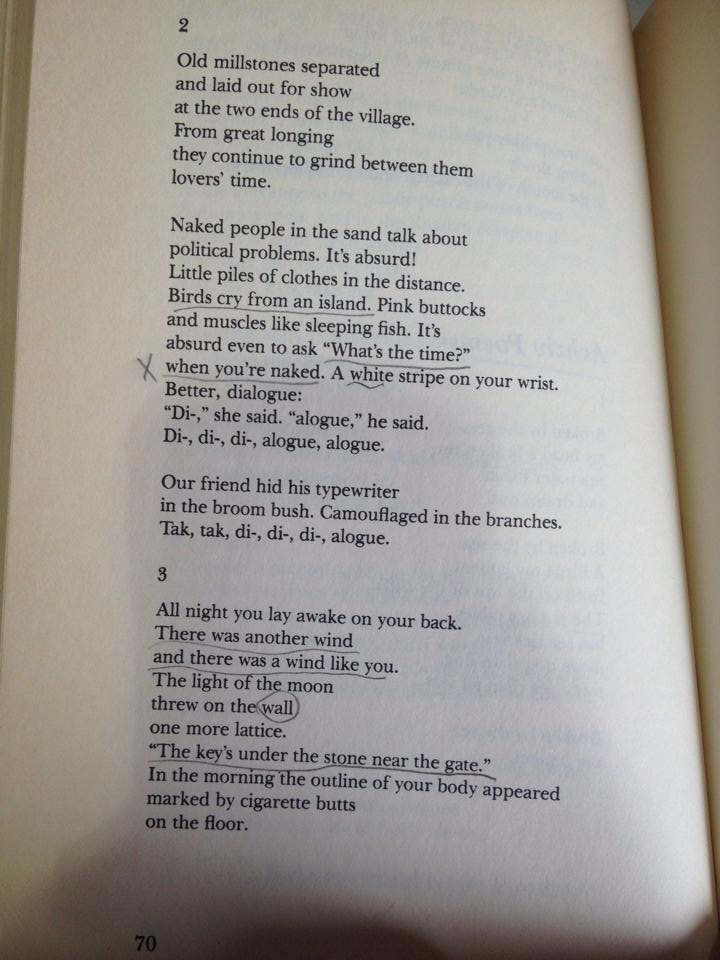
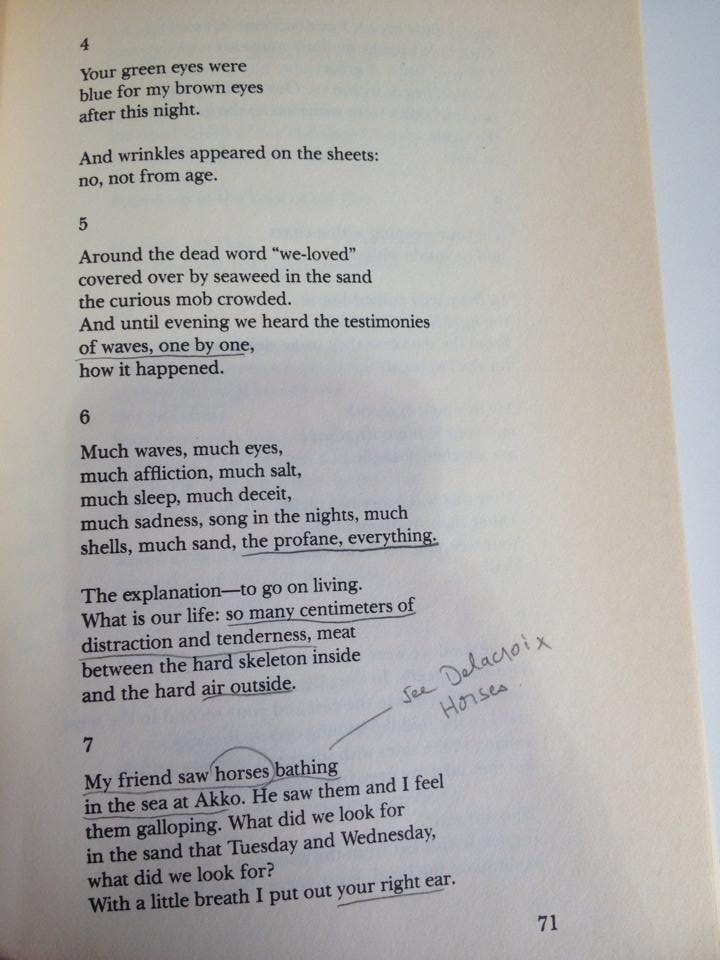
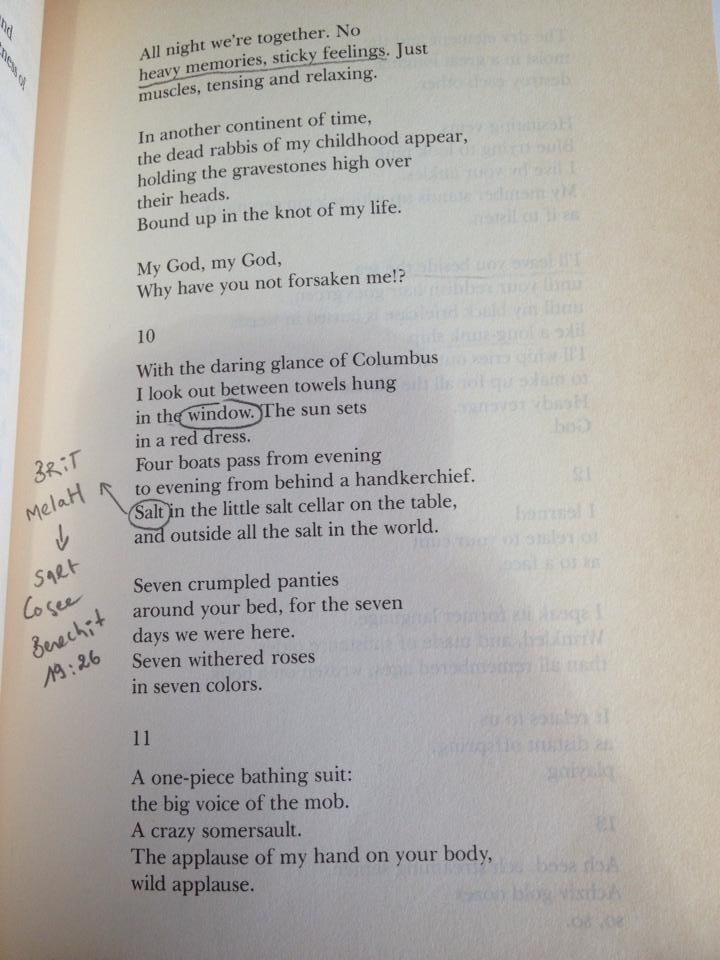
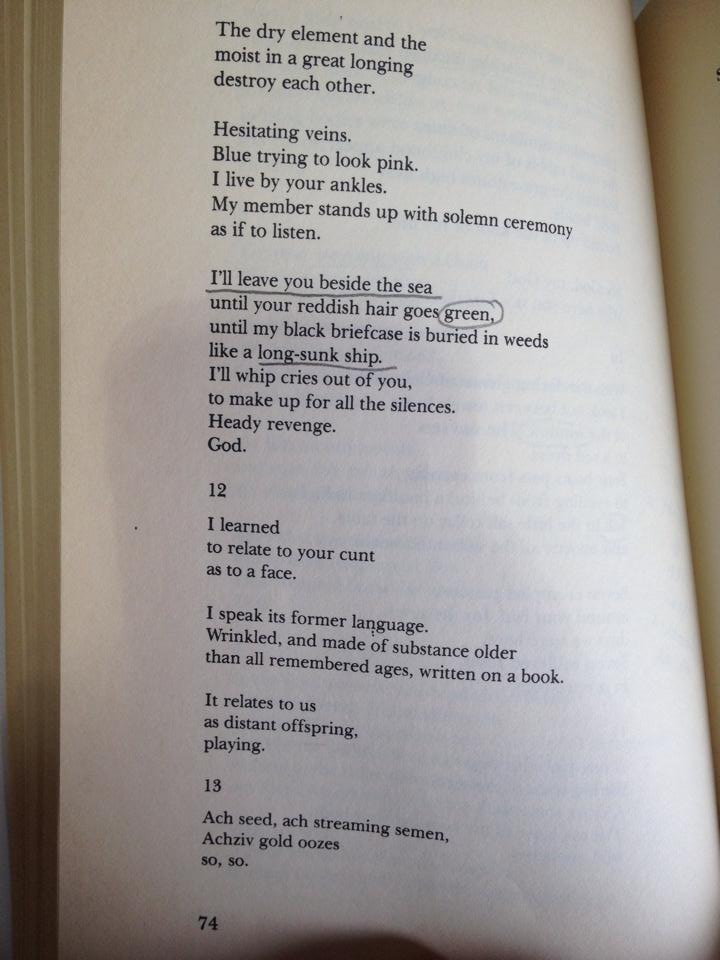
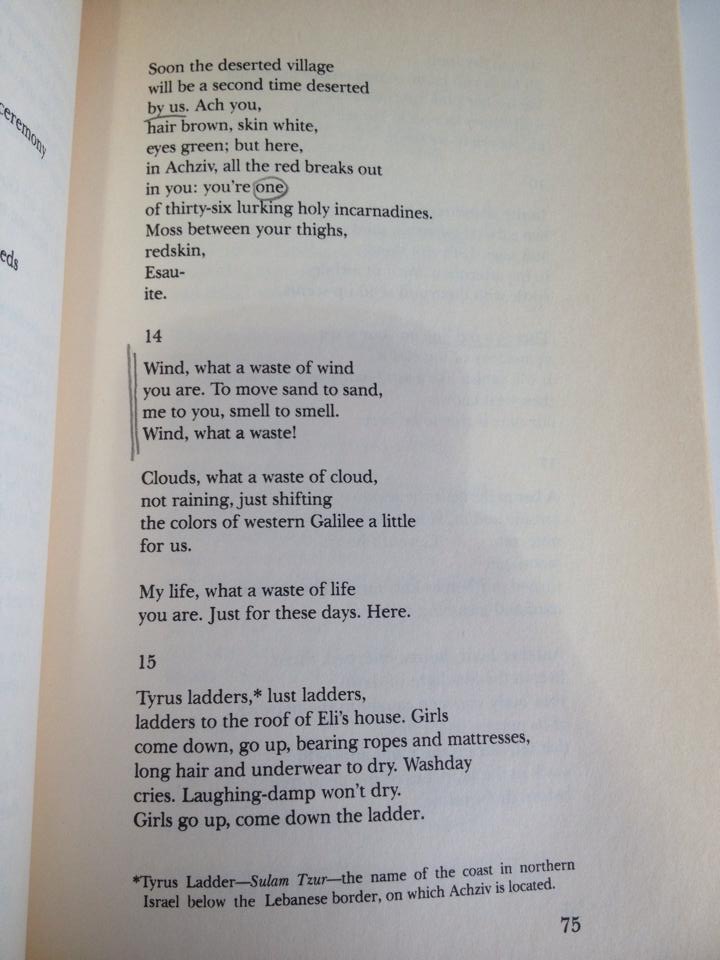
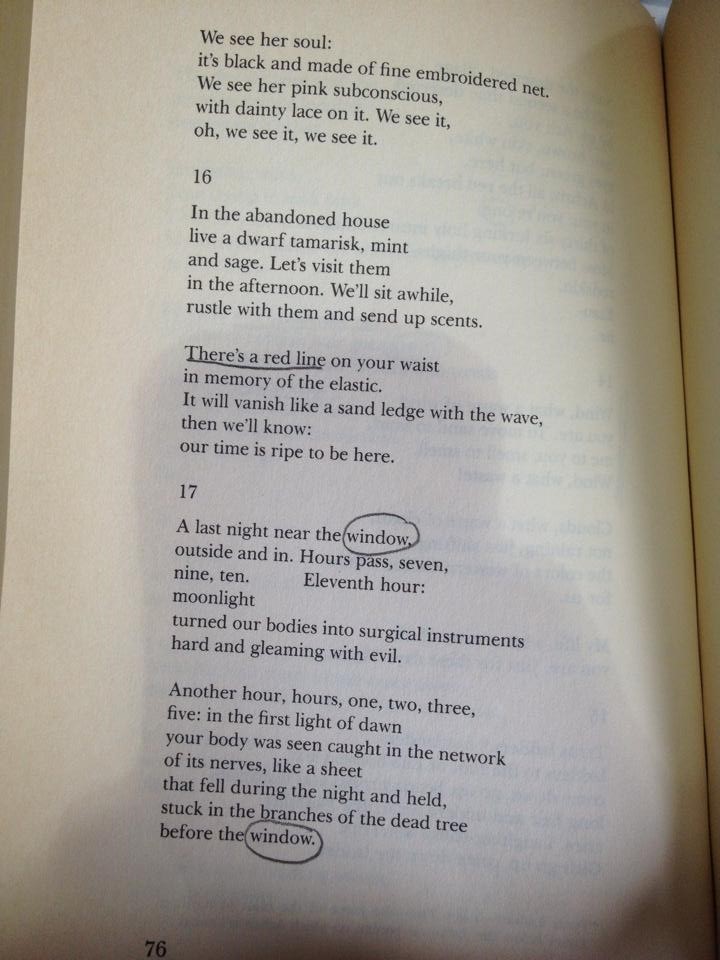
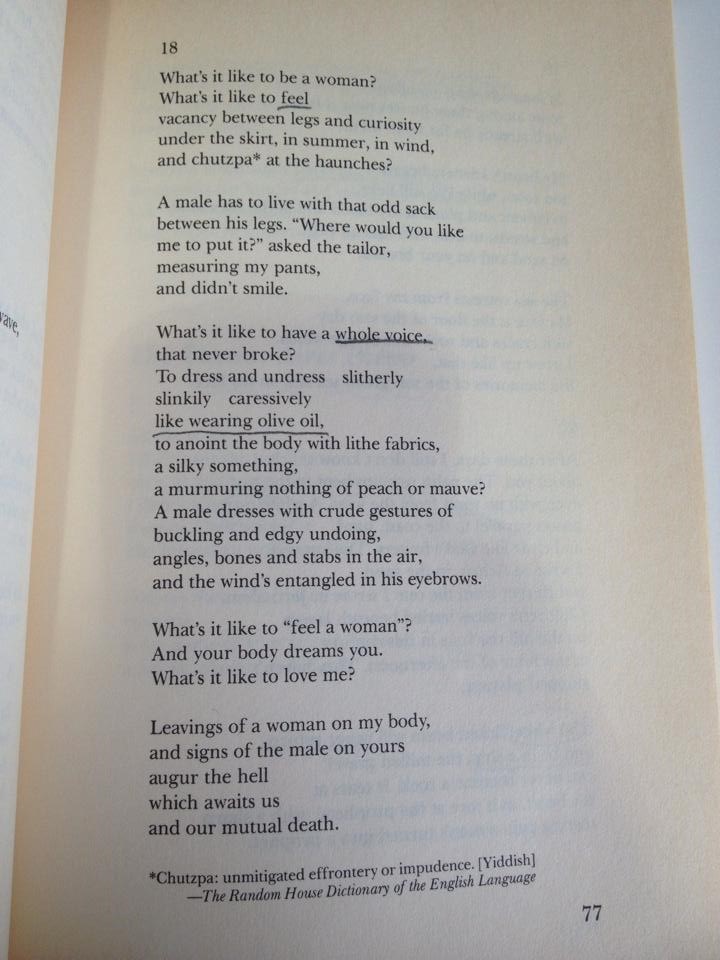
Achziv Poems-Yehuda Amichai

12 Thursday Mar 2015

Posted by S/O in Amichai Yéhuda, Uncategorized

≈ Leave a comment

Tags

Achziv, Yehuda Amichai

בשבילך

1 23 4 5 6 7 8 9 9 11

Share this:

  • Share on X (Opens in new window) X
  • Share on Facebook (Opens in new window) Facebook
Like Loading...

Where the Heart Beats: John Cage, Zen Buddhism, and the Inner Life of Artists

12 Thursday Mar 2015

Posted by S/O in Uncategorized

≈ Leave a comment

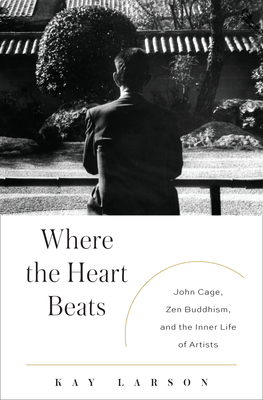
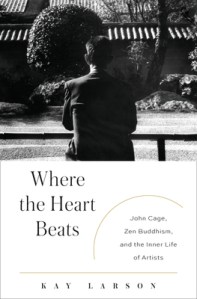
wheretheheartbeats

On love, liberty, and the pursuit of silence.

“Good music can act as a guide to good living,”John Cage (1912–1992) once said. But what, exactly, is good music, or good living, or, for that matter, goodness itself?

Where the Heart Beats: John Cage, Zen Buddhism, and the Inner Life of Artists (public library) is a remarkable new intellectual, creative, and spiritual biography of Cage — one of the most influential composers in modern history, whose impact reaches beyond the realm of music and into art, literature, cinema, and just about every other aesthetic and conceptual expression of curiosity about the world, yet also one of history’s most misunderstood artists — by longtime art critic and practicing Buddhist Kay Larson. Fifteen years in the making, it is without a doubt the richest, most stimulating, most absorbing book I’ve read in the past year, if not decade — remarkably researched, exquisitely written, weaving together a great many threads of cultural history into a holistic understanding of both Cage as an artist and Zen as a lens on existence.

From his early life in California, defined by his investigations into the joy of sound, to his pivotal introduction to Zen Buddhism in Japanese Zen scholar D. T. Suzuki’s Columbia University class, to his blossoming into a force of the mid-century avant-garde, Larson traces Cage’s own journey as an artist and a soul, as well as his intermeshing with the journeys of other celebrated artists, includingMarcel Duchamp, Jasper Johns, Yoko Ono, Robert Rauschenberg, Jackson Pollock, and, most importantly, Merce Cunningham.

The book itself has a beautiful compositional structure, conceived as a conversation with Cage and modeled after Cage’s imagined conversations with Erik Satie, one of his mentors, long after Satie’s death. Interspersed in Larson’s immersive narrative are italicized excerpts of Cage’s own writing, in his own voice.

Where to begin? Perhaps at the core — the core of what Cage has come to be known for, that expansive negative space, isn’t nihilistic, isn’t an absence, but, rather, it’s life-affirming, a presence. Cage himself reflects:

Our intention is to affirm this life, not to bring order out of chaos, nor to suggest improvements in creation, but simply to wake up to the very life we’re living, which is so excellent once one gets one’s mind and desires out of its way and lets it act of its own accord.
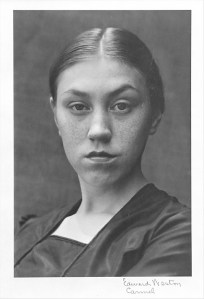
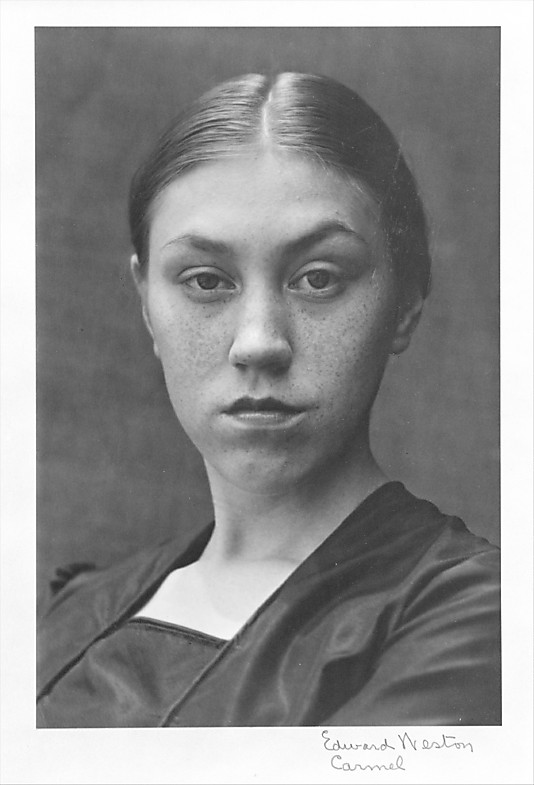
xenia

Xenia Kashevaroff

Image courtesy of the Metropolitan Museum of Art

In his early life, however, Cage was rather unable to get his “mind and desires out of the way,” leading himself into a spiral of inner turmoil. While engaged in a relationship with a man named Don Sample, he met artist Xenia Kashevaroff, the Alaskan-born daughter of a Russian priest, and quickly fell in love. The two got married and, for a while, Cage was able to appease his dissonance about his affair with Sample. But rather than gaining deeper self-knowledge, he seemed to steer further away from himself. Perhaps that’s what prompted him, sixty years later, to admonish:

I’m entirely opposed to emotions….I really am. I think of love as an opportunity to become blind and blind in a bad way….I think that seeing and hearing are extremely important; in my view they are what life is; love makes us blind to seeing and hearing.

By the 1940s, Cage’s relationship with Xenia had begun to unravel. When the two eventually divorced in 1945, Cage’s identity was thrown into turbulence. His work followed faithfully, as he set out to compose Ophelia (1946), a “two-tone poem to madness” based on Shakespeare. Larson writes:

Margaret Leng Tan asked Cage why his portrait of Ophelia is so much harsher than Shakespeare’s. She recorded his reply that ‘all madness is inherently violent, even when it is not directed towards others, for it invariably ravages the sufferer internally.’
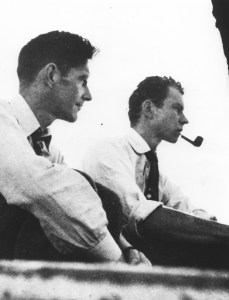
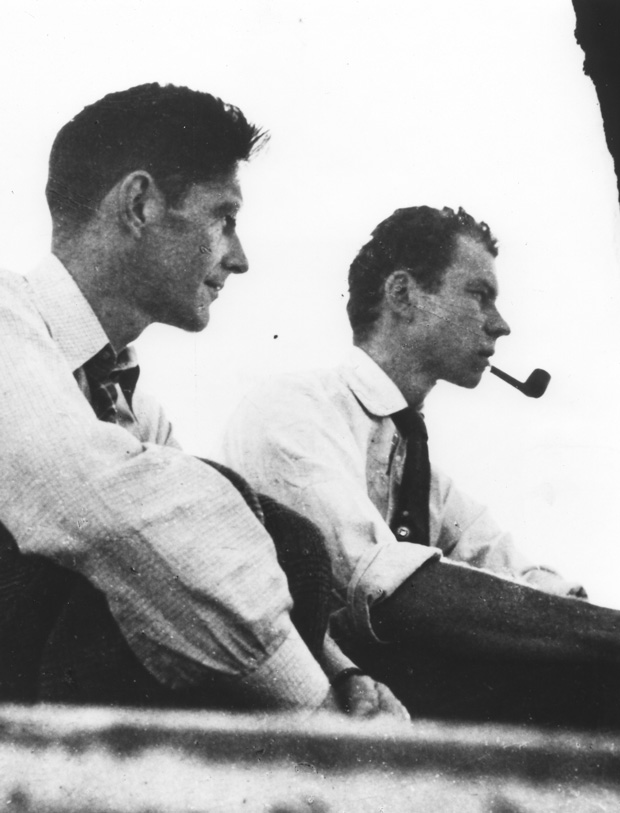
cagecunninghamblackmountain

Cage and Cunningham, circa 1948, as Cage’s confusion and despair began to lift. In this classic image, taken at Black Mountain College, the perfection of their partnering seems a force of nature. Why did Cage struggle at first?

Image courtesy of John Cage Trust / Penguin

Soon, Cage began the decades-long romance with the love of his life, dancer and choreographer Merce Cunningham, which would last until the end of Cage’s life and bequeath some of the most magical collaborations in the history of 20th-century art. Around the same time, Cage began the other essential relationship of his life — that with Zen Buddhism.

Hardly anywhere does Larson’s gift for prose and grasp of the human condition shine more beautifully than in this passage articulating the profound, uncomfortable transformation that love sets in motion:

Caught in the roar of his emotions, Cage was forced to confront a question totally new to him: What is the ‘self’ that is being expressed? The self that hurts so badly it nearly kills you? The self that isn’t seen until it aches?

When Cage and Cunningham met, perhaps they felt a tremor of gravitational shift. It might have been small at first, or the shiver might have been so insistent it rattled them. Whatever the case, something evidently stirred between the two men before they came to New York. But maybe nothing was spoken.

So it is with the places preparing to teach us. It’s only when the heart begins to beat wildly and without pattern — when it begins to realize its boundlessness — that its newly adamant pulse bangs on the walls of its cage and is bruised by its enclosure.

To feel the heart pound is only the beginning. Next is to feel the hurt — the tearing of the psyche — the prelude of entry into the place one has always feared. One fears that place because of being drawn to it, loving it, and wanting to be taught by it. Without the need to be taught, who would feel the psyche rip?…. Without the bruise, who would know where the walls are?

Tying it back to Cage himself, Larson writes:

Bruised and bloodied by throwing himself against the four walls of his enclosure, and deeply shaken by his shrieking emotions, Cage stopped pacing his confinement and realized that his container had no roof. Looking up, he could see the sky. Fascinated, he set out to explore this new dimension.

What he found was a language of silence and immanence.

This Cageian inquisitiveness was indeed fundamental to both this personal life and his approach to music — an ethos reminiscent of Rilke’s counsel to live the questions. Cage:

What can be analyzed in my work, or criticized, are the questions.

Further:

My composition arises out of asking questions. I am reminded of a story early on about a class with Schoenberg. He had us go to the blackboard to solve a particular problem in counterpoint (though it was a class in harmony). He said, ‘When you have a solution, turn around and let me see it.’ I did that. He then said: ‘Now another solution, please.’ I gave another and another until finally, having made seven or eight, I reflected a moment and then said with some certainty: ‘There aren’t any more solutions.’ He said: ‘OK. What is the principle underlying all of these solutions?’ I couldn’t answer his question; but I had always worshipped the man, and at that point I did even more. He ascended, so to speak. I spent the rest of my life, until recently, hearing him ask that question over and over. And then it occurred to me through the direction that my work has taken, which is renunciation of choices and the substitution of asking questions, that the principle underlying all of the solutions that I had given him was the question that he had asked, because they certainly didn’t come from any other point. He would have accepted the answer, I think. The answers have the questions in common. Therefore the question underlies the answers.

This profound pursuit of questions, coupled with disinterest in criticism, came to define Cage’s aesthetic. Larson writes:

One of the relentless consequences of the choices modernists made was uproar: the convulsions of fear and loathing that arose whenever a new aesthetic proposition appeared on the horizon. Cage’s own life — hardly immune from controversy even now — offers an object lesson. He learned very early to ignore criticism, since he knew perfectly well his work was not ridiculous. Criticism was of no interest. Nor was praise, which seemed to require that he repeat himself. ‘At every point society acts to keep you from doing what you have to do,’ he said in 1973. From the outset, he set off to find his own answers, and he looked to experimentalists for precedents.

One remarkable aspect of Cage’s music, derived from his close study of Indian traditions, was the notion of “disinterestedness” — which is not to be confused with “indifference.” Larson distinguishes:

From the standpoint of spiritual practice, the two words have nothing in common. Indifference borders on nihilism. It has a quality of ‘not caring.’ It is ‘apathetic.’ It expresses corrosive cynicism. Ultimately, it is poisonous, both to the practitioner and to the culture as a whole.

Disinterestedness, on the contrary, ‘is unbiased by personal interest or advantage; not influenced by selfish motives,’ according to the Random House Dictionary (1971). Disinterestedness is the natural outcome of meditation on the self and recognition of its lack of substance — then what can trouble you? freeing one’s mind from the grip of the self leads to spiritual ease — being at home in your own skin, free of self-attachment, cured of likes and dislikes, afloat in rasa. It’s how you open your ears to the music of the world.

Cage defined disinterestedness and equated it with ‘love’ in 1948:

‘If one makes music, as the Orient would say, disinterestedly, that is, without concern for money or fame but simply for the love of making it, it is an integrating activity and one will find moments in his life that an complete and fulfilled.’

(This sentiment regarding purpose and doing what you love would come to be articulated by many other creators over the decades to come.)

Echoing something Jackson Pollock’s dad once wrote to his son in one of history’s finest letters, Cage advises:

Look at everything. Don’t close your eyes to the world around you. Look and become curious and interested in what there is to see.

For Cage, this was tied to bridging the dangerous divide between the conscious and unconscious mind:

There are two principal parts of each personality: the conscious mind and the unconscious, and these are split and dispersed, in most of us, in countless ways and directions. The function of music, like that of any other healthy occupation, is to help to bring those separate parts back together again. Music does this by providing a moment when, awareness of time and space being lost, the multiplicity of elements which make up an individual become integrated and he is one.

By the 1950s, however, Cage had started to drift away from the Indian spiritual traditions as he became more deeply immersed in the work of D. T. Suzuki and, in particular, his Essays in Zen Buddhism. Larson writes:

Cage’s mind is breaking its shell. It’s not that he has walked away from the Indians altogether, Cage rarely abandoned anyone or anything that affected him deeply. Rather, a new thought (or a series of thoughts) is in the process of emerging. Cage has set out to solve the problems caused by love — his love for Merce, his love for music, and a love that perhaps he can’t name, that arises as a mysterious upheaval of the heart, a spiritual fire that is causing an urgent search for solutions.

Suzuki, in fact, taught Cage something essential about breaking the bounds of Western culture’s most destructive paradigm — its toxic ultra-individualism and attachment to ego:

Suffering builds character and impels you to penetrate life’s secrets. It’s the path of great artists, great religious leaders, great social reformers. The problem is not suffering per se, but rather our identification with our own ego: our divided, dualistic, cramped view of things. ‘We are too ego-centered,’ Suzuki tells Cage.’ The ego-shell in which we live is the hardest thing to outgrow. We seem to carry it all the time from childhood up to the time we finally pass away.’

This notion of renouncing the ego was comfortably aligned with Cage’s own dismissal of the emotions, so he embraced it:

[Q:] Since your ego and your likes and dislikes have been taken out of your compositions, do you still view them as your compositions, in the sense that you created them?

[Cage:] Emotions, like all tastes and memory, are too closely linked to the self, to the ego. The emotions show that we are touched within ourselves, and tastes evidence our way of being touched on the outside. We have made the ego into a wall and the wall doesn’t even have a door through which the interior and exterior could communicate! Suzuki taught me to destroy that wall. What is important is to insert the individual into the current, the flux of everything that happens. And to do that, the wall has to be demolished; tastes, memory, and emotions have to be weakened; all the ramparts have to be razed. You can feel an emotion; just don’t think that it’s so important….Take it in a way that you can then let it drop! Don’t belabor it! It’s just like the chicken I ordered in the restaurant: it concerns me, but it’s not important….And if we keep emotions and reinforce them, they can produce a critical situation in the world. Precisely that situation in which all of society is now entrapped!

To liberate himself from the burdens of ego, Cage turned to his now-legendary chance operations — specifically, using the ancient Chinese I Ching (Book of Changes) as a key decision-making tool in his compositions. It helped him, as Larson puts, “ask questions of the most fundamental sort.”

Instead of representing my control, they represent questions I’ve asked and the answers that have been given by means of chance operations. I’ve merely changed my responsibility from making choices to asking questions. It’s not easy to ask questions.

Further:

I became free by means of the I Ching from the notion of 2 (relationship). Or you could say I saw that all things arerelated. We don’t have to bring about relationships.

Larson:

Chance operations offered Cage a chance to change his own mind without intellectualizing but, rather, by immersing himself in experiences without judgment and letting them teach him. Indeed, chance and change went hand-in-hand for him:

People frequently ask me if I’m faithful to the answers, or if I change them because I want to. I don’t change them because I want to. When I find myself at that point, in the position of someone who would change something — at that point I don’t change it, I change myself. It’s for that reason that I have said that instead of self-expression, I’m involved in self-alteration.

Cage brought this ethos to his music. Towards the end of 1950, he composed the third movement of Concerto for Prepared Piano and Orchestra by asking questions, tossing coins, and turing to the I Ching for answers. He built a chart of 32 moves that would generate sounds (or silences) as the I Ching told him which number to pick. The remaining 32 of the book’s 64 hexagrams were to produce pauses of various durations. Larson sums up the teaching embedded in Cage’s experience with the I Ching:

It was a moral and spiritual teaching: Use your head. Set up your structure as carefully as you can, then surrender to the experience. Accept all of it willingly and gratefully. Be present for whatever comes. Open the heart to chance and change.

Cage himself put it thusly:

I do accept, I have always accepted everything the I Chinghas revealed to me….

I never thought of not accepting it! That is precisely the first thing the I Ching teaches us: acceptance. It essentially advances this lesson: if we want to use chance operations, then we must accept the results. We have no right to use it if we are determined to criticize the results and to seek a better answer. In fact, the I Ching promises a completely sad lot to anyone who insists on getting a good answer. If I am unhappy after a chance operation, if the result does not satisfy me, by accepting it I at least have the chance to modify myself, to change myself. But if I insist on changing the I Ching, then it changes rather than I, and I have gained nothing, accomplished nothing!

This relinquishing of the self in the hands of pure awareness is something Cage also found in another of his great spiritual heroes, Henry David Thoreau:

Thoreau got up each morning and walked to the woods as though he had never been where he was going to, so that whatever was there came to him like liquid into an empty glass. Many people taking such a walk would have their heads so full of other ideas that it would be a long time before they were capable of hearing or seeing. Most people are blinded by themselves.

But, for Cage, it wasn’t enough to remove that self-blinding from his spiritual life — he had to remove it from his creative life as well, from his music:

The value judgment when it is made doesn’t exist outside the mind but exists within the mind that makes it. When it says this is good and that is not good, it’s a decision to eliminate from experience certain things. Suzuki said Zen wants us to diminish that kind of activity of the ego and to increase the activity that accepts the rest of creation. And rather than taking the path that is prescribed in the formal practice of Zen Buddhism itself, namely, sitting cross-legged and breathing and such things, I decided that my proper discipline was the one to which I was already committed, namely, the making of music. And that I would do it with a means that was as strict as sitting cross-legged, namely, the use of chance operations, and the shifting of my responsibility from the making of choices to that of asking questions.

This ethos also shaped Cage’s understanding of the arts in general, as in this fine addition to history’s greatest meditations on art:

I think the history of art is simply a history of getting rid of the ugly by entering into it, and using it. After all, the notion of something outside of us being ugly is not outside of us but inside of us. And that’s why I keep reiterating that we’re working with our minds. What we’re trying to do is to get them open so that we don’t see things as being ugly, or beautiful, but as we see them just as they are.

But the practice of pure presence was very much a discipline for Cage:

True discipline is not learned in order to give it up, but rather in order to give oneself up. Now, most people never even learn what discipline is…. It means give up the things closest to you. It means give yourself up, everything, and do what it is you are going to do. At that point, what have you given up? Your likes, your dislikes, etc.

The notion of discipline stands at the odd intersection of structure and nothingness, which permeated much of Cage’s thinking. In November 1951, he gave his famous “Lecture on Nothing,” a follow-up to his “Lecture on Something,” which articulates the osmosis between “something” and “nothing”:

We really do need structure, so we can see we are nowhere.

The lecture concludes:

Everybody has a song which is no song at all: it is a process of singing, and when you sing, you are where you are. All I know about method is that when I am not working I sometimes think I know something, but when I am working, it is quite clear that I know nothing.

Perhaps it was this fascination with method and nothingness that led Cage to his obsession with silence, most famously manifest in his 1952 composition 4’33”, and led him to remark:

Silence is not acoustic. It is a change of mind, a turning around.

Implicit to this is, once again, the notion of total surrender to what is. Cage:

There is no rest of life. Life is one. Without beginning, without middle, without ending. The concept: beginning middle and meaning comes from a sense of self which separates itself from what it considers to be the rest of life. But this attitude is untenable unless one insists on stopping life and bringing it to an end. That thought is in itself an attempt to stop life, for life goes on, indifferent to the deaths that are part of its no beginning, no middle, no meaning. How much better to simply get behind and push!

At the same time, Cage observed the dynamic rather than static quality of life itself — the fundamental role of change, once again:

You say: the real, the world as it is. But it is not, it becomes! It moves, it changes! It doesn’t wait for us to change…. It is more mobile than you can imagine. You are getting closer to this reality when you say it ‘presents itself’; that means that it is not there, existing as an object.

The world, the real is not an object. It is a process.

Embedded in this process-ness of life is Cage’s heartening relationship with boredom:

In Zen they say: If something is boring after two minutes, try it for four. If still boring, try it for eight, sixteen, thirty-two, and so on. Eventually one discovers that it’s not boring at all but very interesting.

In the end, however, Cage’s life — and death — presents us with the grandest challenge to fully embodying his philosophy. In discussing a 2010 exhibition honoring Cage, and the language of its brochure, Larson laments:

The only difficulty with ‘ephemeral and transitory poetics’ is their transitoriness. Exhibitions of Cage’s work seem to be lacking a central core, a cohesion. That unifying voice, of course, was supplied by Cage himself, and he has passed on. We celebrate change and yet we also feel its sting. Zen teachers say, though, just look around you. Where has he gone? He’s still speaking to us.
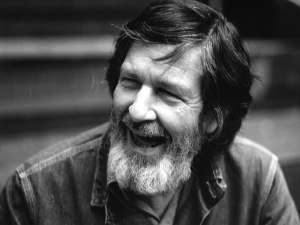
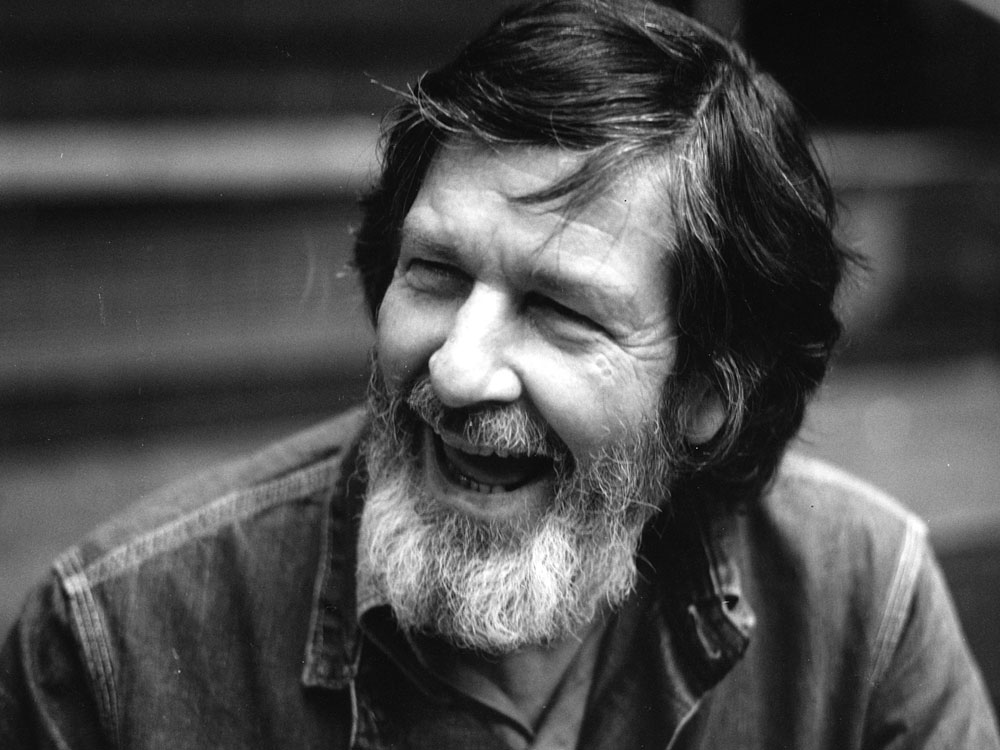
johncage

Cage has become ‘the man of the great smile, the outgoing laugh,’ his friend Peter Yates remembered. ‘Around him everyone laughs.

Larson concludes with a beautiful metaphor for both Zen Buddhism and Cage’s legacy, reflecting on artist Bruce Nauman’s show Mapping the Studio I (Fat Chance John Cage), which was spurred by Nauman’s discovery that he had mice in his studio:

In the studio, things happen by chance. A mouse runs by. A moth flitters through space. These ‘chance events’ are random and filled with non-intention — the buzz of small creatures, caught on film, in the midst of their busy eventful lives. As far as a mouse is concerned, its life is the center of the universe. By watching through the neutral eye of the camera, we are able to see what we might not glimpse otherwise: that a ‘silent’ space is an invisible game of billiards played by beings, each at its own center, each responding to all other beings. The mice, dashing here and there, are playing out their expectations about the cat. Life fills the gaps.

There are absolutely no metaphors, just observations.

[ … ]

The artist maps reality. That’s the cat-and-mouse game between the artist and the world. And it’s not just the artist who plays it. Each of us is in a cat-and-mouse game with our perceptual life. Do we really see ourselves? Or do we see only what obtrudes in daylight? Do we crash through our nightlife, scattering the subtle things that abide there? Or do we simply watch without judgment, in the expectation of learning something?
Share this:

  • Share on X (Opens in new window) X
  • Share on Facebook (Opens in new window) Facebook
Like Loading...

A Lesson in Listening from John Cage

12 Thursday Mar 2015

Posted by S/O in Uncategorized

≈ 1 Comment

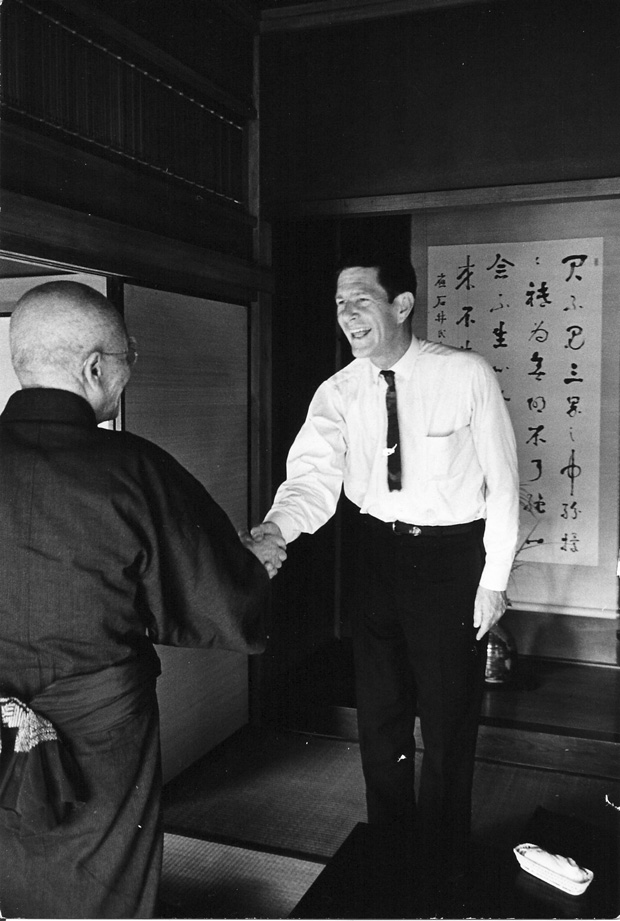
suzuki

In 1962, in Japan for the first time, Cage visits his Zen Buddhist master, D.T. Suzuki, who had shown him the heart of silence.

Image courtesy of John Cage Trust

A simple and beautiful reminder that we only hear what we listen to.

“Silence is not acoustic. It is a change of mind, a turning around,” the legendary avant-garde composer, artist, and Zen Buddhist scholarJohn Cage once remarked. But even though life began with a Big Bang that was actually silent, our civilization has evolved away from silence, rendering true listening an art reserved for the eccentric few. Still: “How lovely this world is, really: one simply has to look,” Joyce Carol Oateswrote in her diary. Or listen.

In “At the Microphone,” one of the shortest and most wonderful essays in the altogether fantastic collection What Would Lynne Tillman Do? (public library) — which also gave us the celebrated author on what to say when people ask you why you write or make art — Tillman describes a 1975 conference called “Schizo-Culture” held at Columbia University for an audience of 300 or so grad students, where a roster of “magnetic and illustrious” speakers discussed such subjects as the structure of the unconscious. Among them was John Cage — perhaps humanity’s greatest champion of the beauty and transcendence of silence as medium of art and life. Tillman captures the essence of his character and credo in a short fable-like anecdote with exquisite, subject-appropriate economy of words:

All day, men — no women — took the microphone and spoke. There was always a buzz in the audience, whispers, an audible hum of excitement. Then it was time for John Cage. He walked onto the stage and began to speak, without the microphone. He stood at the center of the small stage and addressed the crowd. He talked, without amplification, and soon people in the audience shouted, “We can’t hear you, use the mic. We can’t hear you.” John Cage said, “You can, if you listen.” Everyone settled down, there was no more buzz, hum or rustling, there was silence, and John Cage spoke again, without the microphone, and everyone listened and heard perfectly.

What Would Lynne Tillman Do?, which goes on to explore everything from Kafka to Gertrude Stein to the poetics of downtown, is a dimensional and pause-giving read in its entirety. Complement this particular meditation with Kay Larsen’s breathtaking Where the Heart Beats: John Cage, Zen Buddhism, and the Inner Life of Artists.

Share this:

  • Share on X (Opens in new window) X
  • Share on Facebook (Opens in new window) Facebook
Like Loading...

How to Listen Between the Lines

11 Wednesday Mar 2015

Posted by S/O in Uncategorized

≈ Leave a comment

steadman_alice14

Anna Deavere Smith on the Art of Listening in a Culture of Speaking

 “Some people use language as a mask. And some want to create designed language that appears to reveal them but does not.”

In his exquisite taxonomy of the nine kinds of silence, Paul Goodman included “the silence of listening to another speak, catching the drift and helping him be clear.” And yet so often we think of listening as merely an idle pause amid the monologue of makingourselves clear. Hardly anyone has done more to advance the art of listening in a culture of speaking more than artist, actor, playwright, educator, and enchantress of words Anna Deavere Smith, founder and director of Harvard’s Institute on the Arts and Civic Dialogue, and recipient of the prestigious MacArthur “genius” fellowship and the National Humanities Medal.

Half a century after John Cage demonstrated that we only hear what we listen for, Smith set out to explore her intuition that in order to develop a voice, one has to “develop an ear”; that words can be as much “the most important doorway into the soul of a person” as “the doorway into the soul of a culture.” She spent twenty-five years traveling and interviewing, at first, anyone who would talk to her — from the YMCA lifeguard to the lady at the clothing store register to a convicted murderer in a women’s prison — and, eventually, public figures like Christopher Hitchens and Studs Terkel, all the way up to then-President Bill Clinton. Smith would later use these interviews to “perform” the person in her acclaimed one-woman plays. The singular, immeasurably rewarding record of Smith’s journey lives on in Talk to Me: Listening Between the Lines (public library), subsequently released in paperback under the title Talk to Me: Travels in Media and Politics — an unusual meditation on public life via private identity, an investigation of truth-telling and lying, and an uncommonly insightful manifesto for the art of listening and the power of words in the architecture of character.

Smith writes:

The creation of language is the creation of a fiction. The minute we speak we are in that fiction. It’s a fiction designed, we hope, to reveal a truth. There is no “pure” language. The only “pure language” is the initial sounds of a baby. All of us lose that purity, and as we get more “of” the world, we even lose sometimes the capacity to keep that breath moving in our language.

In a sentiment that calls to mind Adrienne Rich’s crystalline conception of the liar as someone who loses sight of “the possibilities that exist between two people, or among a group of people,” Smith adds:

Our ability to create reality, by creating fictions with language, should not be abused. The abuse is called lying. Perhaps we understand the precariousness of our situation. We as linguistic animals. At the very least language is currency as we create “reality.” To abuse language, to lie, is to fray reality, to tatter it. Those in public life who create our values are especially asked not to “lie.” Yet most of us say, at least, that we believe we are often being lied to.

As Smith undertook this experiment in “what happens when you dare to move out of the margins and into another place,” a pivotal point in her journey of listening came when she met a linguist at a random party. She recounts trying to articulate to her the intuitive seed for the project — this effort to listen between the lines in the hope of hearing the realness people conceal beneath the comfort of familiar words:

We can learn a lot about a person in the very moment that language fails them. In the very moment that they have to be more creative than they would have imagined in order to communicate. It’s the very moment that they have to dig deeper than the surface to find words, and at the same time, it’s a moment when they want to communicate very badly. They’re digging deep and projecting out at the same time.

[…]

The idea is that the psychology of people is going to live right inside those moments when their grammar falls apart and, like being in a shipwreck, they are on their own to make it all work out.

Smith was looking for a way to get at precisely that unrehearsed language, so the linguist suggested three questions to crack the shell of verbal habit: “Have you ever come close to death?”; “Do you know the circumstances of your birth?”; and“Have you ever been accused of something that you did not do?” Armed with a simple Panasonic tape recorder and dogged dedication to what was at first merely an intuitive insight, Smith made these questions the springboard for her interviews. She eventually stopped asking them, but the questions, she notes, taught her how to listen. She recalls:

After I asked the questions, I would listen like I had never listened before for people to begin to sing to me. That singing was the moment when they were really talking.

In the early 1980s, she began taking that recorder — which eventually evolved as the technology did — all over America, culminating with Washington, D.C., and the President’s office, where she listened “for the talk, the talk of the big talkers, to turn, if only for a moment, into a song that they and only they can sing.”

Reflecting on the countless messages with which contemporary culture bombards us, from political propaganda to mundanities like airline safety instructions, Smith asks:

Who’s listening anymore? What does it take to get people to listen? When do people feel they need to listen? When do they feel they have to listen? … We get so used to hearing things that they have no meaning… We live with the expectation that words mean very little, because we have seen it all before, heard it all before. And that is why I find myself going on a quest down memory lane for a time when words meant something in my family, in my church, in my city, in my world.

She turns a particularly scrupulous eye to the professional purveyors of such meaningless din:

The press gather the information. But they do a lot more than gather and disseminate information. At their best moments, they use their wit to make us question power in a way that we may not have. And they must get our attention in the first place. They have to creep into the brains of the readers, or listeners, and alter the flow of our ideas.

[…]

It’s like a constant drip that affects the way we think, and the way we see the world. They can change us without our full awareness. It happens slowly, bit by bit, that we take on attitudes that are perpetuated in the media. How can we as a public regain control of words?

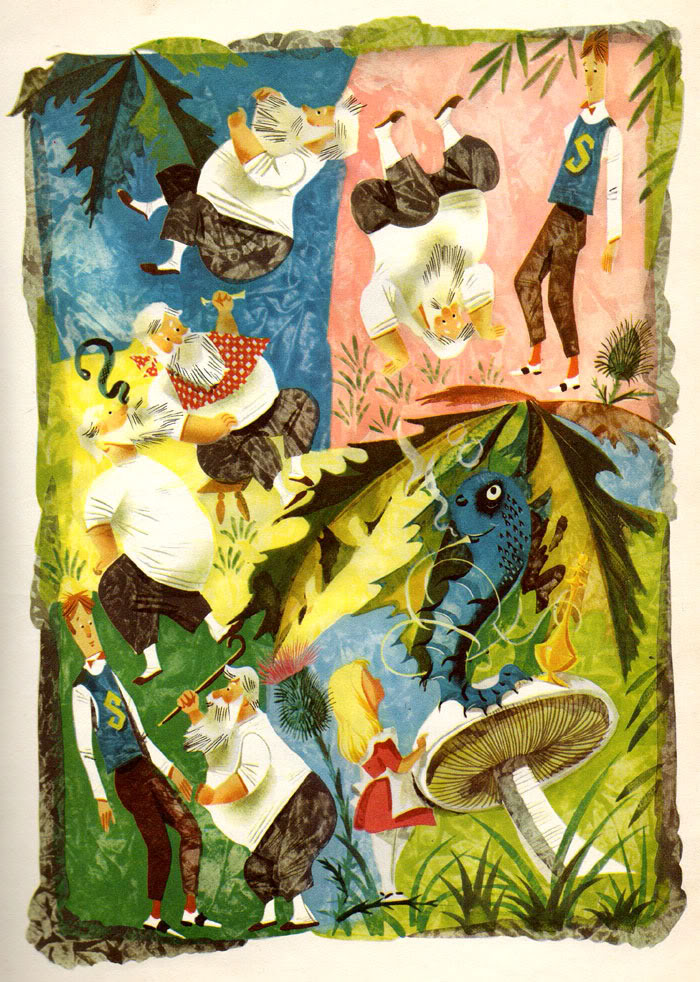
weisgardalice7

Illustration for ‘Alice in Wonderland’ by Leonard Weisgard. 

The effort to reclaim the realness of words — of culture, of public life, of private truth — through acting may seem, at first, like a counterintuitive, even paradoxical approach. But Smith writes:

Acting is the furthest thing from lying that I have encountered. It is the furthest thing from make-believe. It is the furthest thing from pretending. It is the most unfake thing there is. Acting is a search for the authentic. It is a search for the authentic by using the fictional as a frame, a house in which the authentic can live. For a moment. Because, yes indeed, real life inhibits the authentic.

Citing the great director Joseph Chaikin’s formulation of presence as “the gift of the actor,” a “kind of deep libidinal surrender which the performer reserves for his anonymous audience,” she adds:

Presence is that quality that makes you feel as though you’re standing right next to the actor, no matter where you’re sitting in the theater. It’s the feeling you have that the performer is right in front of you, speaking to you and only you. It’s that wonderful moment when Jessye Norman sings in a quiet, so quiet you can hear a pin drop concert hall to an audience that is attentive like no other. It’s a moment when she seems to be singing as she’s never sung, and the audience seem to be listening as they’ve never listened. It’s the moment when it’s clear that everyone is there for the same reason… These moments have a kind of authenticity, because they reach the heart. They speak to us. They speak to us not because they are natural in the sense of normal. They speak to us because they are real in their effort to be together with a very large you, the you being all men and women.

Politicians and media manipulators, Smith argues, often try to borrow these skills, but the result is mere simulacra speaking to very few. More than a decade before the golden age of social media, Smith offers a perspective of extraordinary prescience and urgent timeliness today:

That genuine moment, that “real” connection, is no small thing. It is not something that happens every day. Is it rare because it calls for a special talent? Is it a moment that can happen only when we don’t know each other, when we have so much to learn about each other that we hang on every breath together? It is hard to find those moments in our culture because we think we know so much about each other. Perhaps it is a moment that is dependent not only on the performer or the leader, but on the audience as well. Does this era of focus groups and polls, this desire to get at and quantify the mysteriousness of that “deep libidinal surrender,” make it nearly impossible to find those moments of true engagement? Does the overdetermined nature of our time, and the inherent desire to control the public, to control their thoughts, particularly how they work those thoughts into actions that are favorable to the marketplace, create an atmosphere where only the predictable can occur? Those moments of deep libidinal surrender are in fact all about that which is not predictable. And there is no anonymous audience. At least that’s what the pollsters would like, what commerce would like. They would like to make the anonymous audience fully identifiable. With no anonymous audience, there can be no deep libidinal surrender.

[…]

We’re having a hard time connecting in public.

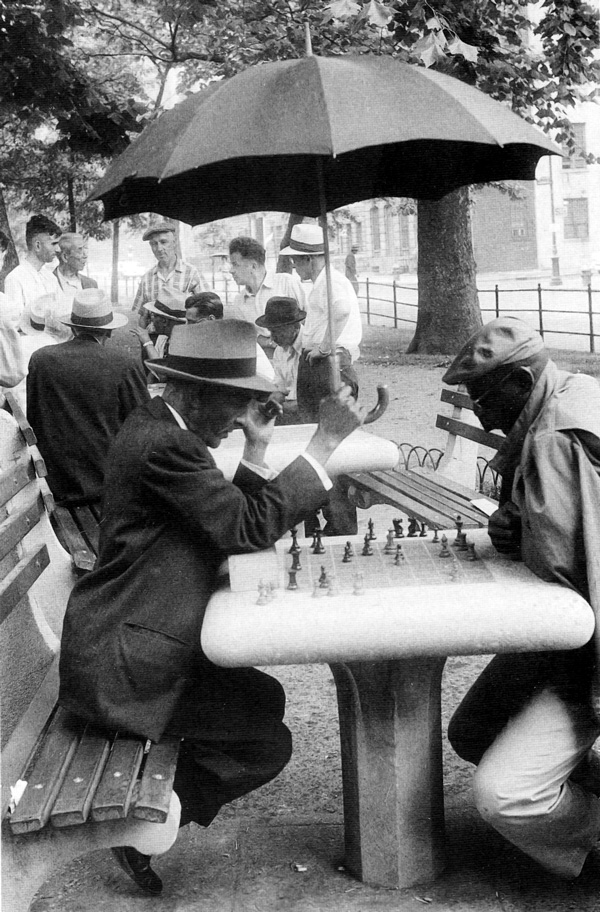
mollymalonecook_chessplayers

Photograph by Molly Malone Cook from ‘Our World’ by Mary Oliver. 

At once a lament and a call to action, Smith’s observation rings even truer today:

We are in a communications revolution. Yet, as the great Americanist Studs Terkel tells us, “We’re more and more into communications and less and less into communication.” In this time of a global economy and business mergers happening as often as sunrise and sunset, where is the human merger? Where is real human engagement?

It’s interesting to note, here, that in the decade since Smith’s contemplation, the word “engagement” itself has been co-opted by the mass media as precisely the kind of marketable metric that dehumanizes how we connect in public. In the language of online media, “engagement” measures meaningless statistics about “user” behavior — and what better way to indicate that one is not listened to than being called a “user”? — that become simulacra for the genuine moments, those moments of “deep libidinal surrender,” which Smith so aptly identifies as the true measure of connection. “Engagement,” under the tyranny of this vocabulary, is interested in the very smallest you, not Smith’s large you of our shared humanity.

If there is any hope for us, it lies in relearning to tell the truth and hear it, in reclaiming ourselves as a listening species.

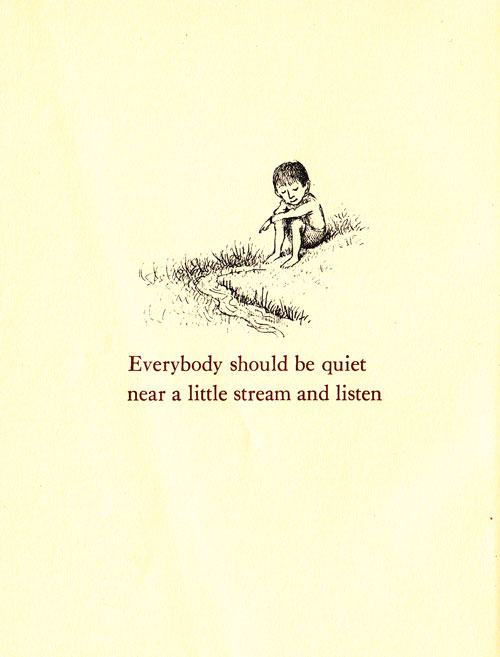
openhouseforbutterflies18

Illustration by Maurice Sendak from ‘Open House for Butterflies’ by Ruth Krauss.

Smith traces her love of words and her fascination with their power to her grandfather — a “tall, thin, and aristocratic looking” patriarch called Pop who, despite only having an eight-grade education himself, managed to send all six of his kids to college. “He and I were good friends, because he liked to talk, and I liked to listen,” Smith recalls. “He is the one who taught me the kernel of all that I understand about acting.” That kernel was contained in a single sentence her grandfather liked to repeat, which eventually became the lens for Smith’s art:

I take the words I can get and try to occupy them. Using the idea that my grandfather gave me — “If you say a word often enough it becomes you” — I borrow people for a moment, by borrowing their words. I borrow them for a moment to understand something about them, and to understand something about us. By “us,” I mean humans.

In these borrowed words, and in the act of borrowing itself — which is predicated on the act of listening — Smith found a rare gateway into the depths of the human experience:

Placing myself in other people’s words, as in placing myself in other people’s shoes, has given me the opportunity to get below the surface — to get “real.”

[…]

Some people use language as a mask. And some want to create designed language that appears to reveal them but does not. Yet from time to time we are betrayed by language, if not in the words themselves, in the rhythm with which we deliver our words. Over time, I would learn to listen for those wonderful moments when people spoke a kind of personal music, which left a rhythmic architecture of who they were. I would be much more interested in those rhythmic architectures than in the information they might or might not reveal.

[…]

I wanted to get people to talk to me, in a true way. Not true in the sense of spilling their guts. Not true in the sense of the difference between truth and lies. I wanted to hear — well — authentic speech, speech that you could dance to, speech that had the possibility of breaking through the walls of the listener, speech that could get to your heart, and beyond that to someplace else in your consciousness.

She contemplates what makes speaking from an authentic place so challenging for most of us and why we protect that place by shrouding it in all kinds of pre-learned patterns of packaged speech:

Speaking calls for risk, speaking calls for a sense of what one has to lose. Not just what one has to gain.

Talk to Me is a dimensional and immensely insightful read in its totality, perhaps even timelier today than when it was first released in 2001. Complement it with Smith on what self-esteem really means and how to stop letting others define us, then revisit John Francis on what the ragged edge of silence taught him about listening.

Share this:

  • Share on X (Opens in new window) X
  • Share on Facebook (Opens in new window) Facebook
Like Loading...

Yehuda Amichai’s obsession

03 Tuesday Mar 2015

Posted by S/O in Amichai Yéhuda

≈ Leave a comment

Tags

Yehuda Amichai

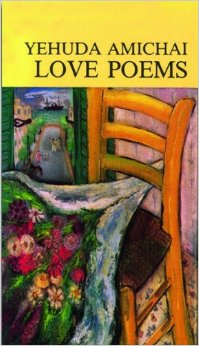
514hZf-PMuL._SY344_BO1,204,203,200_ (1)

Jean Paul Sartre: “It’s quite an undertaking to start loving somebody. You have to have energy, generosity, blindness. There is even a moment right at the start where you have to jump across an abyss: if you think about it you don’t do it.”

When I first started reading Amichai’s poetry I would structure it in any way that felt right. It was quite arbitrary really. Once I reached the half of it, I stopped and took a second look at the poem I just read and asked myself: is there an underling structure here? This is what I came up with.

Each poem in “Amichai’s love poetry” is representing a different image of the lovers; they are like two associations in one mind, as he is referred to, so is she, they are like two lightbulbs in a lamp, each one alone too dark but together lighted they are a festival of light; she is the walled public garden of the city and he the road which moves away from her. They are like two stones at the bottom of a hill, secluded and alone, they are two numbers standing alone and combining; he is like soft water in a pipe, waiting to be summoned by the turning of conceits, affirm the isolated perfection of love. Amichai has this stunning obsession of cutting everything into two.

The couplets which owe something to “Metaphysical” conceits, affirm the isolated perfection of love, yet even at their most serene the lovers are separate entities, two lightbulbs, two stones, two numbers. The poems offer an apparent affirmation of love, yet separateness and isolation are implicit in them.

The “Ahavah be emet” (true love) , the coupling of both spirit and flesh is still undiscovered and it is only for a brief moment that the bulbs achieve a festival of light, unbounded unity in each other. Love has proof in continuity and real love perhaps in eternity, yet the nature of Amichai’s conceits confirms only its uncertainty and brevity.

The poet suggested in “God has pity on kindergarten children” that only true or real lovers may be worthy of God’s grace. The notion of separateness offered by the couplets in “Pine cones” implying that the lovers have failed to achieve perfect unity, indicates their separation also from God.

Lack of completeness is hinted; on the surface the stories are idyllic expressions of love framed by staples of romantic convention, rain, sun, spring, flowers, grass, and the full moon. The woman’s body is “full of lizards, they all love sun” her eyes, breasts and things compose the sensual picture and complement the earth images providing the cycle’s setting. On the surface, peace and tranquility accompany unconditional and perfect love, yet notes of unease penetrate the harmony of body and nature, the hint of conflict about what is only an act of love, not perfect love itself:

“Your heart plays blood-catch

In your veins

Your eyes are still as warm as beds

Time has been lying in

Your thighs are two sweet yesterdays

I’ll come to you

All 150 psalms

Roar at once”

Human love cannot save the lovers from the terrible trial because it is never more than transitory and even though it may hasten the salvation of the world which is an idea Amichai expresses in later poetry, salvation will not be extended to the lovers. Attempts to fix love within a solid and protective frame usually fail.

Images of enclosure occur throughout all Amichai’s love poetry. Solid controlled images which have their place in a defined environment: the public garden is walled, the road is in a city, the water in a pipe, the numbers occur in their framework of arithmetical sums, the bulbs are part of a lamp.

Amichai’s images, rather, echo the phrase from a legal contract “together and severally” which he transposed to serve as the refrain for one of his early love poems ‘’both of us together and each alone” his walled garden, Noah’s ark, a box, a house: all suggest a safe bolt-hole in some guarded space, far away from the attempts of God and man to disturb the lovers. Isolation enclosure and secrecy are the necessary ingredients for love.

Real love in the sense of love that survives separation, that is not a breach but in Donne’s words an expansion is hardly a factory in the lyric of the “I“ experience.

“If we won’t stay together we won’t stay at all; even more so we won’t love”.

Society, social duty and identity take on the implicit guise of “them” those that break into love’s dwelling with love consequently unable to survive the social and spiritual environment in which the “ I “ is placed.

The intruding force remains unspecified: it is partly war, partly social duty, but there is more: we are led once again to the notion of “mixture” which dominates the love poetry: Eros and the world of faith cannot coexist, human love is unable to resist the onslaught of guilt.

If guilt is taken to be part of them, the intruders and destroyers of love, then they symbolizes not only the practical burdens of social duty but also spiritual obligations , God and his deputies, angels and the father, upon all of whom responsibility for moral vigilance has been placed:

“In the sand we were two headed Cerberus

With bared teeth, in the afternoon

Your one leg was in the east and the second in the west

With me in the middle, crouched on my forelegs

Suspiciously looking from side roaring terribly

To warm them off my prey”

The ephemerality of love is captured in words suggesting illusion or transience. Yet the poem presents lost of objects, trivial but real, as a contrast to these signs of transience, nipples, buckles, feathers and so on. These objects define the love more effectively than the words of passage, without necessarily bearing any relationship to each other, but together creating a context for love. Each object carries its own significance as part of love, each to be recalled as an association of it or a spur to memory.

Similarly words and phrases offer not a description but an impression of the woman, her changing and contrary faces and her evanescent nature of which a part is mirror the key to the notion of illusion.

The very nature of love is an illusion for the lovers, sing together the incomprehensible abandoning the decipherment of the real to the enjoyment of whatever they are able to possess.

Amichai’s contrasting of words and body compliments the juxtaposition of unchanging concrete objects with the woman and with love, both of whose nature constantly changing. The very ephemerality of love is due to its foundation on words, rather than the body. Spoken words shift and pass like sand, while writing is a concrete as the objects listed. If there is no love there is no writing, and without the involvement of bodies there is no love.

I think there is a clear distinction between great love poems and poems of great love.  I mean Amichai’s poems are the latter kind because love itself is their subject, albeit love which is sought, imagined, idealized or delusory, its greatness only potential or possible.

The “I “does not speak to the beloved in the sense of courtship or flattery. The female partner is described through extravagant images but they serve often to distance her, as if the hyperbole dehumanizes rather than endears her.

More often than not it is her body which is described but she remains faceless and nameless.

The overt sexuality of many of the body images indicates that she is little more than a means towards some kind of self-realization on the part of the lover.

Rarely is the woman transmitted to us as an object of deep affection, more often she is an adversary stronger that he, to be overcome not only by physical love but by the lover’s need for an even more exalted experience.

More importantly, the poetry seems to be aspiring toward a concept which can be defined as “true love” following Amichai’s own reference to “ha ohavim be emet” in God has pity on kindergarten children.

The idea of “be-emet” (Truly)  in relation to love “actual” real or perhaps great love , the nature of which he does not clarify, seems to refer to an emotional transcendence which endows the lovers with the security of a special kind of knowledge, of perception that survives the material pressures of their live:

“But perhaps he will pity those who love truly

And care for them

And shade them

Like a tree over the sleeper

On the public bench’’

They never attain the higher reality of “real love” however the love represented in the poetry can be passionate, satisfying, hopeless, disappointing, exalted or ecstatic but it does not provide unity of the souls with the unity of bodies, nor a marriage of true minds, this projected unity is alluded to in a poem in which the lover describes how “ we were such a good and loving invention” / “an airplane made from man and wife”/ “wings and everything” /etc.

Generally, however the love described in not purified or endowed with grace, nor does it assure the lovers of immortality. Whatever is meant by “ Ahavat be emet” (true love) , the lover do not achieve it and what they do possess, according to the poetry is insufficient, Amichai’s love poetry offers not an affirmation of true love only speculation as its nature and a consuming need to experience it.

Without this kind of love, the true love, the union of Amichai’s lovers is that the bodies only, any other view of love apart from the shadowy notion of real love approaches the dangerous territory of the spirit of faith.  He rejects the possible allegory.

I think reading Amichai’s love poems brought me back to my favorite movie “ Wings of desire” by Wim Wenders, I’ve always knew that this kind of true metaphysical love requires a jump:

“Now it’s serious. At last it’s becoming serious. So I’ve grown older. Was I the only one who wasn’t serious? Is it our times that are not serious? I was never lonely neither when I was alone, nor with others. But I would have liked to be alone at last. Loneliness means I’m finally whole. Now I can say it as tonight, I’m at last alone. I must put an end to coincidence. The new moon of decision. I don’t know if there’s destiny but there’s a decision. Decide! We are now the times. Not only the whole town – the whole world is taking part in our decision. We two are now more than us two. We incarnate something. We’re representing the people now. And the whole place is full of those who are dreaming the same dream. We are deciding everyone’s game. I am ready. Now it’s your turn. You hold the game in your hand. Now or never. You need me. You will need me. There’s no greater story than ours, that of man and woman. It will be a story of giants… invisible… transposable… a story of new ancestors. Look. My eyes. They are the picture of necessity, of the future of everyone in the place. Last night I dreamt of a stranger… of my man. Only with him could I be alone, open up to him, wholly open, wholly for him. Welcome him wholly into me. Surround him with the labyrinth of shared happiness. I know… it’s you. » Wings of desire- Wim Wenders.

Share this:

  • Share on X (Opens in new window) X
  • Share on Facebook (Opens in new window) Facebook
Like Loading...

Some Thoughts on Hope, Cynicism, and the Stories We Tell Ourselves

21 Saturday Feb 2015

Posted by S/O in Truth

≈ Leave a comment

32275.b

To live with sincerity in our culture of cynicism is a difficult dance — one that comes easily only to the very young and the very old. The rest of us are left to tussle with two polarizing forces ripping the psyche asunder by beckoning to it from opposite directions — critical thinking and hope.

Critical thinking without hope is cynicism. Hope without critical thinking is naïveté.

Finding fault and feeling hopeless about improving the situation produces resignation — cynicism is both resignation’s symptom and a futile self-protection mechanism against it. Blindly believing that everything will work out just fine also produces resignation, for we have no motive to apply ourselves toward making things better. But in order to survive — both as individuals and as a civilization — and especially in order to thrive, we need the right balance of critical thinking and hope.

A plant needs water in order to survive, and needs the right amount of water in order to thrive. Overwater it and it rots with excess. Underwater it and it dries up inside.

I thought about this recently in observing my unease — my seething cauldron of deep disappointment — with an opinion piece commenting on Arianna Huffington’s decision to continue publishing necessary reporting on “what’s not working — political dysfunction, corruption, wrongdoing, etc.” but to begin giving more light to stories that embody the “perseverance, creativity, and grace” of which we humans are capable. The writer criticizing Huffington’s decision asserted, with ample indignation, that “to privilege happy stories over ‘unhappy’ ones is to present a false view of the world.”

Let’s consider for a moment the notion of an un-false view of the world — the journalistic ideal of capital-T truth. Let’s, too, put aside for now Hunter S. Thompson’s rather accurate assertion that the possibility of objectivity is a myth to begin with. Since the golden age of newspapers in the early 1900s, we’ve endured a century of rampant distortion toward the other extreme — a consistent and systematic privileging of harrowing and heartbreaking “news” as the raw material of the media establishment. The complaint which a newspaper editor issued in 1923, lamenting the fact that commercial interest rather than journalistic integrity determines what is published as the “news,” could well have been issued today — if anything, the internet has only exacerbated the problem.

The twentieth century was both the golden age of mass media and a century marked by two world wars, the Great Depression, the AIDS crisis, and a litany of genocides. Viewed through that lens, it is the worst century humanity has endured — even worse than the bubonic plague of the Middle Ages, for those deaths were caused by bacteria indifferent to human ideals and immune to human morality. This view of the twentieth century, then, is frightening enough if true, but doubly frightening if untrue — and Steven Pinker has made a convincing case that it is, indeed, untrue. Then, in a grotesque embodiment of Mark Twain’s wry remark that the worst things in his life never happened to him, we have spent a century believing the worst about ourselves as a species and a civilization.

Carl Sagan saw in books “proof that humans are capable of working magic.” The magic of humanity’s most enduring books — the great works of literature and philosophy — lies in the simple fact that they are full of hope for the human spirit. News has become the sorcerous counterpoint to this magic, mongering not proof of our goodness and brilliance but evidence of our basest capabilities.

A related point of cynicism bears consideration: Coupled with the assertion that giving positive stories more voice distorts our worldview was the accusation that Huffington’s motives were purely mercantile — a ploy to prey on Facebook’s algorithms, which incentivize heartening stories over disheartening ones. Could it be, just maybe, not that people are dumb and shallow, and algorithms dumber and shallower, but that we’ve endured a century of fear-mongering from the news industrial complex and we finally have a way of knowing we’re not alone in craving an antidote? That we finally have a cultural commons onto which we can rally for an uprising?

We don’t get to decry the alleged distortion of our worldview until we’ve lived through at least a century of good news to even the playing field so ravaged by the previous century’s extreme negativity bias.

As for Huffington, while we can only ever speculate about another person’s motives — for who can peer into the psyche of another and truly see into that person’s private truth? — this I continue to believe: The assumptions people make about the motives of others always reveal a great deal more about the assumers than the assumed-about.

This particular brand of cynicism is especially pronounced when the assumed-about have reached a certain level of success or public recognition. Take, for instance, an entity like TED — something that began as a small, semi-secret groundswell that was met with only warmth and love in its first few years of opening up to the larger world. And then, as it reached a tipping point of recognition, TED became the target of rather petty and cynical criticism. Here is an entity that has done nothing more nor less than to insist, over and over, that despite our many imperfections, we are inherently kind and capable and full of goodness — and yet even this isn’t safe from cynicism.

Let’s return, then, to the question of what is true and what is false, and what bearing this question has — if any — on what we call reality.

The stories that we tell ourselves, whether they be false or true, are always real. We act out of those stories, reacting to their realness. William James knew this when he observed: “My experience is what I agree to attend to. Only those items which I notice shape my mind.”

What storytellers do — and this includes journalists and TED and everyone in between who has a point of view and an audience, whatever its size — is help shape our stories of how the world works; at their very best, they can empower our moral imagination to envision how the world could work better. In other words, they help us mediate between the ideal and the real by cultivating the right balance of critical thinking and hope. Truth and falsehood belong to this mediation, but it is guided primarily by what we are made to believe is real.

What we need, then, are writers like William Faulkner, who came of age in a brothel, saw humanity at its most depraved, and yet managed to maintain his faith in the human spirit. In his Nobel Prize acceptance speech, he asserted that the writer’s duty is “to help man endure by lifting his heart.” In contemporary commercial media, driven by private interest, this responsibility to work in the public interest and for the public good recedes into the background. And yet I continue to stand with E.B. White, who so memorably asserted that “writers do not merely reflect and interpret life, they inform and shape life”; that the role of the writer is “to lift people up, not lower them down.”

Yes, people sometimes do horrible things, and we can speculate about why they do them until we run out of words and sanity. But evil only prevails when we mistake it for the norm. There is so much goodness in the world — all we have to do is remind one another of it, show up for it, and refuse to leave.

Share this:

  • Share on X (Opens in new window) X
  • Share on Facebook (Opens in new window) Facebook
Like Loading...
← Older posts
Newer posts →

Subscribe

  • Entries (RSS)
  • Comments (RSS)

Archives

  • January 2026
  • October 2025
  • August 2025
  • June 2025
  • May 2025
  • April 2025
  • March 2025
  • February 2025
  • January 2025
  • December 2024
  • November 2024
  • October 2024
  • September 2024
  • August 2024
  • May 2024
  • April 2024
  • March 2024
  • January 2024
  • December 2023
  • November 2023
  • October 2023
  • September 2023
  • August 2023
  • July 2023
  • June 2023
  • March 2023
  • February 2023
  • January 2023
  • December 2022
  • November 2022
  • October 2022
  • September 2022
  • August 2022
  • July 2022
  • June 2022
  • May 2022
  • April 2022
  • March 2022
  • February 2022
  • January 2022
  • December 2021
  • November 2021
  • October 2021
  • August 2021
  • July 2021
  • June 2021
  • May 2021
  • April 2021
  • March 2021
  • February 2021
  • January 2021
  • December 2020
  • November 2020
  • October 2020
  • September 2020
  • August 2020
  • July 2020
  • June 2020
  • May 2020
  • February 2020
  • January 2020
  • November 2019
  • October 2019
  • June 2019
  • May 2019
  • April 2019
  • March 2019
  • February 2019
  • January 2019
  • December 2018
  • November 2018
  • October 2018
  • September 2018
  • August 2018
  • July 2018
  • June 2018
  • May 2018
  • April 2018
  • March 2018
  • February 2018
  • December 2017
  • November 2017
  • October 2017
  • September 2017
  • August 2017
  • July 2017
  • June 2017
  • May 2017
  • February 2017
  • January 2017
  • December 2016
  • November 2016
  • October 2016
  • August 2016
  • July 2016
  • June 2016
  • May 2016
  • April 2016
  • March 2016
  • February 2016
  • January 2016
  • December 2015
  • November 2015
  • October 2015
  • June 2015
  • March 2015
  • February 2015
  • January 2015
  • December 2014
  • November 2014
  • April 2014
  • March 2014
  • February 2014

Categories

  • Amichai Yéhuda
  • Analogos en Francais
  • Andreï Tarkovski
  • anti kitsch
  • Architecture
  • Art
  • Asperger
  • Aviation
  • BIG DATA
  • Biking
  • blue
  • Blue world
  • Body
  • Bohumil Hrabal
  • Charles Péguy
  • Childhood
  • Cinema
  • Concepts
  • Conceptual
  • Cosmigraphics
  • Danse
  • Dante
  • Dante Alighieri,
  • David Altmejd
  • Denis Diderot
  • DIRES
  • Duras Margueritte
  • Edmond Charlot
  • Equal
  • Exhibitions I saw
  • Fake world
  • fearful-avoidant
  • Fiodor Dostoïevski
  • From my definitions notebook
  • Genealogy
  • George Oppen
  • Giving and receiving
  • Graphic novel
  • Guy Debord
  • Hannah Arendt
  • Hanoch Levin, חנוך לוין
  • INSTRUMENTS
  • Jean Malaquais
  • Jean-Pierre Abraham
  • Jesse Glenn Gray
  • Jewish wisdom
  • Jewishness
  • Karl Marx
  • La justice des hommes
  • langage
  • Le chemin à prendre
  • leibowitz yeshayahu
  • Lighthouse
  • Louis-Ferdinand Céline
  • Maps
  • Martin Buber
  • Mathematics
  • Memory
  • Mozart assassiné
  • Panim
  • Paul Celan
  • Paul Klee
  • Philippe Muray
  • Poetry
  • Polyglot
  • ROBOTS
  • Roland Gori
  • Sadegh Hedayat
  • Scissors
  • Shabbes
  • Shapers of world history
  • Sidewalks
  • Société de spectacle
  • Spinoza
  • Sports
  • Startup stupidity
  • Tauba Auerbach
  • The Eye
  • The Light
  • Thomas Bernhard
  • To do list
  • Tolstoï et Leibowitz
  • Topophilia
  • translation
  • Trips
  • Trumpet
  • Truth
  • Uncategorized
  • Virgile
  • Walkability
  • War and peace
  • Wendell Berry
  • WHAT IS A WOMAN
  • WORDS
  • חיים נחמן ביאליק
  • יהודה עמיחי
  • ישעיהו ליבוביץ
    • ישעיהו ליבוביץ

Meta

  • Create account
  • Log in

calendar

March 2026
M T W T F S S
 1
2345678
9101112131415
16171819202122
23242526272829
3031  
« Jan    

Blog at WordPress.com.

  • Subscribe Subscribed
    • Selbstwehr
    • Join 85 other subscribers
    • Already have a WordPress.com account? Log in now.
    • Selbstwehr
    • Subscribe Subscribed
    • Sign up
    • Log in
    • Report this content
    • View site in Reader
    • Manage subscriptions
    • Collapse this bar
 

Loading Comments...
 

You must be logged in to post a comment.

    %d