The path to a higher freedom – Ernst Jünger

Tags

,

IMG_6353

IMG_6302

IMG_6285

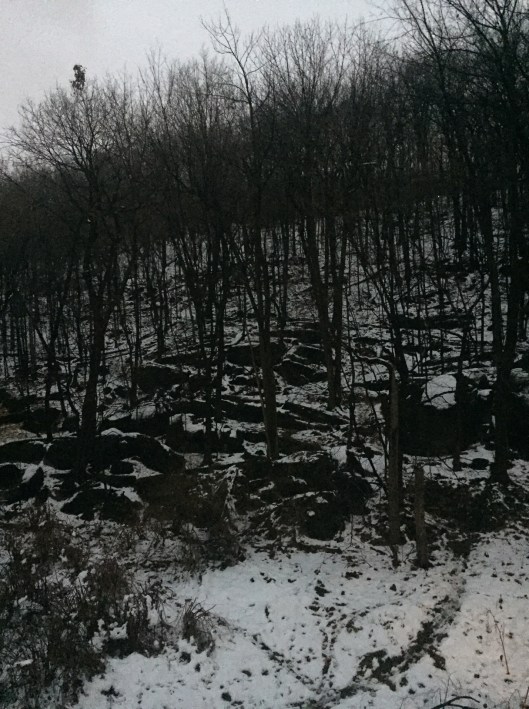
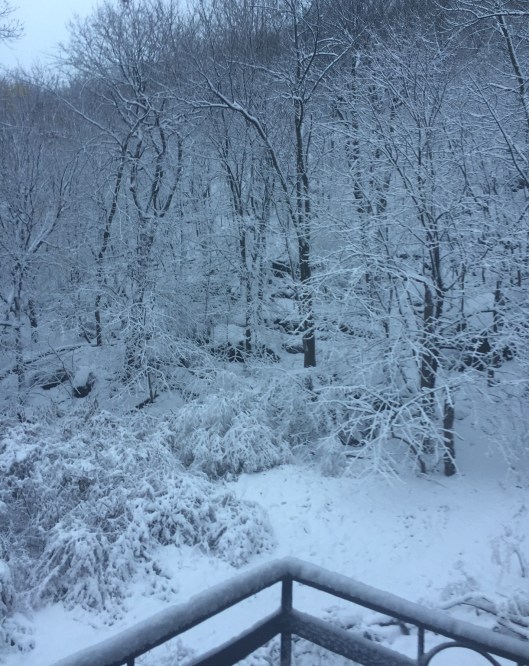
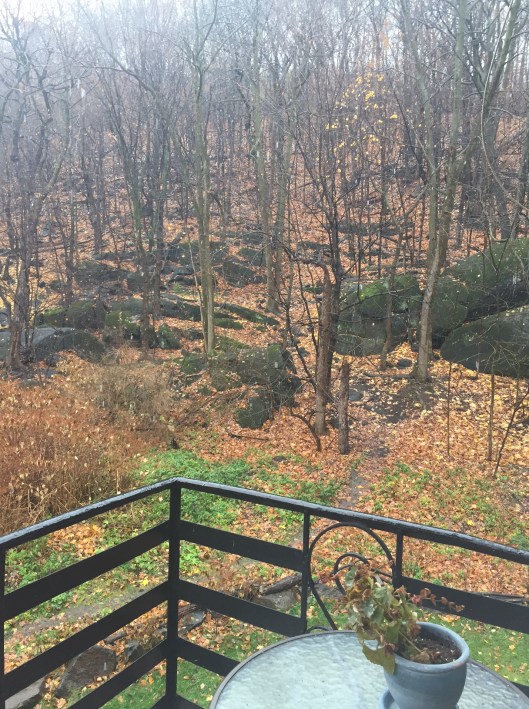
“The locus of freedom is to be found elsewhere than in mere opposition, also nowhere that any flight can lead to. We have called it the forest. There, other instruments exist than a nay scribbled in its prescribed circle. Of course, we have also seen that in the state to which things have now advanced perhaps only one in a hundred is capable of a forest passage. But numerical ratios are irrelevant here – in a theater blaze it takes one clear head, a single brave heart, to check the panic of a thousand others who succumb to an animalistic fear and threaten to crush each other. In speaking of the individual here, we mean the human being, but without the overtones that have accrued to the word over the past two centuries. We mean the free human being, as God created him. This person is not an exception, he represents no elite. Far more, he is concealed in each of us, and differences only arise from the varying degrees that individuals are able to effectuate the freedom that has been bestowed on them. In this he needs help – the help of thinkers, knowers, friends, lovers. We might also say that man sleeps in the forest – and the moment he awakens to recognize his own power, order is restored. The higher rhythm present in history as a whole may even be interpreted as man’s periodic rediscovery of himself. In all epochs there will be powers that seek to force a mask on him, at times totemic powers, at times magical or technical ones. Rigidity then increases, and with it fear. The arts petrify, dogma becomes absolute. Yet, since time immemorial, the spectacle also repeats of man removing the mask, and the happiness that follows is a reflection of the light of freedom. Under the spell of powerful optical illusions we have become accustomed to viewing man as a grain of sand next to his machines and apparatuses. But the apparatuses are, and will always be, no more than a stage set for a low-grade imagination. As man has constructed them, so he can break them down or integrate them into new orders of meaning. The chains of technology can be broken – and it is the individual that has this power.”  Ernst Junger
Image

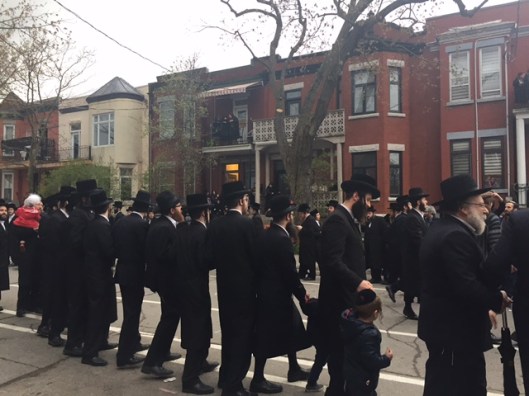
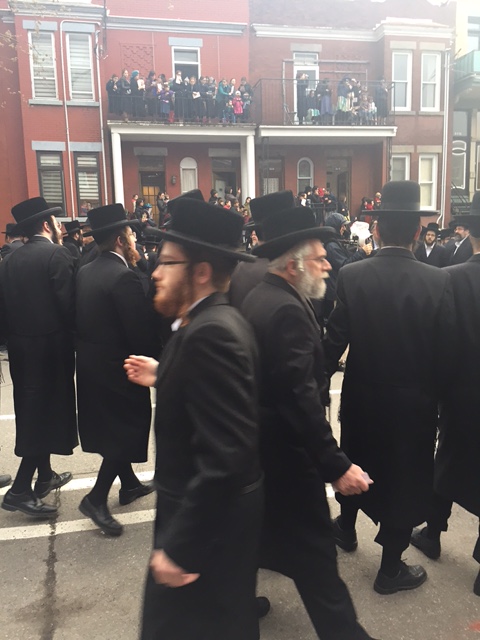
Lag b’Omer in North America – 2017 (5777)

Tags

IMG_1388

IMG_1385

IMG_1391

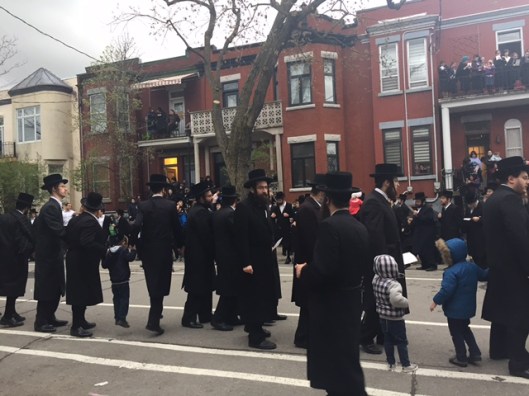
There is a custom to light bonfires in honor of Rashbi. The souls of all the tzadikim are there when the fire is lit. There is a custom to put olive oil in the fire and to burn clothes in the fire. The Rizhiner used to send silk garments to Miron to be burnt in the bonfire. Tzadikim of Eretz Yisroel say this is a segula for success, materially and spiritually.

Inner Improvement – Helena Almeida

Tags

,

When I think about myself,
I almost laugh myself to death,
My life has been one great big joke,
A dance that’s walked
A song that’s spoke,
I laugh so hard I almost choke
When I think about myself.

Sixty years in these folks’ world
The child I works for calls me girl
I say “Yes ma’am” for working’s sake.
Too proud to bend
Too poor to break,
I laugh until my stomach ache,
When I think about myself.

My folks can make me split my side,
I laughed so hard I nearly died,
The tales they tell, sound just like lying,
They grow the fruit,
But eat the rind,
I laugh until I start to crying,
When I think about my folks.

Maya Angelou

Einstein’s Daily Routine

albert-einstein

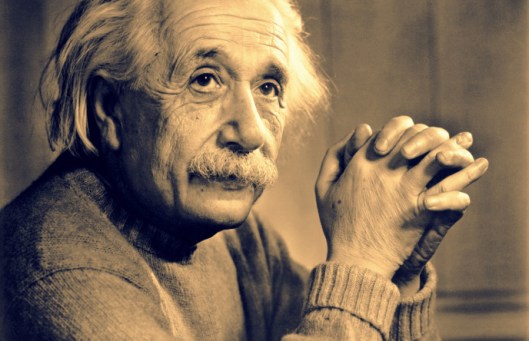
“Einstein immigrated to the United States in 1933, where he held a professorship at Princeton University until his retirement in 1945. His routine there was simple. Between 9:00 and 10:00 A.M. he ate breakfast and perused the daily papers. At about 10:30 he left for his Princeton office, walking when the weather was nice; otherwise, a station wagon from the university would pick him up. He worked until 1:00, then returned home for a 1:30 lunch, a nap, and a cup of tea. The rest of the afternoon was spent at home, continuing his work, seeing visitors, and dealing with the correspondence that his secretary had sorted earlier in the day. Supper was at 6:30, followed by more work and more letters.

Despite his humble lifestyle, Einstein was a celebrity in Princeton, famous not only for his scientific accomplishments but also for his absentmindedness and disheveled appearance. (Einstein wore his hair long to avoid visits to the barber and eschewed socks and suspenders, which he considered unnecessary.) Walking to and from work, he was often waylaid by locals who wanted to meet the great physicist. A colleague remembered, ‘Einstein would pose with the waylayer’s wife, children, or grandchildren as desired and exchange a few good-humored words.

Then he would go on, shaking his head, saying: ‘Well, the old elephant has gone through his tricks again.’ ”

__________

The section on Albert Einstein in Mason Currey’s book Daily Rituals: How Artists Work.

Image

Faire du sordide – Fernand Pouillon “mémoires d’un Architecte”.

Tags

img_7736

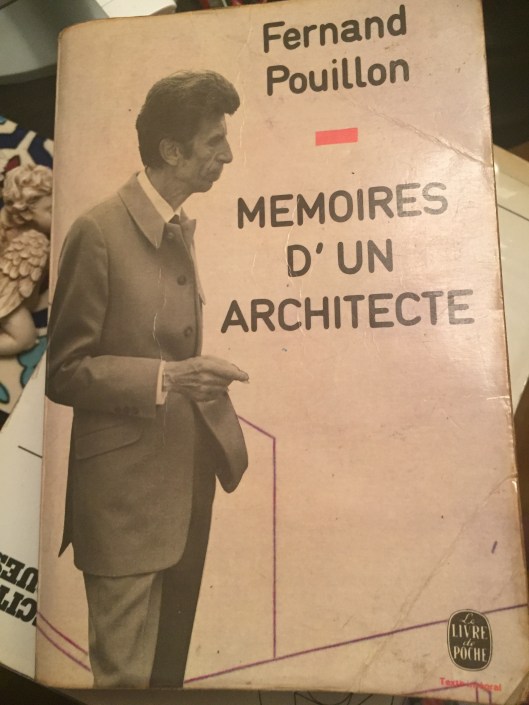
”Depuis cent ans, le monde des bâtisseurs joue les apprentis sorciers avec la vie des hommes. L’art, l’architecture notamment, évolue dans un sens de plus en plus ésotérique. Graphisme et photographie ont fait basculer les maisons et les monuments dans un univers d’abstraction.

la représentation prend des libertés avec la réalité ou la moque. Les génies de notre époque s’attachent trop à ce qu’ils jugent “publiables”, photogénique.”

Fernand Pouillon

Stalin’s Son

Tags

,

stalin-and-daughter

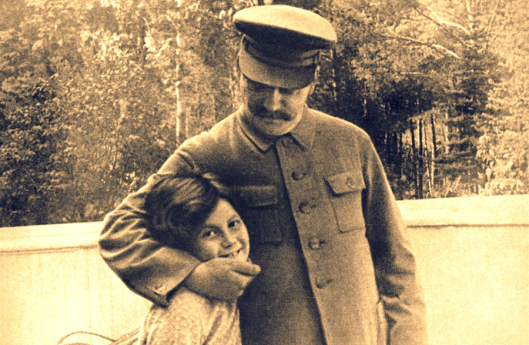
“Stalin really hated him. It took me several days of subliminal work to accept this. The standard interpretation may seem ridiculous, but it is probably the right interpretation. We have seen something of Stalin’s violent insecurity about his provenance. This insecurity was now turned on Yakov. Stalin hated Yakov because Yakov was Georgian. Yakov was Georgian because his mother was Georgian; Yakov was Georgian because Stalin was Georgian; yet Stalin hated Yakov because Yakov was Georgian. The racial and regional tensions within the USSR constitute an enormous subject, but Stalin’s case was, as usual, outlandish. We have to imagine a primitive provincial who (by 1939 or so) had started to think of himself as a self-made Peter the Great: an Ivan the Terrible who had got where he was on merit. Thus Stalin was Russia personified; and Yakov was Georgian. Yakov is said also to have been of a mild and gentle disposition, to his father’s additional disgust.

Raised by his maternal grandparents, Yakov joined the Stalin household in the mid-1920s. He spoke little Russian, and did so with a thick accent (like Stalin). Nadezhda seems to have liked him and fully accepted him. But Stalin’s persecution was so systematic that toward the end of the decade Yakov attempted suicide. He succeeded only in wounding himself; and when Stalin heard about the attempt he said, ‘Ha! He couldn’t even shoot straight” (Volkogonov has him actually confronting his son with the greeting, ‘Ha! You missed!’) Soon afterward Yakov moved to Leningrad to live with Nadezhda’s family, the Alliluyevs.

Like Vasily, Yakov joined the armed forces, as a lieutenant (rather than a field marshal), reflecting his more peripheral status. He was the better soldier, and fought energetically until his unit was captured by the Reichswehr. This placed Stalin in a doubly embarrassing position. A law of August 1941 had declared that all captured officers were ‘malicious traitors’ whose families were ‘subject to arrest.’ Thus Yakov came under the first category – and Stalin came under the second. As a kind of compromise, Stalin arrested Yakov’s wife. When the Nazis tried to negotiate an exchange, Stalin refused (‘I have no son called Yakov’). He feared all the same that the supposedly feeble Yakov might be pressured into some propagandist exhibition of disloyalty. He need not have so feared. Yakov passed through three concentration camps – Hammelburg, Lubeck, Sachsenhausen – and resisted all intimidation. It was precisely to avoid succumbing (Volkogonov believes) that Yakov made his decisive move. In a German camp, as in a Russian, the surest route to suicide was a run at the barbed wire. Yakov ran. The guard did not miss.”

Stalin's son 2

__________

Stalin's children