Resolved – no more lies

Hevron from our dusty maps

A year ago I wanted to clarify Mellissa’s note: “Should I tell the story of this place? Is there anything to say about it? “. And then so many events have occurred and I couldn’t work on it.

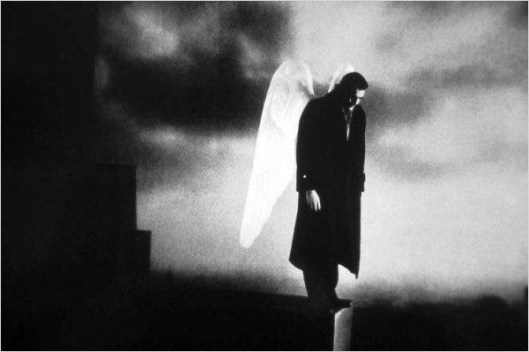
All those who are familiar with Wim Wenders movies may remember the famous speech of Homer in Der Himmel Uber Berlin. This old man, storyteller, lonely and homesick is the only one who still remember Potsdamer Platz and me too today more than ever.

Singular forces pushe me as they pushed all the characters in Wenders movies back to the place of their childhood, but all of them end with the same feeling of anguish and infinite sadness, because once back there they became aware that what they thought have changed remains as damaged as mutilated than before, and what they would have wanted to see unchanged became deteriorated in the same way as cinema was brutally repressed and destroyed by the logic of production utility.

Potsdamer Platz made me think about my Jewish identity. The Jewish people have built their identity on a mythical basis: not on the consciousness of historical continuity.

Roland Barthes explains that the myth exists as long as the speech is its source, it is a supreme History above history, trying to reach a deeper and eternal truth of an historical event whatever this one is proven or not, that doesn’t matter.

Saying for example that each generation must see themselves as they came out of Egypt is a mythical speech because it involves every Jew as if he was above history. It becomes part of our active identity. The myth is also beyond the borders and totally an immutable destiny.

Jews spoke different languages along with Hebrew, there was no common Jewish destiny, everything depended on where they were, but they kept saying, “Next year in Jerusalem “. Because they had this deep feeling that the real focus is elsewhere, everything was temporary.

Myths have allowed us an effective geographical mobility, maintain this mythical identity until we made ourselves mythical. The birth of Zionism was and is not messianic, his only purpose was to bring back the Jews in the history arena as said Gershom Scholem. Because before Zionism we were not in history, we were in the myths.

If the myths were true or not, this really doesn’t matter at all.

This is why Israel has no clear borders until today, It’s because of this mythological quantum leap in the history that we are exhibiting dusty cards straight out from our dusty closets and claim that Hevron during Avraham’s time is the same Hevron of today.

Myths are incorrigible. The Germans did an amazing job by correcting their history, and I admire them for that, but they rewarded us and the entire world with a Berlin museum of horror and lies.

Avoir enfin quelque chose à dire

Tags

,

UAI-00674226 - © - United Archives

«On fait parfois comme si les gens ne pouvaient pas s’exprimer. Mais, en fait, ils n’arrêtent pas de s’exprimer.
Les couples maudits sont ceux où la femme ne peut pas être distraite ou fatiguée sans que l’homme dise « Qu’est-ce que tu as ? exprime-toi… », et l’homme sans que la femme…, etc. La radio, la télévision ont fait déborder le couple, l’ont essaimé partout, et nous sommes transpercés de paroles inutiles, de quantités démentes de paroles et d’images. La bêtise n’est jamais muette ni aveugle. Si bien que le problème n’est plus de faire que les gens s’expriment, mais de leur ménager des vacuoles de solitude et de silence à partir desquelles ils auraient enfin quelque chose à dire. Les forces de répression n’empêchent pas les gens de s’exprimer, elles les forcent au contraire à s’exprimer. Douceur de n’avoir rien à dire, droit ne n’avoir rien à dire, puisque c’est la condition pour que se forme quelque chose de rare ou de raréfié qui mériterait un peu d’être dit». Deleuze

Far away from the market-place

Tags

, ,

71642253_10214813214871070_8592406496002703360_n

«Slow is the experience of all deep fountains: long have they to wait until they know what has fallen into their depths. Far away from the market-place and from fame happens all that is great: far away from the market-place and from fame have always dwelt the creators of new values». Zarathustra

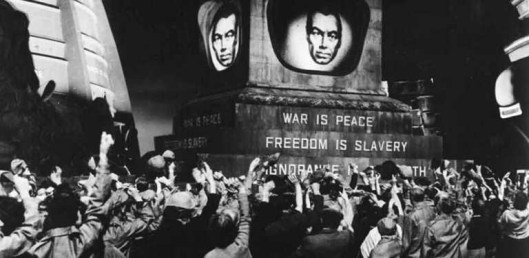
War is peace

«How senseless is everything that can ever be written, done, or thought, when such things are possible. It must be all lies and of no account when the culture of a thousand years could not prevent this stream of blood being poured out, these torture-chambers in their hundreds of thousands. A hospital alone shows what war is. »Erich Maria

Imposture ordinaire

Tags

,

img_6397img_6395

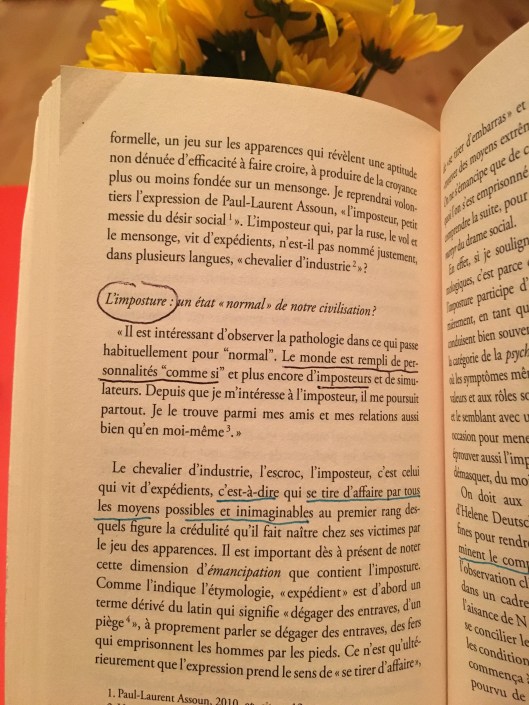
“Il est intéressant d’observer la pathologie dans ce qui passe habituellement pour normal. Le monde est rempli de personnalités “comme si” et plus encore d’imposteurs et de simulateurs. depuis que je m’intéresse à l’imposteur, il me poursuit partout. je le trouve parmi mes mais et mes relations aussi bien qu’en moi-même.” Roland Gori.

“L’unification heureuse de la société par la consommation, la division réelle est seulement suspendue jusqu’au prochain non accomplissement dans le consommable.” Guy Debord

img_6399

img_6401

Digestion des images

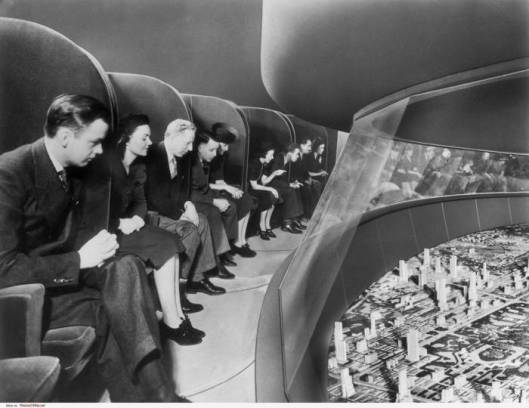
“L’aliénation du spectateur au profit de l’objet contemplé (qui est le résultat de sa propre activité inconsciente) s’exprime ainsi : plus il contemple, moins il vit ; plus il accepte de se reconnaître dans les images dominantes du besoin, moins il comprend sa propre existence et son propre désir. L’extériorité du spectacle par rapport à l’homme agissant apparaît en ce que ses propres gestes ne sont plus à lui, mais à un autre qui les lui représente. C’est pourquoi le spectateur ne se sent chez lui nulle part, car le spectacle est partout. “neo-transcendance-norman-bel-geddes-futurama-foire-mondiale-de-new-york-1939

Confiscation du temps

Tags

,

09_metropolis_workers

L’homme n’est plus rien que ce qu’il produit :

“Il ne faut pas dire qu’une heure de travail d’un homme vaut une heure d’un autre homme, mais plutôt qu’un homme d’une heure vaut un autre homme d’une heure. Le temps est tout, l’homme n’est plus rien; il est tout au plus la carcasse du temps. Il n’est plus question de la qualité. La quantité seule décide de tout. Heure par heure, journée par journée.” Karl Marx.


“We should not say that one man’s hour is worth another man’s hour, but rather that one man during an hour is worth just as much as another man during an hour. Time is everything, man is nothing: he is at the most time’s carcass.” Karl Marx.