Everywhere we learn that love is important, and yet we are bombarded by its failure… This bleak picture in no way alters the nature of our longing. We still hope that love will prevail. We still believe in love’s promise… Our hope lies in the reality that so many of us continue to believe in love’s power. We believe it is important to know love. We believe it is important to search for love’s truths… To open our hearts more fully to love’s power and grace we must dare to acknowledge how little we know of love in both theory and practice.
[…]
To know love we have to tell the truth to ourselves and to others… Commitment to truth telling lays the groundwork for the openness and honesty that is the heartbeat of love. To commit to love is fundamentally to commit to a life beyond dualism. That’s why love is so sacred in a culture of domination, because it simply begins to erode your dualisms: dualisms of black and white, male and female, right and wrong.
Human beings are unable to be honest with themselves about themselves. They cannot talk about themselves without embellishing. The script portrays such human beings—the kind who cannot survive without lies to make them feel they are better people than they really are. It even shows this sinful need for flattering falsehood going beyond the grave—even the character who dies cannot give up his lies when he speaks to the living through a medium. Egoism is a sin the human being carries with him from birth; it is the most difficult to redeem. This film is like a strange picture scroll that is unrolled and displayed by the ago. You say that you can’t understand this script at all, but that is because the human heart itself is impossible to understand. If you focus on the impossibility of truly understanding human psychology and read the script one more time, I think you will grasp the point of it.”—Akira Kurosawa
Descartes se proposait de “bien juger pour bien faire” ; Wittgenstein, quant à lui, de “bien faire et ne rien dire.” Je me demande si, à ce stade de ma vie et un peu plus réconcilié avec ma médiocrité, la sagesse ne serait pas plutôt pour moi d’observer la maxime inverse — tout aussi inapplicable — : bien dire et ne rien faire.
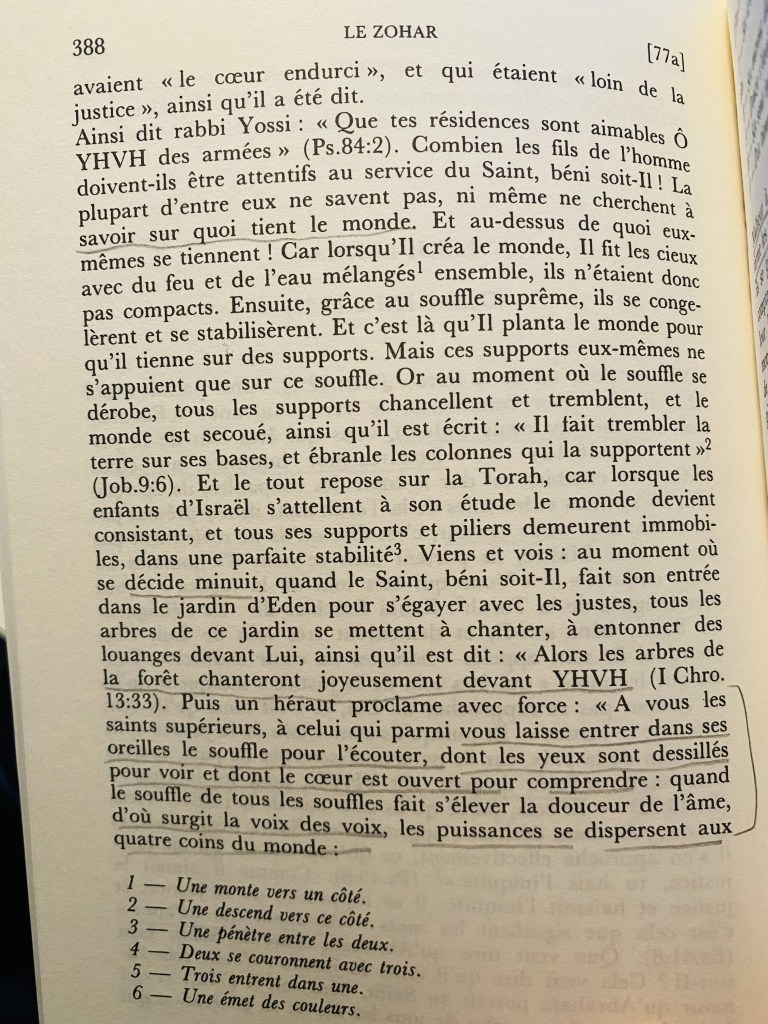
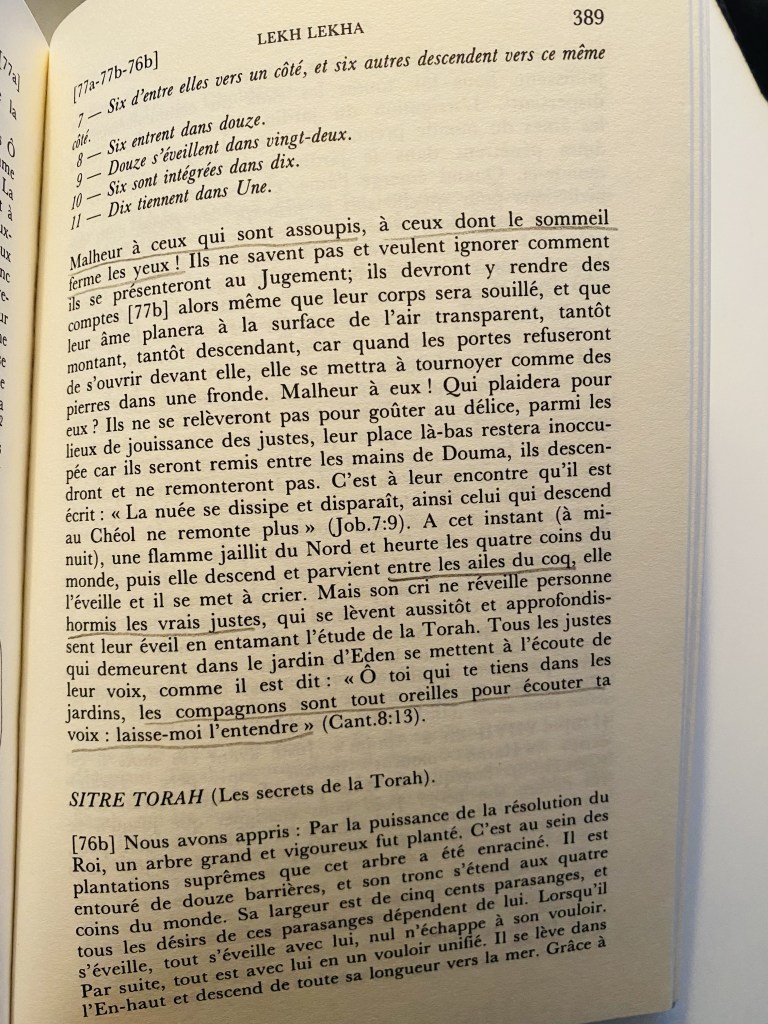
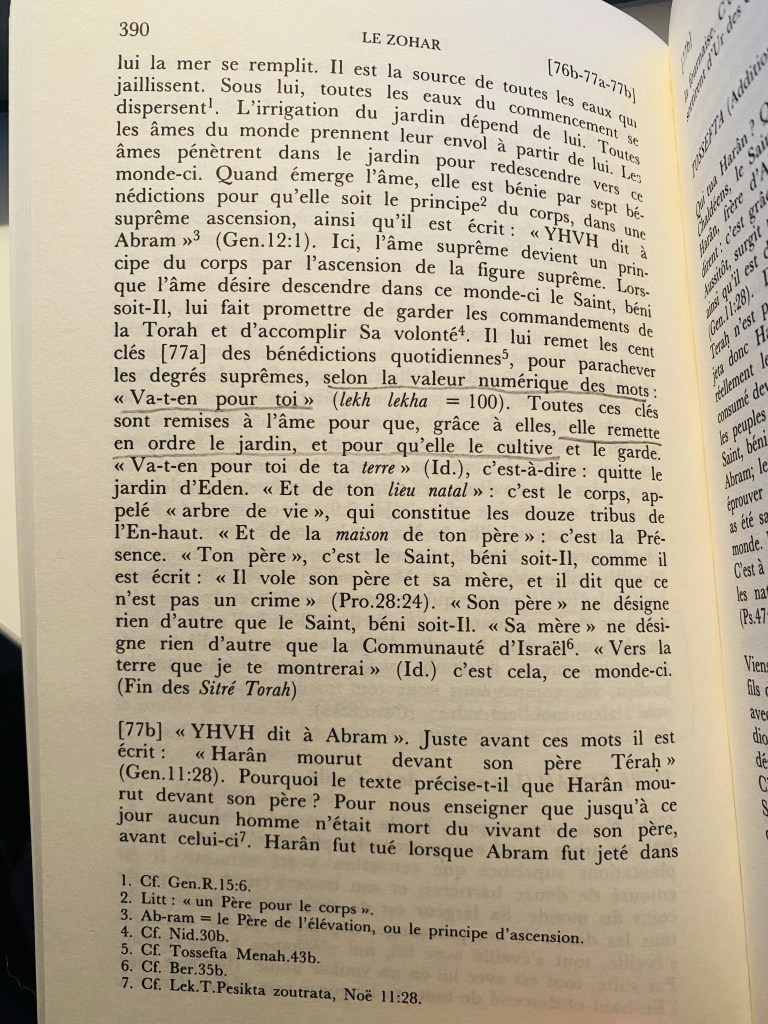
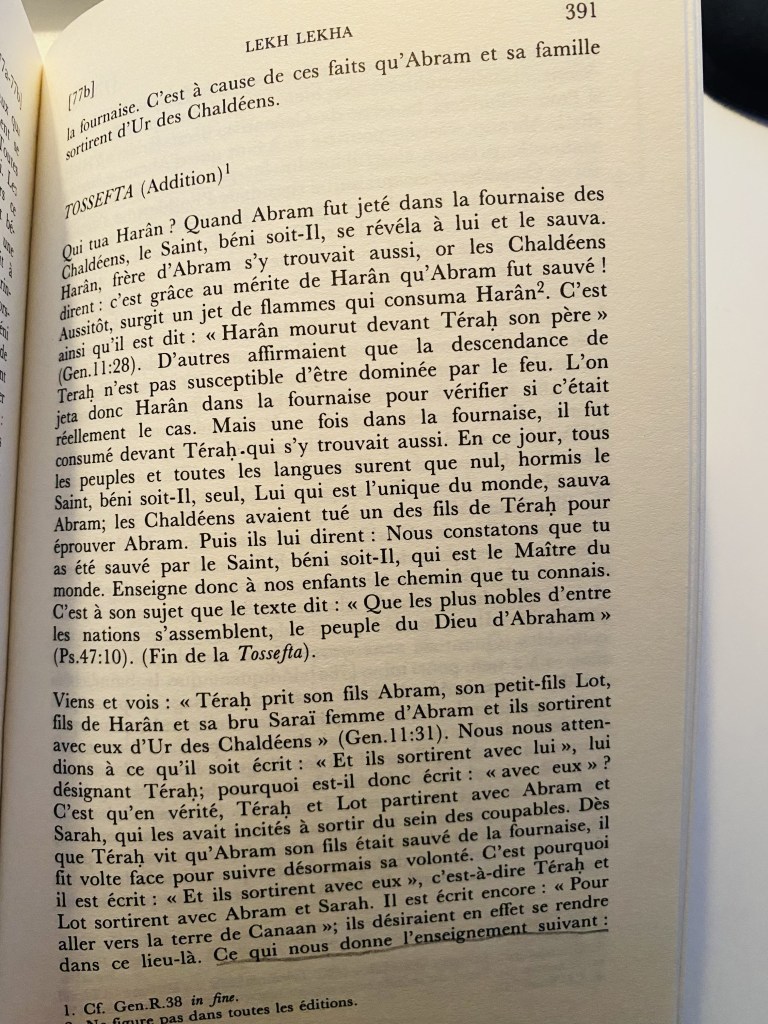
The Gemara says that a person should say to himself, “The whole world was created only for my sake.” This thought has far reaching implications. When you realize that the whole world was created for no one but you, it follows that you are the only person in the entire world, and that the survival or destruction of the world hinges on your choice to do good or evil. Since you are the only one around, you need not be concerned about the opinions of others when you are serving G-d, for next to you, all else is of secondary importance. When you look at life from this perspective then you will serve G-d with total devotion, without any ulterior motive or muddled thinking. You will then break down all the klippos – the outer barriers that prevent you from perceiving holiness.
From his window facing the marketplace Rebbe Nachman spotted one of his followers rushing by.
“Have you looked up at the sky this morning?” the Rebbe asked.
“No, Rebbe, I haven’t had the time.”
“Believe me, in fifty years everything you see here today will be gone. There will be another fair–with other horses, other wagons, different people. I won’t be here then and neither will you. So what’s so important that you don’t have time to look at the sky?!”
Rebbe Nachman of Breslev states that it is a segulah to gaze at the sky. (A segulah is something that has some sort of mysterious power, although we may not understand how it works.) He does not exactly say what this is a segulah for, but it seems to be for wisdom.
Today i sat looking at the sky. The blue expanse was especially clear and luminous, and it occurred to me that thoughts are like clouds, massing in the open space of the mind, even taking over, magnetizing all of our attention, but still constantly changing, rearranging like the glass fragments of a kaleidoscope. Yet the open expanse remains the same. Spiritual obstacles are also like clouds. Rebbe Nachman states that all obstacles are illusory, but the main obstacles are those of the mind. They may seem to be the most insubstantial, but not when a person stares them in the face.
Nachman suggests that the essence of reality is actually the “World of Thought” : the cosmic mind. Everything comes from there, and returns there, and in truth — although this is hard for us to grasp — everything constantly remains there. We experience a physical universe, but it emerges from the divine thought:Thus, all existence is like the clouds. Each created thing appears to be solid and firm, but in truth it is insubstantial and transitory. As we say on Rosh Hashanah at the end of U’nesaneh Tokef, “Like a broken shard, like withering grass, like a fading flower, like a passing shadow, like a dissipating cloud, like a gust of wind, like a swirl of dust, like a fleeting dream…”






You must be logged in to post a comment.