Understand

Tags

,

img_2503-1

“To speak of these things and to try to understand their nature and, having understood it, to try slowly and humbly and constantly to express, to press out again, from the gross earth or what it brings forth, from sound and shape and colour which are the prison gates of our soul, an image of the beauty we have come to understand—that is art.” James Joyce

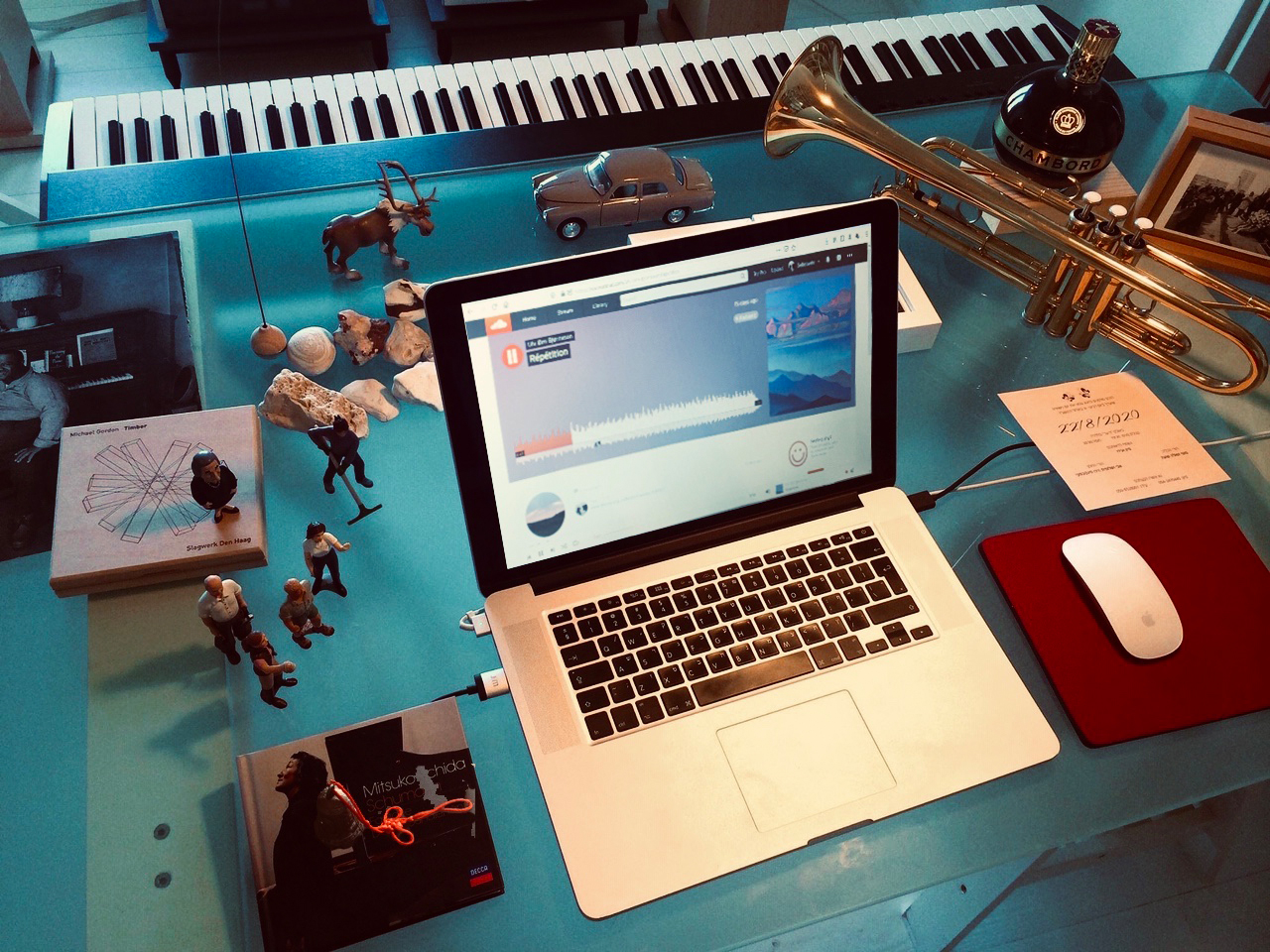
https://soundcloud.com/ulv-orn-bjornsson/repetition


Breach in a dam

Tags

,

“It is astounding how I have systematically destroyed myself in the course of the years, it was like a slowly widening breach in a dam, a purposeful action. The spirit that brought it about must now be celebrating triumphs, why doesn’t it let me take part in them ? But perhaps it hasn’t yet achieved its purpose and can therefore think of nothing else ”

Franz Kafka, Diaries, 1921
30708072_10156367917764743_6813435401391308800_o


das Erscheinende -Appearing

Tags

, , , , ,

37482_1437611954177_7686559_n

“Oh, how one wishes sometimes to escape from the meaningless dullness of human eloquence, from all those sublime phrases, to take refuge in nature, apparently so inarticulate, or in the wordlessness of long, grinding labor, of sound sleep, of true music, or of a human understanding rendered speechless by emotion”

Boris Pasternak, Doctor Zhivago.

“Only so does Revelation. Shine in the time that rejected you. Only your nothingness is the experience. It is entitled to have of you.”

Gershom Scholem


Oblivion

Tags

,

11059202_10100570475859004_5738260957414823510_n

IMG_2136

Humanity lends itself in the Plato cave, continuing to enjoy, out of centuries-old habit, simple images of the truth but being educated by photographs is not like having been educated by older and more handcrafted images: today there are much more numerous images that require our attention; inventory began in 1839 and since then almost everything has been photographed, or at least so it seems; this insatiability of the photographic eye changes the conditions of captivity in that cave that is our world; teaching us a new visual code, photographs alter and expand our notions of what is worth watching and what we have the right to observe; the greatest consequence of photography is that it gives us the feeling that we can have the whole world in our head, like anthology of images…

Susan Sontag, On Photography


Bernard Stiegler Big data

Tags

,

Bernard Stiegler leaves us, at just sixty-eight years old.

Those who met him will remember his deep humanity, combined with surprising and lively intelligence. Stiegler has been able to pass through life without ever forgetting the fundamental question: what really makes life worth living? He also gave his book this question by title, turning it into an affirmation.

He wasn’t afraid to affirm. He had nothing of that false modesty typical of post-modernity. He believed in the critical exercise of thought and, I dare say, in the search for truth. For almost forty years he had been trying to think, radically and without stupid neoluddist tics, how to handle the technological ′′ drug ambivalence, toxic and salvific, of the technique and, in particular, of the web and the internet (which he carefully distinguished). He believed in the possibility of using technologies capable of going beyond entropy, beyond the value destruction of the data economy, towards a shared form of knowledge, capable of giving life on earth a meaning.

Stiegler, through the ambitious program of an organology, fought functional stupidity and depression to which a world destined us, that of the web economy, which drags each of us, each isolated into an anonymous network, towards the mediocrity of an average man, that faceless subject coming out of algorithms; a subject incompetent of exception and therefore of innovation. There is no change, transformation, evolution, new meanings except from exceptions, singularities, from what makes every rule, every prediction, every calculation.

Stiegler believed in the power of impossible and unexpected in a world where everything must be predictable and possible. He knew how to listen. He believed in attention as a form of thought. He was a curious, sensitive man; I’d say sweet.

Big data, surely, are already processing his death. We still have the legacy of a thought and the memory of a person full of life.
60cd8983865c1e80545dba8a0227f5d8