• About

Selbstwehr

~ Art as self defense

Category Archives: Uncategorized

Where have all the Fireflies Gone ?

18 Friday Nov 2016

Posted by S/O in Bohumil Hrabal, Cinema, Uncategorized

≈ Leave a comment

Tags

La notte brava, Mauro Bolognini

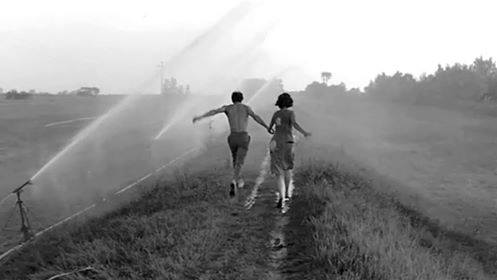
15109621_10207525102672820_4570172963648191597_n

Picture from : Mauro Bolognini: “La notte brava” (1959)

This text was written by Pier Paolo Pasolini and originally published as ‘Il vuoto del potere in Italia’ (The Power Void in Italy) in ‘Corriere della sera’, 1 February 1975. Translated by Christopher Mott.

“The distinction between adjective and substantive fascism goes back to nothing less than the newspaper il Politecnico, in other words, directly after the war”. Thus begins Franco Fortini’s work on fascism (l’Europeo, 26-12-1974), a writing based on principles that I fully and completely subscribe to. I cannot, however, agree with his tendentious beginning. Indeed, the distinction between the “fascisms” made in il Politecnico is neither pertinent nor current. It was still valid up until some ten years ago, when the Christian-Democrat regime was the pure and simple extension of the fascist regime.

However, ten or so years ago, an “event” occurred. It was something that did not exist, nor was it foreseeable, not only in the Politecnico era, but even up to a year before the thing happened, or in fact, as we shall see, while the thing was happening.

The true confrontation between the two fascisms cannot therefore chronologically be the fascist fascism in the form of Christian-Democrat fascism, but the confrontation between fascist fascism with a fascism that was born of this event, a totally, radically and unforeseeably new type of fascism that occurred some ten years ago.

Since I am a writer and I get involved in controversy, or at least in discussions with other writers, allow me to provide a poetic-literary definition of this phenomena that occurred in Italy during that time. This will serve to simplify and shorten our sunject, and probably to better understand it.

At the beginning of the sixties, the fireflies began to disappear in our nation, due to pollution of the air, and the azure rivers and limpid canals, above all in the countryside. This was a stunning and searing phenomena. There were no fireflies left after a few years. Today this is a somewhat poignant recollection of the past—a man of that time with such a souvenir cannot be young among the young of today and can therefore not have the wonderful regrets of those times.

The event that occurred some ten years ago we shall now call the “disappearance of the fireflies”.

The Christian-Democrat regime passed through two completely different phases that not only cannot be set off against each other—which would imply a certain degree of continuity between them—but which also have become flatly immeasurable, from an historic viewpoint.

The first phase of this regime, which the radicals have always rightly called it, is the phase beginning with the end of the war and extending to the extinction of the fireflies. The second goes from the extinction of the fireflies to the present day. We shall discuss them in order.

Before the extinction of the fireflies.
Christian-Democrat fascism is a total and absolute extension of fascist fascism. I will not deal with certain subjects which were discussed at the time, perhaps in Politecnico. They include the lost opportunity for purification, the continuation of the codes [1], police brutality and disregard for the constitution. In addition, I will stop at that event that subsequently passed for a retrospective historical conscience, which was that the democracy that anti-fascist Christian-Democrats put forth in opposition to the fascist dictatorship was unabashedly categorical.

It was based on an absolute majority of votes obtained from wide strata of the middle classes and huge masses of the peasantry, oriented by the Vatican. This participation by the Vatican could only be possible if it was based on a totally repressive regime. In this type of world, the “values” that counted were those upheld by fascism, meaning Church, family, country, obedience, discipline, order, saving and morality. These values, as under fascism, were “genuine”, in other words they formed part of the specific and concrete cultures that were the basis of the ancient agricultural and palaeo-industrial traditions in Italy. However, from the moment they were elevated to the status of national “values”, they lost all reality, becoming atrocious, stupid and repressive State conformity characteristics, the conformity of fascist and Christian-Democrat power. We are not speaking of provincialism, of the vulgarity and ignorance of the élites [2] who, on a level different from the masses, were the same throughout fascism and the initial phase of the Christian-Democrat regime. The paradigm of this ignorance was the pragmatism and the formalism of the Vatican.

All this seems clear and uncontestable today because intellectuals and the opposition of the period cherished ridiculous illusions. They hoped that all that they were seeing was not completely true and that true democracy really counted for something.

Before moving to the second phase, I must devote a paragraph to the transition.

While the fireflies were disappearing.
During this period, the distinction between fascism and the Politecnico fascism was still in effect. Neither the large country that was forming within the nation, that is, the peasant and working class masses being organized by the PCI (Italian Communist Party) nor the most advanced and critical intellectuals saw that the fireflies were becoming extinct. They understood sociology quite well—which during those years had caused a crisis in the Marxist analytical method—but their understanding was not yet tested by life experience and was essentially theoretical. No one could perceive what historical reality concerning the immediate future was evolving, nor link what was then called well-being with the development concept which was to bring about for the first time fully in Italy the ‘genocide’ described by Marx in his Manifesto.

After the extinction of the fireflies.
The nationalized and therefore falsified “values” of the old agricultural-based and palaeo-capitalistic world suddenly were no longer important. Church, country, family, obedience, order, savings, morality, none of it was important any more. They didn’t even survive in the form of false values. They remained within the reduced clerical-fascism order and even the M.S.I. repudiated them. “Values” for a new type of civilization replaced them, which were completely apart from the peasant and palaeo-industrial society. This phenomena had already been experienced by other countries. However, in Italy, it was completely unique because it involved the first true unification of our country. In other countries this unification was superimposed logically over monarchic or bourgeois and industrial revolution-imposed unifications. Perhaps the only precedent to the Italian trauma produced by the clash between pluralist archaism and industrial equalization was pre-Hitler Germany. In that country also, the values of different specific cultures were destroyed by the violent recognition process of industrialization, with the consequence of producing those gigantic hordes who had neither the ancient peasant or artisan roots or not even a modern bourgeois background, and who made up the savage, abnormal and unpredictable bodies of Nazi troops.

Something similar is now occurring in Italy, with even greater violence in that the industrialization of the sixties and seventies was also a decisive mutation compared to that in Germany fifty years ago. As we all know, we are not now facing a new age, but rather a new era of human history, with human history seen in periods of one thousand years. The Italian people could not have behaved worse than they did in confronting this historic trauma. Over a period of several years they have become, especially in the Center-South, a degenerate, ridiculous, monstrous and criminal population – one need only go into the street to understand this. Of course, in order to understand the changes in people, you have understand the people themselves. To my detriment, I liked them, the Italian population, both outside of the power systems—in fact in desperate opposition to them—and outside of populist and humanitarian systems. I felt real love for them, rooted in my personality. I could see with my “senses” how the power of a consumption-based society modeled and deformed the conscience of the Italian people, finally arriving at an irreversible degradation. This was something that did not occur in the fascist fascism period, during which individual behavior was totally disassociated from the conscience. The totalitarian power repeated incessantly its injunctions on behavior modification in vain, since the conscience no longer entered into play. The fascist models were only masks that were donned and removed in turn. When the fascist fascism movement fell, everything returned to its previous order. This occurred also in Portugal. After forty years of fascism, the Portuguese celebrate D the 1st of May as if the last one celebrated was the preceding one.

As such it is ridiculous for Fortini to backdate the distinction between fascism and the fascism prevalent to directly after the war. The distinction between fascist fascism and the fascism of the second phase of the Christian-Democrat regime has no grounds for comparison in our history, and not only in our history but probably in all history.

I do not write this article to debate this subject, even though it is one very near to me. I write for a very different reason, which I will now outline.

All my readers will certainly have observed change in Christian-Democrat officials. Over several months they have become funereal. It is true that they continue to dispense radiant smiles of an incredible sincerity. Their eyes exude an honest, blissful spark of good will, when they aren’t betraying a mocking, spirited cunning. This, apparently, pleases voters as much as genuine good will. Furthermore, our officials continue imperturbably to release incomprehensible verbiage into the atmosphere, or float the flatus vocis of their habitual stereotyped promises.

In reality, all these things actually are masks. I am sure that, if they were removed we wouldn’t even see a heap of bones and ashes. There would be nothing, just emptiness. The reason for this is simple because in Italy today, there is a dramatic power void. However, the important thing is that the void is not of a legislative or executive nature, it is not a void in the power of governing or even in political power of any traditional description. It is a power void in itself.

How did this void come about? Or rather, “How is it that the people in power came to this?”

The explanation for this is also simple. The Christian-Democrat power base went from the “fireflies” stage to the “fireflies extinction” phase” without realizing it. However quasi-criminal this may appear, their unconsciousness in this matter was based on one absolute issue, which was that they had no inkling that the power that they held and exercised did not follow a normal pattern of evolution but rather was undergoing a radical change of form.

They were deceived into thinking that in their regime nothing would really changed and that, for example, they would always be able to rely on the Vatican’s support. They didn’t realize that the power they continued to exercise had no further use for the Vatican, which was a center of the poor, backward peasantry. They had the illusion that they would always be able to count on a nationalist army, just as their fascist predecessors did. They did not see that the power that they continued to exercise was already maneuvering to establish the basis for new transnational armies, almost like a technocratic police force. The same can be said with regard to the family, which was relegated to saving and upholding morality and which had no means of maintaining these traditions during the transition from fascism. Today the power of the consumer society has imposed radical changes on this institution, with the acceptance of divorce and now potentially anything else without limit, or at least within the limits allowed by the the permissiveness of the new power scheme, which is more totalitarian because it is violently aggregate.

Christian-Democrat politicians accepted all this, all the while believing that they were administrating it. They did not realize that it amounted to “something else” that was not only immeasurable with respect to themselves but also with all forms of civilization. As always (see. Gramsci), the only symptoms of this occurred in language. During the transition phase – meaning, the “extinction of the fireflies” – Christian-Democrat rulers changed their way of communicating almost abruptly, adopting a completely new language that was as incomprehensible as Latin. This was especially true of Aldo Moro. Through a puzzling correlation, the one who seems to be the least involved of all in the horrible acts perpetuated between 1969 to the present, whose purpose was to retain power at all costs. Up to now, this goal has been formally achieved.

I say ‘formally’ because, and I repeat, in reality, Christian-Democrat officials are keeping the void hidden behind their smiles and automated movements. The real power works without them and they hold in their hands only a useless apparatus. The only real thing about them are their mournful three-piece suits.

Nonetheless, in history the void cannot remain in existence. The only way to assert it is in the abstract or reasoning on the basis of absurdity. It is likely that the void that I speak of is already being filled by a crisis or an event that cannot avoid ravaging the entire country. The morbid expectation of a coup d’état is a hint of this. As if it amounted only to replacing a group of people that have governed us terribly for thirty years, bringing Italy to economic, ecological, urban and anthropological disaster! In reality, the false replacement of these “pig-headed people” by other “pig-headed people”—who will be not less, but more lugubriously carnavalesque—brought on by the artificial reinforcement of the old fascist apparatus, would do nothing. Should this occur, it is clear that the “troupe” would be Nazi, virtually be its composition. The real power, which for ten years the “pig-headed people” have exercised without comprehending reality, that is something that could already have filled the void. This would also render useless the possible participation in the government of the greater communist country that evolved during the degradation of Italy, because it is not a question of governing. We formulate abstract images of this real power, which are basically apocalyptic. We have no idea what form it would take in directly replacing those who used it and took it for a simple modernization of techniques. At any rate, as for me, should that interest the reader, let it be clearly understood. I would give the entire Montedison, even though it be a multinational company, for a firefly.
Share this:

  • Share on X (Opens in new window) X
  • Share on Facebook (Opens in new window) Facebook
Like Loading...

הקפיטליסט האחרון

03 Thursday Nov 2016

Posted by S/O in Uncategorized

≈ Leave a comment

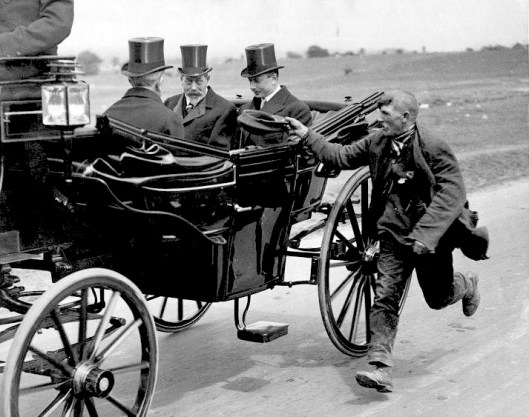
toujours-courir

Rise like lions after slumber

In unvanquishable number

Shake your chains to earth like dew

Which in sleep has fallen on you

Ye are many – they are few

(זהו הבית האחרון במונולוג ארוך שנושאת התקווה, שאביה הוא הזמן, אל בני האדם. את הפואמה שנקראת מסיכת האנרכיה כתב פרסי שלי, משורר השייך לתנועה הרומנטית, ב-1819. הוא כתב זאת אחרי שממשלת אנגליה טבחה 80 אלף אזרחים –  בני המעמד הנמוך, ביניהם אינטלקטואלים ועיתונאים, שרצו זכות בחירה וייצוג פרלמנטרי כמו המעמד העליון, העשירים).

*

כל זה כבר כאן, אני מתכוונת לשעה שאחרי הקפיטליזם. לא משנה כיצד נקרא לזה, אחרי המבול או לפניו, הדבר כבר כאן. הזמן הזה הגיע עוד לפני שהתחלנו לחשוב עליו במונחים כאלה. כאלה הן תנועות גדולות היסטוריות, מתחילות במקום לא נראה לעין ומעט מעט מתחוור שאנשים חיים כבר את הפרדיגמה הבאה. לקפיטליזם לקח מאות שנים לקבל שם ומערכת סדורה של ערכים עד שפרץ במאה ה-18 לחיינו והסדר החברתי-כלכלי החדש עושה דרכו באותה צורה. אני מאמינה שיותר ויותר מאיתנו יזכו לחיות אותו, יש בינינו שחיים בו כבר עכשיו.

אבל אתחיל מהתחלה. כשחשבתי כיצד לכתוב על השלב הבא אחרי קפיטליזם, מיד דמיינתי את הקפיטליסט האחרון שיישאר כאן. בדמיוני הוא יצא ממחילה תחת האדמה לעולם חרב, דומה כנראה למה שעלה גם בראשם של עפרי וגל כששמו את חשרת העננים הקודרת בתמונה המתנוססת מעל הפרויקט. בכל מקרה בדמיוני הקפיטליסט האחרון יצא לעולם מלא באוויר מחניק ועשן, הביט בשמים הלבנים וטמן את ראשו בידיו בייאוש. ראשו היה מלא תכניות מפוארות אבל הוא יזם שאבד לו החומר למימוש היזמות. כלומר, בני האדם לא רצו לעבוד יותר תחת אחרים, בנקים הולאמו וכך גם חברות ביטוח, חברות מייצרות מזון, תרופות וחברות בנייה. לבסוף הולאמו גם הפייסבוק ופלטפורמות טכנולוגיות בשימוש ההמון.

כמה ריחמתי על אותו קפיטליסט אחרון, שעיניו ממצמצות מול השמש החולה של עולם כלה. דמיינתי אותו משום מה בדמותו של אדם סמית הליברל הראשון, איש אופטימי ללא תקנה, שהאמין כי מצא דרך לתעל את דחפיהם הפראיים של בני האדם למערכת הרמונית של שגשוג. כמו הקפיטליסט האחרון שלי הוא האמין כי אין גבול לתושיית הבריות ולמשאבי הטבע, ושבהינתן חופש לבני האדם, יד נעלמה ומיטיבה תבטיח איזון בין צרכים, תיאום בין ביקוש להיצע ושלום ואחווה בין אינטרסים שונים.

רק שהבדל עצום היה בין הקפיטליסט הראשון לקפיטליסט האחרון שחזיתי בדמיוני. והדבר היה שברון הלב של האחרון. כי הוא היה עד להתפוררות התקווה שברעיון של הקפיטליזם, עד לחרחורי גסיסה אלימים וארוכים של מערכות ענק עולמיות ולעלייה מבעיתה של פיאודליזם דורסני של בעלי הון ובירוקרטיה ממשלתית שטנית. יותר מכל היה עד להתנפצות שיוויון ההזדמנויות שהבטיח הקפיטליזם. בעיני רוחי הקפיטליסט האחרון היה בן למעמד חסרי הקניין. מלכתחילה לא היה לו סיכוי, אבל גם אחרי שיצא מאותה מחילה לא ידע זאת.

מוזר בעיניי שהאינסטינקט הראשוני שלי היה לתאר עולם הרוס כל כך בלי קפיטליזם. בניגוד לכל  האמונות שאני מחזיקה בהן, מחשבותיי המרו את רצוני ויצאו במחול שדים נגדי. אני מניחה שהדבר נבע גם מהעובדה שנותר לי מה להפסיד אם הקפיטליזם ייעלם ושהמחשבה על כך עוררה בי פאניקה. בעצם נסחפתי לחשוב על טרגדיה המונית, כזו שחברות ענק מנסות בדרך כלל לשווק לציבור כדי שיגלח להן חובות. המוני בני האדם חסרי התודעה הקפיטליסטית נראו לי לפתע מאיימים מאוד, בדיוק כפי שכרגע ההמון בעל התודעה הקפיטליסטית נראה לי מאיים מאוד.

מאיים אבל לפחות המון שמסודר במערכת כלשהי, חשבתי, דפוקה ועקומה ככל שתהיה. כמובן שמאחורי המחשבה הזאת רובצת מערכת אמונות מערבית: הוגי הסדר הקפיטליסטי האמינו שהאדם הוא יציר תשוקות מגונות, שכוחות הרס מנהלים אותו וכי יש צורך לנתב את תשוקותיו ההרסניות למערכות חברתיות נוקשות. תאוות הבצע נראתה לכמה הוגים במאה ה-18 כמו דחף שאם ירתמו אותו לטובת החברה – בני האדם ייצאו נשכרים ממנו. כך תאוות בצע עברה מכבסת מילים והוסבה לאינטרס עצמי, למיקסום רווח ולצירופי מילים מוכרים נוספות עד ששוב התגלתה בדיסקורס של הקפיטליזם אצל מילטון פרידמן וגם אצל ברוני הקפיטליזם הגדולים בסוף שנות ה-90 של המאה הקודמת.

לפי האידיאולוגיה המקובלת של הכלכלה הנאו-קלסית, בני האדם רוצים כסף, ומאחר שלקפיטליזם אין גבולות והשוק החופשי לכאורה מתרחב בלי סוף, הרי שבני אדם הלכה למעשה רוצים כסף בלי סוף. אפשר לראות את הפרדיגמות הללו בניסויים בתורת המשחקים, תחום משותף לכלכלה ולפסיכולוגיה שמנסה לעקוב אחר המניעים האנושיים הפועלים בחיים הכלכליים. בניסויים האלה ההוראה שמקבלים המשתתפים היא למקסם את רווחיהם. כל התופעות הפסיכולוגיות של פחד, תחרות, תאוות בצע ואנוכיות יכולים להיות מוסברים תחת הארטיפקט הזה, אבל בתרבות הקפיטליסטית כל אלה מוצגות כתכונות אנושיות יסודיות. אל שיתוף פעולה ועזרה לזולת מתייחסים כאן בחשדנות.

מערכת שבאה להחליף את הקפיטליזם חייבת להתייחס למבנה הפסיכולוגי שהמערכת הנוכחית מניחה כאל מובן מאליו. מערכת אחרת תתחיל לכן מהגדרתו של מבנה פסיכולוגי אחר, מתשוקה מרכזית אחרת, חשבתי. ואז חשבתי גם על השאלה איפה התשוקה שלי נמצאת. התשובה היתה שהיא לא בכסף או בצבירת רכוש או במיקסום רווחיי. חשבתי על אנשים רבים שאני מכירה ושדומים לי בזה, העברתי בראשי את אופן החיים שלהם, שלנו, שנגזר מתוך תשוקות אחרות והבנתי שאין לי צורך בתרחישים דמיוניים של אחרי הקפיטליזם. אנחנו חיים כבר את ההווה המהפכני ששלוח כחץ אל העתיד, ושאליו עתידים להצטרף יותר ויותר בני אדם. הם ימצאו את עצמם מחוץ למשחק הקפיטליסטי מבחירה או כי ייפלטו מתוכו.


DIGITAL CAMERA

אנחנו חברת נוודים עירונית. כדאי להתחיל מזה כשמתארים את העולם אחרי הקפיטליזם. אין לנו בית משלנו. המערכת הכלכלית הישנה הקפיטליסטית, כפי שהיא, לא יכלה לאפשר לנו להחזיק ברעיון רכישת דירה ויותר מזה אפילו לא יכלה לאפשר לנו להחזיק ברעיון של מגורי קבע. אין שכירויות ארוכות טווח והגנה לשוכרים כך שעלינו להיות נוודים. אם יש הבדל מעמדי בולט אחד בעיניי בתקופת הזאת, במעבר בין הכלכלה הישנה לחדשה, הוא בין הנוודים ליושבי הקבע. מדובר על הבדלים מעמדיים אפילו בין בני אותה משפחה במרחק של דור אחד. זהו הבדל מהותי ועתיק ומובלט גם בתנ”ך בסיפור קין והבל למשל; נגזרו ממנו תכונות אופי אחרות, יעדים אחרים וגורל אחר.

התודעה הנוודית מייצרת באופן טבעי מבט מנוכר כלפי רכוש וכלפי אופני הבעלות בכלל. היא מייצרת גם מבט מפוכח אל התקוות והכמיהות למגורי קבע ולדרכים לממש אותן. צריך להבין כי בחברה הקפיטליסטית הישנה צבירת הון מסומנת כהצלחה, הבעלות על קניין מסומנת כהצלחה, ריבוי מסומן כהצלחה. לכן הנוודות היא כישלון בחברה הזאת. כדי לצאת מהכישלון הזה ולספק את היצר של הבעלות על רכוש וצבירתו, המערכת הקפיטליסטית מסמנת את עולם העבודה כפיתרון. לא משנה כעת אם העבודה יצרנית או לא – האתוס הכלכלי הישן אומר שאם נעבוד ונתאמץ נוכל להגיע למעמד הנכסף של יושבי הקבע. בכלכלה הגלובלית אגב מדובר על יושבי קבע במובן הגלובלי – בבחינת בכל מקום בעולם יכול להיות לי בית.

עבודה אם כן כמסלול תנועה לינארי בעולם הישן כדי להבטיח יציאה מהארעי אל הקבוע ואז אל הקבוע הגדול יותר ויותר. אבל הבטחתו של מסלול כזה בתקופת המעבר למצב הכלכלי הבא – היא שקר גס. מחוץ לכמה מובלעות מסוימות בעולם הישן עבודה אינה מקיימת את בני האדם – אותנו. המחיר שמשולם על המשאב העיקרי שקיים ברשות כל אדם, הזמן, נעשה זול ומגוחך. ואילו האדם נתבע לשלם מחירים שערורייתיים על היטמעותו בשוק העבודה הקפיטליסטי – מבחינה חברתית ונפשית.

נוסף לזה העבודה כפי שהכרנו אותה נעלמת. היא מתכווצת כל הזמן, יותר אנשים מובטלים, מפוטרים ומושלכים ממנה מרגע לרגע ובשרירותיות. עבודה כפי שנראית בעולם הישן אינה מייצרת הווה או עתיד כלכלי עבורנו ואנחנו יודעים את זה. לכן העבודה מחזקת את תנועת הנוודות. לכן יש לנו ציפיות נמוכות – עבודה אמורה לספק כסף בהווה הארעי עבור קורת גג, מזון וצרכים בסיסיים כמו ביגוד, טיפולי שיניים וטיפול נפשי לאלה שמאמינים בו. זו עבודה שיש להרוויח בה את הכסף לתנאי המחייה הבסיסיים.

מחוץ לעבודה המפרנסת קיימת עבודה נוספת. זו עבודה שאין לה שוק בעולם הישן. אין לה ביקוש. זו עבודת החיים שלנו, עבודת הנשמה, הייעוד לשמו הגענו לעולם או בפשטות ההתנסות שאותה אנחנו מחפשים. זו יכולה להיות כתיבת שירה, פרוזה, העלאת רעיונות מתקדמים וקריאה. זו יכולה להיות עבודה אינטלקטואלית במסגרת אוניברסיטאית או עצמאית, נגינה וזמרה, זו יכולה להיות אמנות מכל סוג שהוא. זו יכולה להיות עבודה חברתית, טיפולית, הוראה או הורות. המשותף לכל העבודות הללו שהן לא יכולות לפרנס אותנו, הן לא משתלמות כלכלית אלא במקרים חריגים וברי מזל, ובכל זאת אנחנו נעשה אותן בין כה וכה בדבקות.

במונחים של העולם הקפיטליסטי דווקא זו ה”קריירה” שלנו; שלא כמו בעולם הישן ה”קריירה” שלנו דווקא לא מכניסה כסף ומסלול ההתפתחות בה כלל לא מבטיח תגמולים כלכליים. שלא כמו בעולם הישן (אלא אם נולדנו למעמד בעלי הקניין) עלינו לתמוך ב”קריירה” שלנו בעבודה נוספת אחת לפחות, שעדיין יש בה שכר, מהזן שתואר למעלה. אם להיות מדויקת, במונחי העולם הישן, הפרנסה היא התחביב שלנו – אך כזה שלא ניתן להיפטר ממנו.

אם ככה, אנחנו יצרניים אבל האינטרס הכלכלי שלנו נופל ומתמוטט מול תשוקות אחרות שחיות בנו. אם המעשה הרציונלי בעולם הישן היה למקסם את פוטנציאל רווחיך בעבודה קשה, הרי המעשה הרציונאלי עבורנו (אם למושג רציונאלי יש עוד משמעות עבורנו) הוא למקסם את פוטנציאל הזמן, להביאו לידי מיצוי עבור מה שאנחנו מזהים כחשוב ומספק. עבודה, כל עבודה, שהיא אינה כלי לביטוי עצמי או מכוונת באופן קונקרטי עבור טובתם של אחרים אינה חשובה מספיק. צריך לשים לב שאני מתארת כאן מבנה נפשי שונה מאוד מזה שמניחה המערכת הקפיטליסטית על החברים בה. המערכת הבאה תצטרך לתמוך במבנה הנפשי הזה באופן מוסדי.

התודעה הנוודית של העולם אחרי הקפיטליזם, עולם המעבר, מייצרת אסתטיקה מסוימת. למשל ריבוי כותבי השירה בעשר השנים האחרונות בישראל, כפי שהיטיב לזהות זאת ידידי אריק גלסנר, הוא ריאקציה לשוק העבודה הקפיטליסטי. לדעתי זהו גם סממן לחברה הנוודית המתפתחת. שירה היא כלי אמנותי של נוודים נפשיים או נוודים במובן הפיזי. שירה לא דורשת אמצעי ייצור שאחרת היו כובלים אותה למערכת הישנה המתמוטטת, והיא יכולה להיות מועברת בעל פה ובקצרה יחסית בכל מקום. השירה גם מייצרת קהילות שחוזקן מצוי בזה שהן סובבות סביב המבעים האסתטיים הפנימיים והאישים של החברות בהם ונותנות להם תוקף והערכה. לא במקרה משוררות ומשוררים רבים חיים כבר עכשיו את היום שאחרי הקפיטליזם. אפשר למצוא מבעים אסתטיים נוספים לנוודים: אני יכולה לחשוב כרגע על בגדי יד שנייה, רהיטים ישנים. ובכלל, בכל הקשר מדובר על אסתטיקה שבה מרבים להשתמש וממעטים לרכוש. אני מניחה כשאלה פתוחה את המקום של הקוד הפתוח והאינטרנט במצב הנוודות וכמצב אסתטי; האם הפס הרחב הוא ישוב הקבע שלנו או פלטפורמה נוודית מסוג אחר, אילו אפשרויות אסתטיות חדשות הוא מייצר, האם עלינו לדאוג מכליונו ובאילו תנאים יוכל לשרוד בכלכלה החדשה?


Share this:

  • Share on X (Opens in new window) X
  • Share on Facebook (Opens in new window) Facebook
Like Loading...

Corto Maltese

28 Friday Oct 2016

Posted by S/O in Uncategorized

≈ Leave a comment

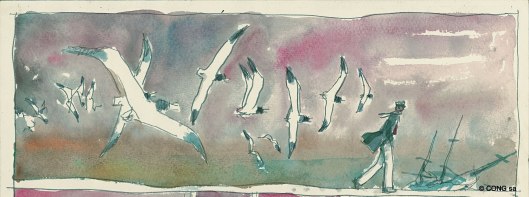
i-viaggi-di-corto-maltese

On the blue summer evenings, I shall go down the paths,
Getting pricked by the corn, crushing the short grass:
In a dream I shall feel its coolness on my feet.
I shall let the wind bathe my bare head.

I shall not speak, I shall think about nothing:
But endless love will mount in my soul;
And I shall travel far, very far, like a gipsy,
Through the countryside – as happy as if I were with a woman.

Arthur Rimbaud

Par les soirs bleus d’été, j’irai dans les sentiers,
Picoté par les blés, fouler l’herbe menue :
Rêveur, j’en sentirai la fraîcheur à mes pieds.
Je laisserai le vent baigner ma tête nue.

Je ne parlerai pas, je ne penserai rien,
Mais l’amour infini me montera dans l’âme ;
Et j’irai loin, bien loin, comme un bohémien,
Par la Nature, heureux- comme avec une femme.

Arthur Rimbaud

Share this:

  • Share on X (Opens in new window) X
  • Share on Facebook (Opens in new window) Facebook
Like Loading...

Eternity

25 Thursday Aug 2016

Posted by S/O in Uncategorized

≈ Leave a comment

12373313_1016931438366452_293328820414980633_n

Painting from Emile BETSELLERE

“Our leaders strain every nerve and with success, to get the next war going, while the rest of us, meanwhile, dance the fox trot, earn money and eat chocolates…And perhaps…it has always been the same and always will be, and what is called history at school, and all we learn by heart there about heroes and geniuses and great deeds and fine emotions, is all nothing but a swindle invented by the schoolmasters for educational reasons to keep children occupied for a given number of years. It has always been so and always will be. Time and the world, money and power belong to the small people and shallow people. To the rest, to the real men belongs nothing…eternity…it isn’t fame. Fame exists in that sense only for the schoolmasters. No, it isn’t fame. It is what I call eternity…The music of Mozart belongs there and the poetry of your great poets. The saints, too, belong there, who have worked wonders and suffered martyrdom and given a great example to men. But the image of every true act, the strength of every true feeling, belongs to eternity just as much, even though no one knows of it or sees it or records it or hands it down to posterity. In eternity there is no posterity…It is the kingdom on the other side of time and appearances. It is there we belong. There is our home. It is that which our heart strives for…And we have no one to guide us. Our only guide is our homesickness.”

Hermann Hesse

Share this:

  • Share on X (Opens in new window) X
  • Share on Facebook (Opens in new window) Facebook
Like Loading...

Napoléon en exil

22 Friday Jul 2016

Posted by S/O in Uncategorized

≈ Leave a comment

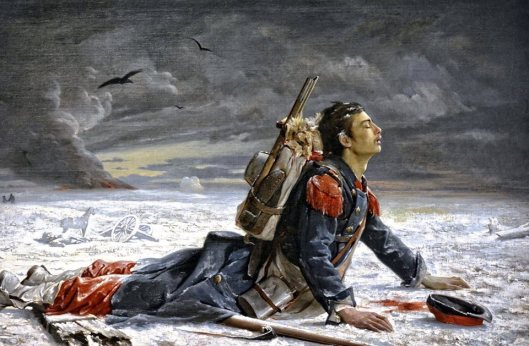
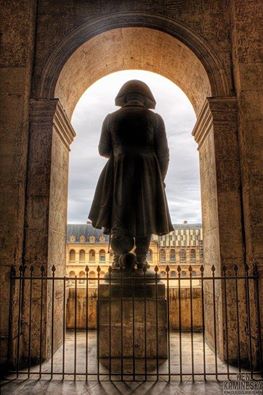
12512337_1091999847526277_267752755043966982_n


« J’ai toujours marché avec l’opinion de cinq à six millions d’hommes. Malgré tous les libelles, je ne crains rien à ma renommée : la postérité me rendra justice ; la vérité sera connue, et l’on comparera le bien que j’ai fait avec les fautes que j’ai commises ; je ne redoute pas le résultat de l’examen. Si j’eusse réussi, je serais mort avec la réputation du plus grand homme qui eût existé. Dans l’état où sont les choses, quoique j’ai échoué, je serai encore considéré comme un homme extraordinaire. Mon élévation est unique dans l’histoire, parce qu’elle n’est le résultat d’aucun crime. J’ai combattu dans cinquante batailles, que j’ai presque toutes gagnées ; j’ai tracé et fait mettre à exécution un code de lois qui portera mon nom à la postérité la plus reculée. De rien, je suis devenu par moi-même le monarque le plus puissant du Monde : j’ai vu l’Europe à mes pieds. Mon ambition était grande, je l’avoue ; mais elle était froide et causée par les événements […]. Appelé à la tête de la Nation, ma maxime fut : carrière ouverte aux talents sans distinction de naissance ou de fortune ; c’est pour ce système méritocratique que l’oligarchie anglaise me déteste tant. »

Share this:

  • Share on X (Opens in new window) X
  • Share on Facebook (Opens in new window) Facebook
Like Loading...

”Choses vues” sous le regard du père

21 Thursday Jul 2016

Posted by S/O in Uncategorized

≈ Leave a comment

13697042_10206645513963652_1805688427786426085_n

13775341_10206645513883650_8454265104959035514_n

13709863_10206645513923651_4489386728800261972_n

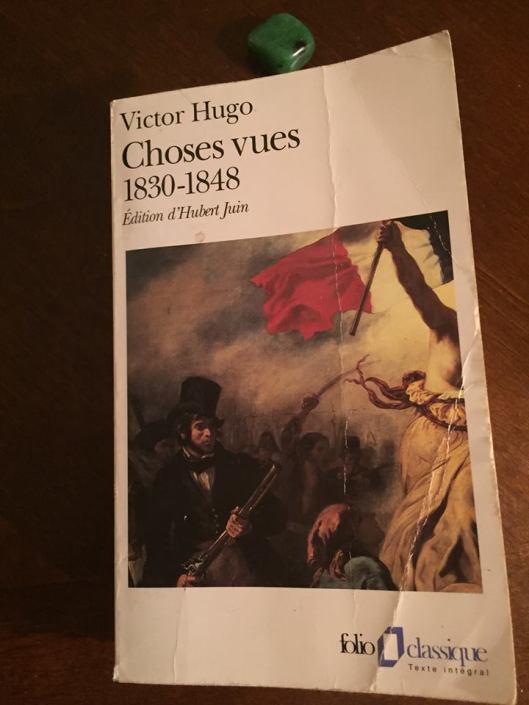
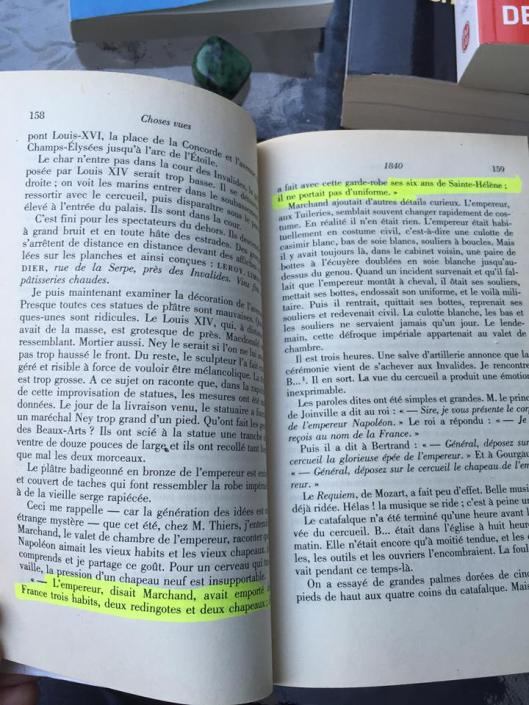
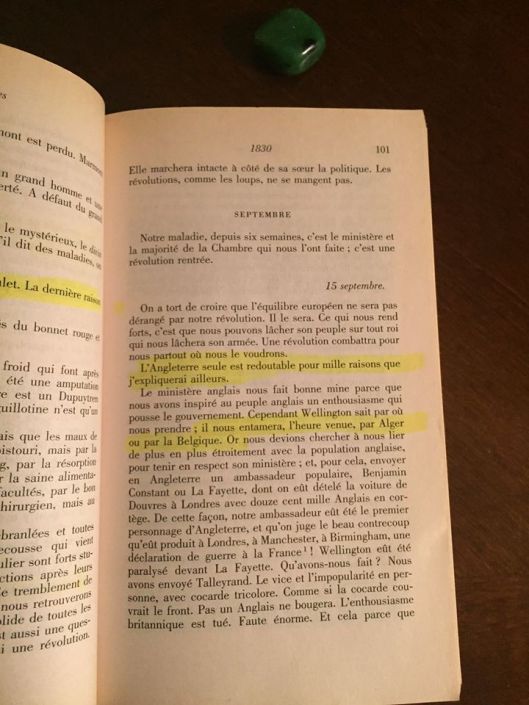
La dernière fois que j’ai vu mon père il m’a donné ce livre de Victor Hugo ”Choses vues” avec cette étrange couverture de Delacroix ou on ne voit qu’un sein.
J’avais pensé alors que j’en avais assez de ses classiques, je ne saurais dire combien de fois je les aies lus et relus et que ça ne pouvait rien m’apporter de nouveau.
Ce soir je me suis enfin décidé à y jeter un coup d’œil avec circonspection et la prudence d’un type en cavale…J’y retrouve cette merveilleuse manie qu’a mon père et qui nous a toujours rapproché au plus haut point intellectuel, de raturer des mots, des phrases, d’y bombarder de grosses goutes d’encre.
Une certaine émotion s’empare de moi lorsque je les reprends. De me poser la question du pourquoi telle ou telle phrase avait été soulignée. C’est ainsi que nous avons toujours dialogué dans la distance et la proximité.
Les livres les plus forts, on a beau se dire qu’à force de les fréquenter on les connait par cœur, chaque nouvelle lecture se révèle une bouleversante et excitante première fois.
C’est ainsi que je me dis que je devrais voyager comme Napoléon (Page 158 plus haut) avec deux redingotes et deux chapeaux.

Share this:

  • Share on X (Opens in new window) X
  • Share on Facebook (Opens in new window) Facebook
Like Loading...

Conclusions (I) about the value of” Truth” from the book of Yeshayahu Leibowitz

26 Sunday Jun 2016

Posted by S/O in Truth, Uncategorized

≈ Leave a comment

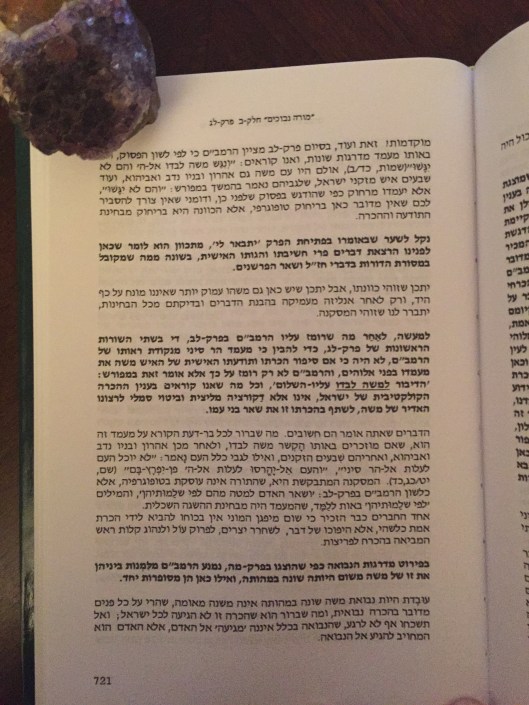
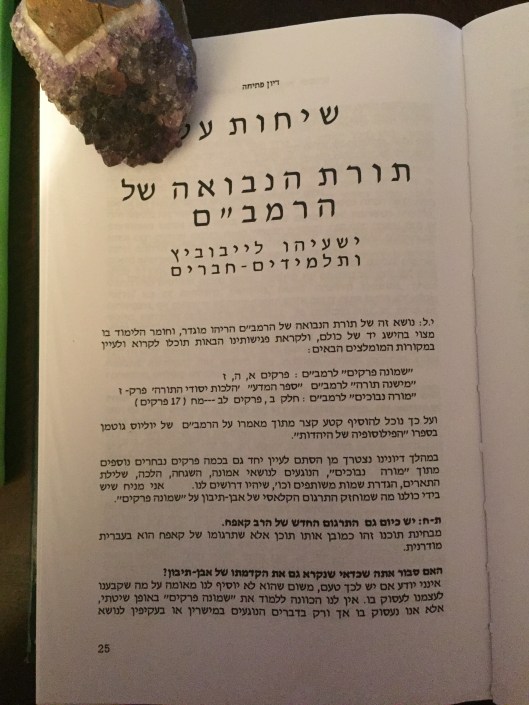
img_3072

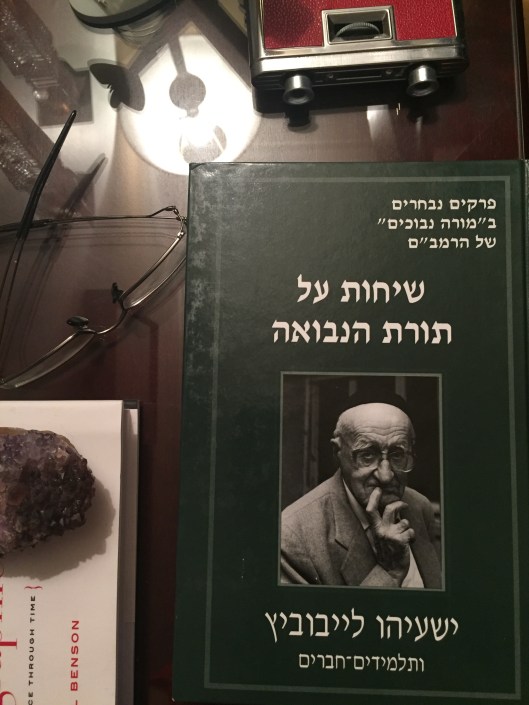
I just started to read ”שיחות על תורת הנבואה” of Yeshayahu Leibowitz and I am already fascinated. Even if I see many similarities between Leibowitz, Nietzsche and Hannah Arendt regarding the notions of truth and reality ( Hannah Arendt cautioned that “the basic fallacy … is to interpret meaning on the model of truth.” ) I find in Leibowitz work a honest tentative to bridge the gap between meaning, which is the human interpretation of truth, and that naked truth itself and it’s perhaps the most abiding challenge in reconciling the human intellect with the human spirit.

Conclusions – I –  about the concept of truth:

On page 1-25 :

Telling the truth will not help, unless the listener has the tools for understanding the truth. You can not tell the truth – the truth needs to be revealed.

On page 721 :

Mass rally ( at Mount Sinai) can not lead to knowledge of the truth, but rather the opposite – a mass rally leads to the liberation of passion, bolt, and frivolity.

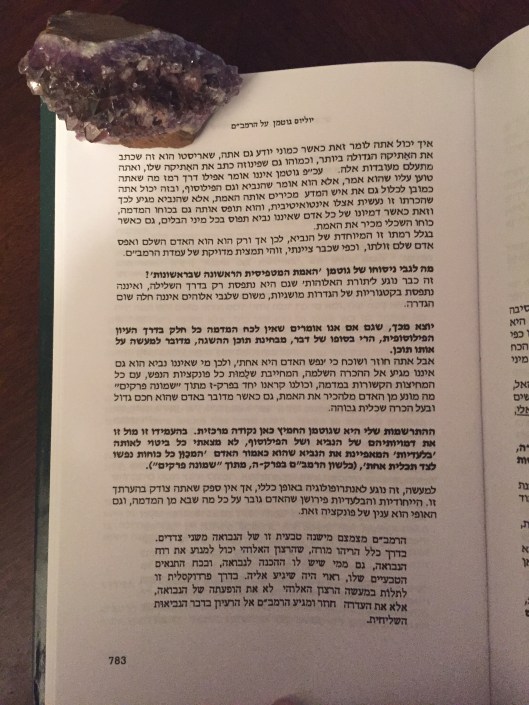
On Page 783 :

He who is not a prophet, his imagination is busy with trivialities, even if mentally it’s the truth.

img_3074

img_3075

img_3079

Share this:

  • Share on X (Opens in new window) X
  • Share on Facebook (Opens in new window) Facebook
Like Loading...

Micro-interiors of Peter Sloterdijk / Cioran heights

09 Thursday Jun 2016

Posted by S/O in Uncategorized

≈ Leave a comment

”Here I am developing an idea that Walter Benjamin addressed in his Arcades Project. He starts from the anthropological assumption that people in all epochs dedicate themselves to creating interiors, and at the same time he seeks to emancipate this motif from its apparent timelessness. He therefore asks the question: How does capitalist man in the 19th century express his need for an interior? The answer is: He uses the most cutting-edge technology in order to orchestrate the most archaic of all needs, the need to immunize exist-ence by constructing protective islands. In the case of the arcade, modern man opts for glass, wrought iron, and assembly of prefabricated parts in order to build the largest possible interior. For this reason, Joseph Paxton’s Crystal Palace, erected in London in 1851, is the paradigmatic building. It forms the first hyper-interior that offers a perfect expression of the spatial idea of psychedelic capitalism. It is the prototype of all later theme-park interiors and event architectures. The arcade heralds the abolition of the outside world. It abolishes outdoor markets and brings them indoors, into a closed sphere. The antagonistic spatial types of salon and market meld here to form a hybrid. This is what Benjamin found so theoretically exciting: The 19th-century citizen seeks to expand his living room into a cosmos and at the same time to impress the dogmatic form of a room on the universe. This sparks a trend that is perfected in 20th-century apartment design as well as in shopping-mall and sports-stadium design—these are the three paradigms of modern construction, that is, the construction of micro-interiors and macro-interiors.” Peter Sloterdijk

Instead of this archaic state of protection I prefer the words of Cioran:

”The absence of an organic character of the contemporary culture, makes that man is no longer living in contents but in formulas that he can change as fast as he changes his shirt. So you understand why it is necessary to purify oneself on the heights.” The full text below ( In French only).

cioran1
cioran 2
cioran3
Kazakh hunters in Altai Mountains in Western Mongolia :

Share this:

  • Share on X (Opens in new window) X
  • Share on Facebook (Opens in new window) Facebook
Like Loading...

Micro-interiors of Peter Sloterdijk / Cioran heights

09 Thursday Jun 2016

Posted by S/O in Uncategorized

≈ Leave a comment

”Here I am developing an idea that Walter Benjamin addressed in his Arcades Project. He starts from the anthropological assumption that people in all epochs dedicate themselves to creating interiors, and at the same time he seeks to emancipate this motif from its apparent timelessness. He therefore asks the question: How does capitalist man in the 19th century express his need for an interior? The answer is: He uses the most cutting-edge technology in order to orchestrate the most archaic of all needs, the need to immunize exist-ence by constructing protective islands. In the case of the arcade, modern man opts for glass, wrought iron, and assembly of prefabricated parts in order to build the largest possible interior. For this reason, Joseph Paxton’s Crystal Palace, erected in London in 1851, is the paradigmatic building. It forms the first hyper-interior that offers a perfect expression of the spatial idea of psychedelic capitalism. It is the prototype of all later theme-park interiors and event architectures. The arcade heralds the abolition of the outside world. It abolishes outdoor markets and brings them indoors, into a closed sphere. The antagonistic spatial types of salon and market meld here to form a hybrid. This is what Benjamin found so theoretically exciting: The 19th-century citizen seeks to expand his living room into a cosmos and at the same time to impress the dogmatic form of a room on the universe. This sparks a trend that is perfected in 20th-century apartment design as well as in shopping-mall and sports-stadium design—these are the three paradigms of modern construction, that is, the construction of micro-interiors and macro-interiors.”

Peter Sloterdijk

Instead of this archaic state of protection I prefer the words of Cioran:

”The absence of an organic character of the contemporary culture, makes that man is no longer living in contents but in formulas that he can change as fast as he changes his shirt. So you understand why it is necessary to purify oneself on the heights.” The full text below ( In French only).


cioran1
cioran 2
cioran3
”Si l’on veut comprendre la vanité des ambitions et des aspirations cultivées par l’homme dans les grandes villes, si l’on veut dépasser les illusions engendrées par l’assimilation au rythme fou de la vie moderne, il est plus que nécessaire, il est indispensable de faire provisoirement retraite. ”( …) ”L’absence de caractère organique de la culture contemporaine fait que l’homme ne vit plus dans des contenus mais dans des formules dont il peut changer comme il changerait de chemise. vous comprenez donc pourquoi il est nécessaire de se purifier sur les hauteurs. ” Emil Cioran

Kazakh hunters in Altai Mountains in Western Mongolia :

Share this:

  • Share on X (Opens in new window) X
  • Share on Facebook (Opens in new window) Facebook
Like Loading...

Now I know – Abba Kovner

31 Tuesday May 2016

Posted by S/O in Uncategorized

≈ Leave a comment

Tags

Abba Kovner

img_2802
img_2881
img_2882


This is a small portion of the poem written by Abba Kovner for  Yocheved Bat-Miriam.

My tanslation :

Now I know why our house is concrete and why

we wear jeans and why

Jerusalem is united. Why we want

a different theater. And why

we need a crosswalk

and a traffic signal,

the flash of authority.

And why clever members of Parliament

are absent from the plenum

in permanent rotation,

and why I read the morning news

and the late news

compulsively

but for God’s sake, why

do I not stop talking

to you !

to you.

So many days

with no answer, with no

certainty.

When and why

do you keep quiet ?


Share this:

  • Share on X (Opens in new window) X
  • Share on Facebook (Opens in new window) Facebook
Like Loading...
← Older posts
Newer posts →

Translation

  • Amichai Yéhuda
  • Analogos en Francais
  • Andreï Tarkovski
  • anti kitsch
  • Architecture
  • Art
  • Asperger
  • Aviation
  • BIG DATA
  • Biking
  • blue
  • Blue world
  • Body
  • Bohumil Hrabal
  • Charles Péguy
  • Childhood
  • Cinema
  • Concepts
  • Conceptual
  • Cosmigraphics
  • Danse
  • Dante
  • Dante Alighieri,
  • David Altmejd
  • Denis Diderot
  • DIRES
  • Duras Margueritte
  • Edmond Charlot
  • Equal
  • Exhibitions I saw
  • Fake world
  • fearful-avoidant
  • Fiodor Dostoïevski
  • From my definitions notebook
  • Genealogy
  • George Oppen
  • Giving and receiving
  • Graphic novel
  • Guy Debord
  • Hannah Arendt
  • Hanoch Levin, חנוך לוין
  • INSTRUMENTS
  • Jean Malaquais
  • Jean-Pierre Abraham
  • Jesse Glenn Gray
  • Jewish wisdom
  • Jewishness
  • Karl Marx
  • La justice des hommes
  • langage
  • Le chemin à prendre
  • leibowitz yeshayahu
  • Lighthouse
  • Louis-Ferdinand Céline
  • Maps
  • Martin Buber
  • Mathematics
  • Memory
  • Mozart assassiné
  • Panim
  • Paul Celan
  • Paul Klee
  • Philippe Muray
  • Poetry
  • Polyglot
  • ROBOTS
  • Roland Gori
  • Sadegh Hedayat
  • Scissors
  • Shabbes
  • Shapers of world history
  • Sidewalks
  • Société de spectacle
  • Spinoza
  • Sports
  • Startup stupidity
  • Tauba Auerbach
  • The Eye
  • The Light
  • Thomas Bernhard
  • To do list
  • Tolstoï et Leibowitz
  • Topophilia
  • translation
  • Trips
  • Trumpet
  • Truth
  • Uncategorized
  • Virgile
  • Walkability
  • War and peace
  • Wendell Berry
  • WHAT IS A WOMAN
  • WORDS
  • חיים נחמן ביאליק
  • יהודה עמיחי
  • ישעיהו ליבוביץ
Follow Selbstwehr on WordPress.com

calendar

February 2026
M T W T F S S
 1
2345678
9101112131415
16171819202122
232425262728  
« Jan    

Blog at WordPress.com.

  • Subscribe Subscribed
    • Selbstwehr
    • Join 85 other subscribers
    • Already have a WordPress.com account? Log in now.
    • Selbstwehr
    • Subscribe Subscribed
    • Sign up
    • Log in
    • Report this content
    • View site in Reader
    • Manage subscriptions
    • Collapse this bar
 

Loading Comments...
 

You must be logged in to post a comment.

    %d