“There is nothing more complete than a broken heart.” Kotzker Rebbe

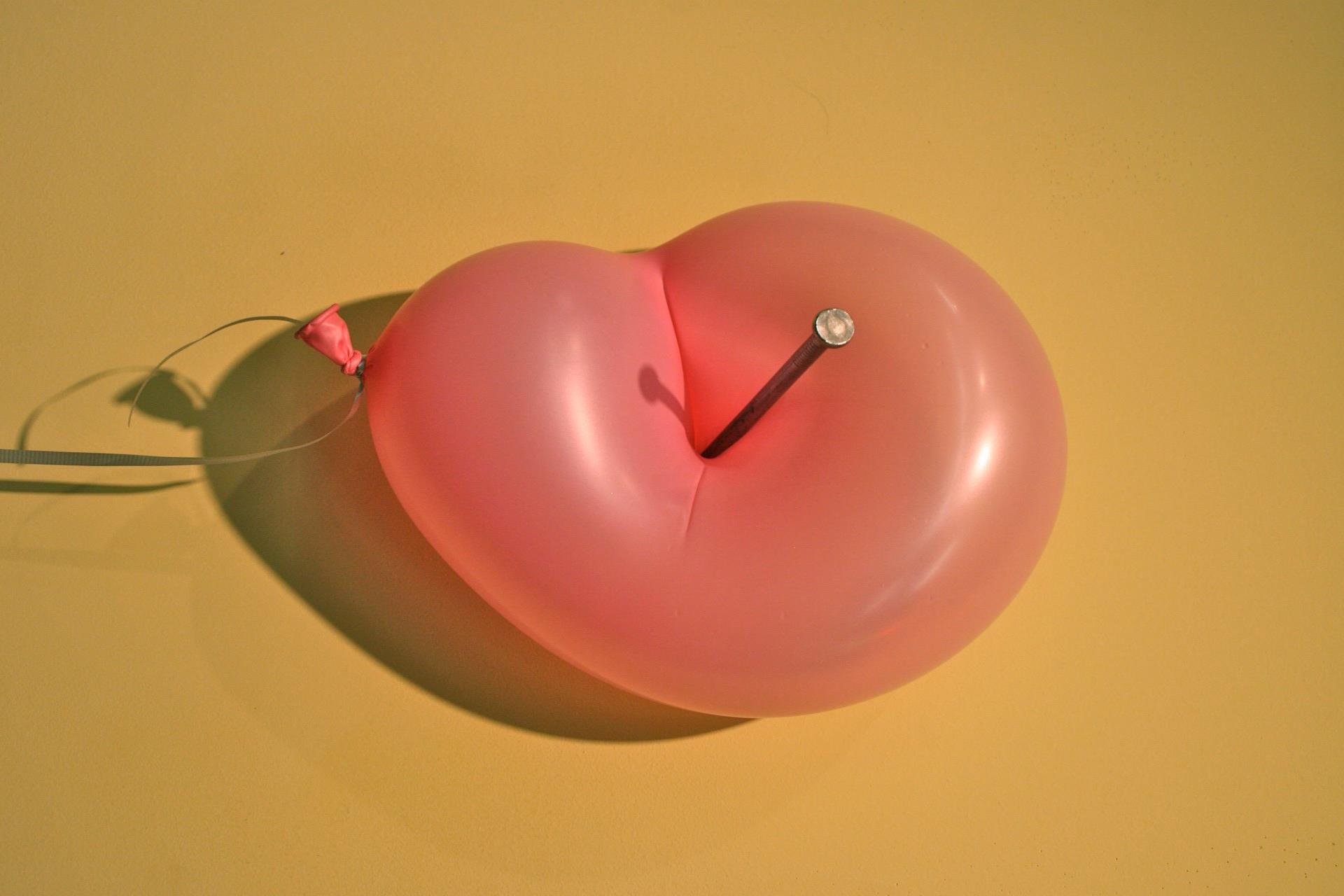
I recently discovered a life changing idea—shvira, the Hebrew word for “brokenness.” It goes entirely against how our society usually views suffering and is wonderfully expressed in a saying by the 19th-century Chassidic sage Rabbi Menachem Mendel Morgenstern, known as the Kotzker Rebbe. “There is nothing more complete than a broken heart.” In other words, your heart is more complete now that it’s broken. How can that be?.
When a heart breaks, it breaks into pieces with cracks in between. The Kotzker Rebbe’s saying suggests that true growth takes place in the cracks between the broken shards. It’s in those spaces that your wisdom, maturity and strength can grow into beautiful imperfection. Of course, no one wants to have their heart broken. No one wants to discover that they were wrong about being loved, to lose confidence or feel like a failure. But the growth that comes from these feelings of worthlessness; pain can ultimately be greater than the pain itself.
There was a time when I tried to “fix” what had gone wrong in me, hide the scars, make myself “perfect.” That is, until I learned about shvira and the value of broken things.
Today, I keep that chipped nail as a reminder. I won’t get rid of the torn blanket; I’ll sew it up myself. And the broken toaster? I use things like that as a doorstop or a toy. Yes, really.
Moses spent 40 days and 40 nights on Mount Sinai. The Israelites grew impatient and forged a Golden Calf. When Moses finally came down, he saw the forbidden idol and smashed the Tablets of the Law he had received from God. After reprimanding and punishing the sinners, Moses went back up the mountain and begged God to forgive the Israelites for their grave sin. He pleaded, and eventually, God agreed, granting His forgiveness. A new, second set of tablets was carved and handed to Moses by God. It was an opportunity to start again.
Lo and behold, the original tablets, which were broken into pieces, were not thrown away. In fact, they were kept alongside the new, unbroken tablets in the holiest of places: the Ark of the Covenant. They were revered and honored because they symbolized and commemorated human mistakes, as well as the opportunity to gain forgiveness.
The broken tablets were Not hidden. Not buried. Not forgotten. Instead, the shattered shards were restored to a place of honor in the Holy Ark alongside the new, restored Tablets.
Brokenness and wholeness sat side by side, as they still do today. If we don’t forgive, we lack the capacity to learn from mistakes, to repair and move forward. We resent others and ourselves. We hold on to anger for far too long.
At the end of a Jewish wedding ceremony, the groom traditionally breaks a glass by stomping on it. This can be a reminder for us that things will always break, even in the happiest of times. And those hard moments can and should be used to develop a stronger marriage. The couple must learn to accept brokenness and use it as a vehicle for growth to become even more whole.
Throughout your life, your heart will be broken in multiple, different ways—by rejection, guilt, failure, loss, shame. One heartbreak doesn’t protect you from future breaks; one shattering doesn’t prevent future pain. Yet when we get comfortable with feeling uncomfortable and accept that life was never supposed to be perfect, we allow ourselves to look at life as a grand chance to better ourselves. So while we cannot be happy all the time, it is entirely possible and natural to simultaneously carry sadness and joy, failure and forgiveness, heartbreak and hope, fear and purpose, all together inside.
 Selbstwehr
Ultimately the life partner that Hashem gives us is not the person who gives us the most pleasure. Indeed to receive pleasure is not the primary reason for us being here, rather Hashem in His great wisdom will send us the person best qualified to help us grow, spiritually. Emotionally and intellectually.
Thank you for being vulnerable and sharing this beautiful insight!. I deeply love your post.
WONDERFUL!
The bottom line is that we all have to realize that our work is never complete, no matter how far we have advanced. There is always a higher level to strive for. One should be happy with every small improvement, as opposed to being depressed about how far we have to go. My father who was a rabbi used to tell me that your broken heart is for sure the only way to create the vessel you need at this moment. The Zohar in parshas Emor 3:90b, says that HaShem only rests in a broken vessel. The broken vessel is really the most complete since HaShem resides there. Sending you all my love.
• brokenness = lets the light in.
• depression, sadness, anger = blocks the light.
Don’t think that because you have a struggle something is wrong with you, or you should hide it or not let the world see it. That’s the worst thing you could do, hide yourself. Our sages told us Every day is New day .You have to live like that in your marriage, in your health. Everything could change in the blink of an eye.